
Moving hazardous and/or sensitive equipment in the factory requires a plan for the move that begins with a structured approach and includes risk management. This begins with comprehensive risk classification, comprehensive equipment inspection, isolation of utilities, protective packaging, specialized lifting, adherence to regulations, monitored transport, and post-move verification to ensure the safety of people, assets, and production timelines.
Common types of hazardous equipment contain chemicals, residues, batteries, oils, gases, and pressure systems, while common types of sensitive equipment are precision machines, control systems, sensors, and vibration sensitive equipment. Handling procedures are different in each category, and must be coordinated. Powered-off machines are often mistakenly considered ready-to-move materials, and business teams typically fail to account for potential risks, such as leakage, misalignment, moisture damage, or compliance problems that can result in injuries, repairs, or lost time. Hazardous or sensitive equipment should never be considered as regular factory goods, it must be handled in accordance with a documented relocation procedure, which takes care of safety, compliance, equipment safeguarding, and restart readiness.
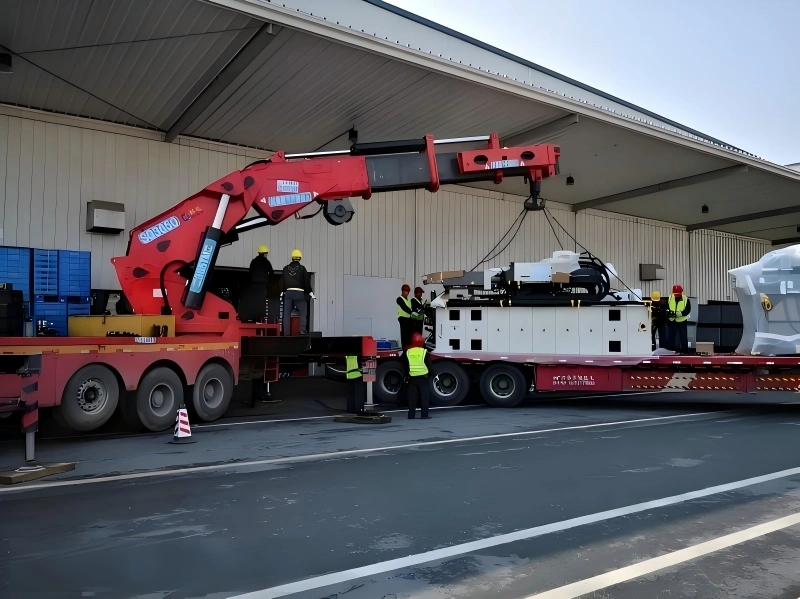
What Counts as Hazardous or Sensitive Equipment During a Factory Move?
Equipment that presents hazards or is sensitive to handling needs to be classified separately because their hazard and handling risks vary greatly. Their treatment may result in an underestimate of risks or in over-protecting and spending more money than necessary.
Common sources of hazardous material include chemical processing equipment, machinery containing residues, oils, coolants, solvents, battery systems, pressurized vessels, gas cylinders and high voltage electrical cabinets. Sensitive equipment includes any equipment that is used in a manufacturing process that requires precision, calibration, or automation, such as CNC machines, laboratory equipment, automation systems, robots, sensors, control units, and more.
| Equipment Type | Why It Requires Special Handling | Main Risk |
| Chemical Processing Equipment | May contain residues or contamination | Leakage, exposure, compliance issues |
| Battery Systems | May require special handling and documentation | Fire risk, short circuit, transport restrictions |
| Pressurized Equipment | May store pressure or connected gas systems | Release, rupture, safety hazards |
| Electrical Cabinets | Contain sensitive control systems and wiring | Moisture, impact, incorrect reconnection |
| CNC and Precision Machinery | Requires alignment and vibration control | Accuracy loss, hidden mechanical damage |
| Laboratory Instruments | Often sensitive to shock, dust, and humidity | Calibration failure or sensor damage |
| Automation Systems | Include sensors, robots, and controllers | Misalignment, wiring errors, software issues |
Step 1: Classify the Risk Before Relocation Begins
The process of correct risk classification within the project determines the packaging level, level of documentation, methods of transport and the experience of the team.
Before lifting commences, project teams should check the risk classification, isolation from utilities, packaging requirements, and transport conditions, as well as post-move inspection needs for sensitive industrial equipment. Do some specific questions: Does it contain dangerous chemicals? Does it need a specific amount of precision or vibrations? What are the compliance and production impact implications?
| Risk Classification Question | Why It Matters | Action Required |
| Does the equipment contain hazardous substances? | Determines safety and documentation needs | Identify, drain, clean, isolate, or declare as required |
| Does it contain batteries or electrical storage? | May affect transport compliance | Review battery type and protection requirements |
| Is it pressurized or connected to gas systems? | Creates safety risk during dismantling | Depressurize and isolate before moving |
| Is it precision or calibration-sensitive? | Requires shock and vibration control | Plan protective handling and post-move calibration |
| Is it moisture-sensitive? | Can cause corrosion or electrical faults | Use moisture barriers and desiccants |
| Is it critical to production restart? | Delays may affect business continuity | Prioritize sequencing and monitoring |
Step 2: Inspect, Isolate, and Document Equipment Condition
Inspection and isolation should be performed prior to dismantling and packaging to determine baseline condition and to remove active risks.
Record all information on pictures, serials, notes, etc. This provides an evidentiary record that can be helpful when reviewing or settling a claim, as well as for insurance purposes and compliance.
| Inspection or Isolation Task | What to Check | Why It Matters |
| Equipment Identification | Name, model, serial number, location | Avoids confusion during relocation |
| Condition Photos | All sides, panels, connectors, fragile areas | Supports damage comparison |
| Leak Check | Oil, coolant, chemical, gas, or water leakage | Prevents contamination or safety incidents |
| Power Isolation | Electrical disconnection and safe shutdown | Reduces shock and equipment damage risk |
| Pressure Release | Hydraulic, pneumatic, or gas pressure | Prevents sudden release during dismantling |
| Residue Review | Chemical or hazardous material traces | Determines cleaning or declaration needs |
| Wiring and Connector Check | Cables, control panels, terminals | Supports safe reconnection |
Step 3: Prepare Hazardous Equipment Safely Before Moving
Hazardous equipment preparation involves eliminating or mitigating risks, such as leaks, pressure or reactive materials, prior to movement.
These actions require the expertise of trained personnel and site-specific safety measures must be implemented, with necessary documentation being prepared.
| Hazardous Preparation Task | Recommended Action | Risk Reduced |
| Drain Liquids | Remove oil, coolant, solvents, or chemicals where required | Leakage and contamination |
| Clean Residues | Decontaminate surfaces or internal areas if needed | Exposure and compliance problems |
| Seal Openings | Cap valves, ports, and pipes | Spills and moisture entry |
| Depressurize Systems | Release pressure from hydraulic, pneumatic, or gas lines | Sudden discharge or rupture |
| Secure Batteries | Insulate terminals and follow battery handling rules | Short circuit or fire risk |
| Label Hazardous Parts | Mark risk areas and handling instructions | Incorrect handling |
| Prepare Documentation | SDS, declarations, permits, or inspection records if needed | Customs or transport delays |
Step 4: Protect Sensitive Equipment from Shock, Vibration, Moisture, and Dust
Sensitive equipment is sometimes thought to be strong, but can be damaged by vibration, impact, humidity or contamination during transit.
Install security materials that are suited to the needs of the individual asset.
| Sensitive Equipment Risk | Protection Method | Practical Note |
| Shock and Impact | Shock-absorbing pads, cushioned supports | Important for precision machines and instruments |
| Vibration | Anti-vibration materials and secure blocking | Reduces hidden alignment damage |
| Moisture | Moisture barrier, desiccants, vacuum sealing | Prevents corrosion and electrical faults |
| Dust | Sealed wrapping and protective covers | Protects control cabinets and sensors |
| Sensor Damage | Remove or protect exposed sensors | Avoids calibration and control issues |
| Precision Surface Damage | Edge protection and rust-preventive coating | Protects rails, shafts, beds, and machined surfaces |
| Tilt Risk | Tilt indicators or clear handling marks | Useful for upright-sensitive equipment |
Step 5: Use Correct Packaging, Labeling, and Handling Marks
Clear packaging and labeling assures all the handlers are aware of each piece’s requirements.
| Label or Marking | What It Shows | Why It Matters |
| Lifting Point Mark | Approved lifting locations | Prevents structural damage |
| Center of Gravity Mark | Balance point of the equipment | Supports safe lifting and loading |
| Upright Mark | Correct cargo orientation | Prevents tilt-sensitive damage |
| Fragile Mark | Sensitive areas or components | Alerts handlers to avoid impact |
| Hazard Label | Regulated or risky components | Supports compliance and safe handling |
| Cable/Line Labels | Matching points for reconnection | Reduces installation errors |
| Crate Number | Packing sequence and inventory | Prevents missing parts |
Step 6: Plan Safe Lifting, Loading, and Securing
Prevents safety incidents and physical damage by having controlled lifting and securing.
| Handling Control | Why It Matters | Risk If Ignored |
| Approved Lifting Points | Protects equipment structure | Deformation or unstable lifting |
| Center-of-Gravity Review | Keeps load balanced | Tipping or swinging |
| Spreader Beam | Reduces side pressure from slings | Damage to frames or panels |
| Load Positioning | Maintains transport stability | Shifting or uneven load stress |
| Blocking and Bracing | Prevents base movement | Cargo sliding or collision |
| Correct Lashing Angle | Holds cargo securely | Weak restraint performance |
| Surface Protection | Prevents strap or chain damage | Scratches, dents, or pressure damage |
Step 7: Check Compliance and Documentation Requirements
Different equipment types, routes and destinations have different compliance needs, early review means no delays.
| Document or Compliance Item | When It May Be Needed | Why It Matters |
| Safety Data Sheet | Chemical residues or hazardous materials | Supports safe handling and declaration |
| Hazardous Goods Declaration | Regulated cargo components | Avoids rejection or compliance issues |
| Battery Information | Lithium or industrial battery systems | Confirms transport handling requirements |
| Cleaning Record | Equipment previously used with chemicals | Reduces contamination concerns |
| Equipment Serial Number | Used machinery export/import | Supports customs identification |
| HS Code | International shipment classification | Helps customs clearance |
| Insurance Record | High-value or sensitive machinery | Supports risk protection |
| Oversized Permit | Large or heavy equipment | Required for road or port handling |
Step 8: Monitor Transport Conditions for High-Risk Equipment
Real time monitoring: Early warning for valuable or sensitive items.
| Monitoring Method | What It Tracks | Best Used For |
| GPS Tracking | Location and route progress | Time-sensitive factory moves |
| Shock Sensor | Impact during handling or transport | Precision machinery and instruments |
| Tilt Indicator | Unsafe angle changes | Upright-sensitive equipment |
| Humidity Sensor | Moisture exposure | Rust-sensitive or electrical equipment |
| Temperature Sensor | Heat or cold exposure | Sensitive electronics or materials |
| Seal Record | Unauthorized opening or handling | High-value or regulated cargo |
| Lashing Photo Record | Securing condition before departure | Heavy or sensitive machinery |
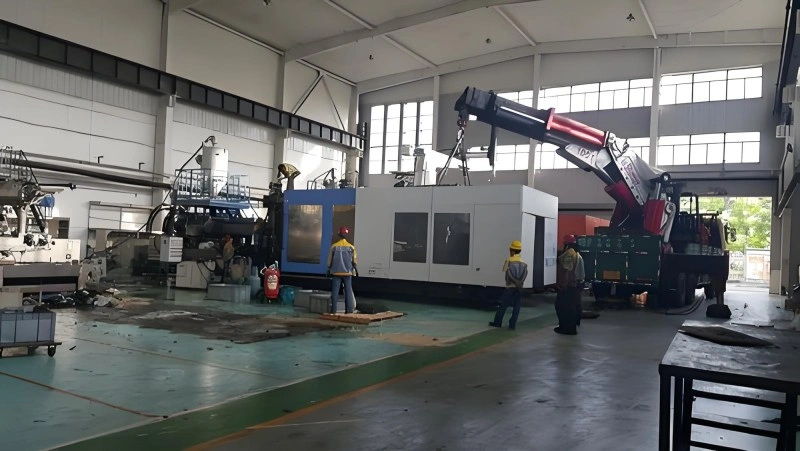
Step 9: Inspect, Reconnect, Calibrate, and Test After Relocation
Do not turn equipment back on until complete verification.
| Post-Move Check | What to Verify | Why It Matters |
| Visual Inspection | Damage, corrosion, cracks, leaks, loose parts | Detects visible relocation issues |
| Leak Check | Oil, coolant, hydraulic, gas, or chemical leakage | Prevents safety and contamination risks |
| Electrical Check | Panels, cables, terminals, sensors | Reduces startup failure risk |
| Reconnection Review | Cables, hoses, pipes, utilities | Prevents incorrect installation |
| Alignment and Leveling | Machine position and foundation stability | Supports safe operation and accuracy |
| Calibration | Precision settings and measurement accuracy | Restores performance |
| Trial Run | Noise, vibration, temperature, output | Detects hidden problems |
| Acceptance Record | Photos, test results, handover notes | Confirms relocation completion |
Common Mistakes to Avoid When Handling Hazardous or Sensitive Equipment
Knowing what to avoid will prevent expensive mistakes on future projects.
| Mistake | Why It Is Risky | Better Practice |
| No Risk Classification | Hazardous or sensitive needs may be missed | Identify hazards and sensitivity before planning |
| Poor Utility Isolation | Energy, pressure, or leakage risks remain | Disconnect and isolate systems safely |
| Weak Labeling | Reconnection mistakes become likely | Label cables, hoses, pipes, valves, and parts |
| Basic Packaging Only | Shock, humidity, or dust can damage equipment | Match packaging to equipment sensitivity |
| Wrong Lifting Point | Equipment may deform or tip | Confirm approved lifting points |
| Missing Compliance Review | Cargo may be delayed or rejected | Check documentation before shipment |
| No Post-Move Testing | Hidden issues may affect production | Inspect, calibrate, and trial run before restart |
Hazardous and Sensitive Equipment Relocation Checklist
Check off the items in this handy checklist to keep things under control during the project.
| Stage | Checklist |
| Before Planning | Classify equipment as hazardous, sensitive, high-value, oversized, or critical |
| Before Dismantling | Inspect condition, photograph equipment, identify residues, batteries, pressure, and fragile areas |
| During Preparation | Drain or isolate fluids, depressurize systems, disconnect utilities, label cables and pipes |
| During Packaging | Use moisture barriers, shock control, dust protection, VCI materials, crates, and handling marks |
| During Lifting | Confirm lifting points, center of gravity, rigging method, safety zones, and surface protection |
| During Transport | Use proper securing, monitoring, route planning, permits, and documentation |
| After Delivery | Inspect, reconnect, check leaks, calibrate, test, and document acceptance |
Conclusion — High-Risk Equipment Requires Controlled Relocation, Not Ordinary Moving
Moving hazardous or sensitive equipment in the factory is more than just carrying care; it is about caring for the equipment. Before relocating the machines, each machine should be evaluated for potential dangers, hazardous materials, sensitivity, packaging requirements, compliance requirements, and restart requirements. By providing clear documentation, trained handling, protection measures, and post-move verification, companies can mitigate unnecessary risk and safely transport critical industrial assets with more control. Good planning and careful execution will save you and your team and your future productions.