
Typically, international logistics project failures in engineering occur when there is a lack of integrated management of cargo data, route feasibility, permits, contractor responsibilities, documents, risk control, and contingency plan. These projects require a combination of the following factors: oversized cargo, high value industrial equipment, multiple modes of transport, specialized handling, port operations, road permits, and delivery schedules.
The majority of international engineering logistics issues can be averted, provided that project teams conduct a proper verification of technical cargo data, carry out a preliminary route risk assessment, clearly coordinate contractors, manage documents and establish contingency plans before works commence. While there are external factors that can’t be controlled, such as the weather or congestion at the port, these issues often stem from other issues such as a lack of attention to early planning, cargo data that is not as accurate and complete as it could be, or lack of coordination.
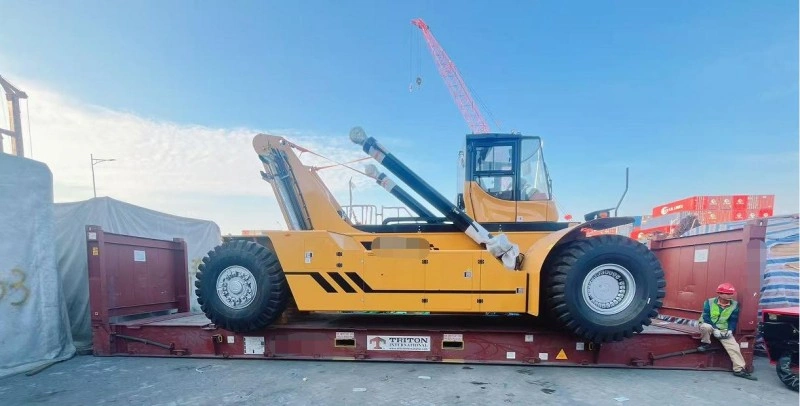
Why International Engineering Logistics Projects Fail
International engineering logistics projects typically have more than one issue that fails. In most cases, they are a combination of related planning issues that manifest themselves during operations, and carry through into schedule, cost and cargo integrity.
Common causes include uneventually completed cargo weights without ground truthing, using estimated weight data rather than scale data, unidentified centers of gravity for stability and limitations on the route documented only during transport. Last-minute permits often result in delays, and teams at origin and destination don’t always have the same information. Choosing the wrong equipment or protecting the cargo with insufficient measures will add to the risks; similarly, when the export or import documentation is incomplete, or there are no backup plans in place.
For oversized machinery, factory equipment, and cross-border project cargo, professional international engineering logistics solutions should connect cargo survey, route planning, permits, securing methods, customs documents, and final delivery into one controlled project plan. Over many years of complex OOG movements, we’ve found that shifting the mindset from simply a freight booking to a full engineering project has a significant positive impact on the outcome and on the avoidance of unnecessary delays and setbacks.
| Failure Cause | What Usually Happens | Practical Lesson |
| Inaccurate Cargo Data | Trailer, crane, container, or lashing plan may be wrong | Verify weight, dimensions, lifting points, and center of gravity before planning |
| Late Route Survey | Road restrictions or clearance limits are discovered too late | Complete route feasibility checks before confirming pickup |
| Permit Delays | Cargo cannot move legally on the planned schedule | Start permit applications early and track approval status |
| Poor Contractor Coordination | Loading, trucking, customs, or delivery teams work from different information | Use one approved cargo profile and responsibility matrix |
| Weak Cargo Securing | Cargo shifts, vibrates, or suffers structural damage | Design lashing, blocking, and bracing based on cargo and transport mode |
| Missing Documents | Customs, port, or insurance processes are delayed | Use a document checklist and version control |
| No Contingency Plan | Small problems cause major project disruption | Prepare backup routes, equipment options, and schedule buffers |
Lesson 1: Treat Engineering Logistics as a Project, Not a Shipment
International engineering logistics is not the same as a standard freight process – it needs a project management approach. This implies that technical, operations and compliance aspects should be taken up in a holistic manner, starting from the planning phase till delivery.
Key activities involve comprehensive cargo surveys and measurements, route and infrastructure inspection, selecting the right equipment (ultra-low flatbed trailers or modular units), designing the efficient loading and unloading plan, planning the optimal lashing and securing strategy, arranging port and customs requirements, preparing for the site at the destination, and keeping the milestone tracking system up to date.
This project mentality is where experienced teams get the message that they are not only concerned with cost per ton, but also with the overall feasibility, safety, and on-time delivery. It will avoid the common mistake of making hasty transport decisions before all the facts are known.
| Standard Shipment Thinking | Project Logistics Thinking |
| Focuses mainly on freight rate and transit time | Focuses on cargo feasibility, safety, compliance, and schedule reliability |
| Starts after cargo is ready | Starts during engineering and pre-shipment planning |
| Uses standard transport process | Builds a transport plan around cargo size, weight, value, and risk |
| Handles documents near shipping date | Controls permits, customs, and port documents early |
| Reacts to problems during execution | Identifies risks and prepares contingencies before execution |
Lesson 2: Verify Cargo Data Before Making Transport Decisions
The key to a successful international engineering logistics operation is accurate cargo data. One of the most common causes of project cargo failures is the incorrect information.
The key data that should be verified include exact length, width, and height dimensions, confirmed gross weight, the location of the center of gravity, specified lifting points, tie-down points, support points, identification of fragile or critical areas, packaging current status, good photographs and technical drawings, and manufacturer-specific handling guidelines. Well-trained survey teams ensure that no assumptions are made that can interfere with the latter phases.
This verification process is necessary to prevent overloaded trailers, unstable lifts, or incompatible containers. This up-front time investment will save a ton of time and money and stress in the long run.
| Cargo Data to Verify | Risk If Incorrect |
| Length, Width, Height | Route clearance, container selection, and port handling may fail |
| Gross Weight | Trailer, crane, or flat rack may be overloaded |
| Center of Gravity | Lifting and transport stability may be unsafe |
| Lifting Points | Cargo may be damaged during crane operations |
| Tie-Down Points | Lashing design may be ineffective |
| Support Points | Cargo base may deform during transport |
| Sensitive Components | Vibration, moisture, or impact protection may be insufficient |
| Cargo Photos | Planning teams may miss access or handling constraints |
| Technical Drawings | Equipment selection and cargo securing may be based on assumptions |
Lesson 3: Route Feasibility Must Be Confirmed Before Execution
The best (or most obvious) way to move heavy equipment across country is often not the best way—or even possible way—to move it internationally. To prevent unwanted issues, it is important to conduct thorough route feasibility studies.
The critical factors include road width and load bearing capacity of roads, bridge ratings, height above ground/headroom for overhead roads such as power lines and structures, minimum turning radii, road conditions, night/day movement restrictions, escort vehicle needs, port terminal entry guidelines and final destination site accessibility. There have been rapid changes in local regulations and recent surveys are a must.
The experienced planner can model or simulate critical sections and take into account seasonal factors or construction sites. This will prevent the selected route from winding its way around and around the cargo, with no place to unload it if the operator is unable to do so at the specified point in the route.
| Route Factor | Failure Risk | Prevention Method |
| Bridge Capacity | Cargo may exceed legal or structural limits | Verify route capacity and select approved route |
| Overhead Clearance | Collision with wires, signs, bridges, or gates | Conduct route survey and measure clearance |
| Turning Radius | Trailer may not pass safely | Simulate critical turning points or choose alternate route |
| Road Width | Traffic disruption or unsafe movement | Plan escort vehicles and approved time windows |
| Road Surface | Vibration, instability, or cargo shock | Choose suitable trailer and adjust speed |
| Port Entry Access | Cargo may be refused or delayed at terminal | Confirm terminal rules and arrival schedule in advance |
| Destination Site Access | Unloading may not be possible | Survey final site and crane positioning area |
Lesson 4: Contractor Responsibilities Must Be Clear
There are a lot of special parties involved in international project cargo movements. When everyone is responsible for everything there can be unfulfilled tasks or conflicting instructions.
Stakeholders include the cargo owner, factory staff, surveyors, trucking companies, crane operators, lashing experts, packing companies, customs brokers, port personnel, shipping companies, destination delivery staff and project managers. The project is kept on track by a clear responsibility matrix communicated to all.
Small problems escalate rapidly when roles overlap or gaps exist. In the process of documenting accountability from day one, you will help to keep things moving and keep things on track.
| Project Task | Responsible Party | Why Clarity Matters |
| Cargo Survey | Survey team / logistics coordinator | Provides verified data for all later planning |
| Packing Protection | Packing contractor / cargo owner | Prevents corrosion, moisture, and handling damage |
| Route Survey | Route survey team / trucking provider | Confirms transport feasibility |
| Permit Application | Permit agent / logistics team | Prevents illegal movement or road delays |
| Crane Planning | Crane contractor | Ensures safe lifting and unloading |
| Lashing Plan | Lashing team / logistics coordinator | Prevents cargo shifting during transport |
| Customs Documents | Customs broker / cargo owner | Prevents clearance delays |
| Port Coordination | Port agent / freight forwarder | Aligns terminal entry and vessel schedule |
| Final Delivery | Destination delivery team | Ensures site access and unloading readiness |
Lesson 5: Cargo Protection Should Match the Transport Environment
Ocean transport of engineering cargoes is subject to various stresses such as humidity, possible rain, salt air, road and sea vibration, temperature variations and long storage times.
Some protection measures that can be implemented are waterproof coverings, anti-rust treatments, vacuum sealing, strong wooden crate construction, moisture indicators, vibration dampening, edge and surface protection, shock absorbing components, scheduled inspection during storage or transit, and use of desiccants. Each of these are designed for that particular trip: ocean voyages require special consideration to moisture, road legs concentrate on vibration.
Proper protection isn’t an extra expense, it’s an investment in cargo integrity. Teams with protection to the environment experience much lower claims and easier transitions.
| Transport Environment | Possible Damage | Protection Method |
| Ocean Humidity | Corrosion or condensation | Desiccants, vapor barrier, vacuum sealing |
| Rain Exposure | Electrical or surface damage | Waterproof covering and sealed packaging |
| Salt Air | Accelerated rust | Anti-rust treatment and marine-grade protection |
| Vibration | Misalignment or internal damage | Shock-absorbing supports and secure bracing |
| Long Storage | Surface degradation or moisture buildup | Inspection schedule and protective packaging |
| Rough Handling | Scratches, dents, or structural stress | Wooden crating, edge protection, and handling labels |
Lesson 6: Customs and Documentation Errors Can Stop the Entire Project
Errors or omissions at customs or port gates are not something that one can simply overlook in international engineering logistics.
Examples of vital documents are commercial invoices, detailed packing lists, correct HS codes, export declarations, any necessary import permits, transport permits, insurance certificates, cargo technical drawings, lifting and lashing plans, MSDS for hazardous elements (if applicable), inspection reports and certificates of origin. All pieces should be accurate, consistent, and prepared ahead of time.
One incorrect HS code or drawing can result in inspection, storage or rejection. The process moves forward through very close version control and pre-submission reviews.
| Document | Failure Risk If Missing or Incorrect |
| Commercial Invoice | Customs valuation or clearance delay |
| Packing List | Cargo identification problems |
| HS Code | Wrong duty, inspection, or declaration issue |
| Transport Permit | Road movement may be stopped |
| Cargo Drawings | Handling, lifting, or port planning may be affected |
| Lashing Plan | Port or shipping line may question cargo safety |
| Insurance Policy | Claim process may be weakened |
| Inspection Photos | Cargo condition dispute may be difficult to resolve |
| Certificate of Origin | Import clearance or tariff treatment may be affected |
| MSDS | Hazardous components may not be handled correctly |
Lesson 7: Schedule Buffers and Contingency Plans Are Not Optional
While all of the above are well managed, there is no guarantee that international engineering cargo projects won’t suffer from unforeseen events like weather, permit processing delays, port congestion, customs inspection delays, equipment availability, vessel schedule changes, and site preparations at the destination.
The trick is to put in buffers and make alternatives. This covers back-up routes, standby trailer/crane, alternative loading windows, weather response, port monitoring procedures, document correction procedures, emergency contact trees, and clear incident response procedures that follow insurance coverage.
Realistic buffers recognize that the world’s logistics are unpredictable, but it is not the end of the world. To be in control when conditions change, teams must plan for the unexpected.
| Possible Disruption | Contingency Measure |
| Permit Approval Delay | Start applications early and prepare schedule buffer |
| Weather Delay | Plan alternative loading date and protective measures |
| Equipment Shortage | Reserve backup trailer or crane provider if possible |
| Port Congestion | Confirm terminal appointment early and monitor cut-off dates |
| Customs Hold | Prepare complete documents and responsible contact person |
| Route Obstruction | Prepare alternate route or temporary traffic support plan |
| Destination Not Ready | Confirm unloading equipment and access conditions before arrival |
Failure Pattern Checklist for International Engineering Logistics
Project teams can have several misconceptions that help them underestimate cross-border heavy equipment transport risks.
Resolving such perceptions can lead to more positive decision-making from the beginning and eliminate the many frustrations that can arise.
| Checklist Question | Why It Matters |
| Has the cargo weight and dimension been verified? | Prevents wrong equipment and permit planning |
| Is the center of gravity known? | Supports safe lifting and load stability |
| Has the route been surveyed? | Confirms road, bridge, and clearance feasibility |
| Are permits required and already in progress? | Avoids legal movement delays |
| Is the lifting plan reviewed? | Reduces loading and unloading accidents |
| Is the lashing method suitable for the cargo and transport mode? | Prevents shifting and damage |
| Are export/import documents complete? | Reduces customs and port delays |
| Is cargo protection suitable for weather and ocean exposure? | Prevents corrosion and moisture damage |
| Are contractor responsibilities clear? | Avoids missed tasks and duplicate work |
| Is there a contingency plan? | Reduces disruption when unexpected problems occur |
Common Misunderstandings About International Engineering Logistics Failures
Several misconceptions can lead project teams to underestimate risks in cross-border heavy equipment transport.
Clearing up these views helps set realistic expectations and encourages better decision-making from the outset.
| Misunderstanding | More Accurate View |
| “The carrier is responsible for everything.” | Project cargo success depends on cargo owner, logistics provider, contractors, ports, customs, and destination teams |
| “The lowest quote is the best option.” | Low upfront cost may create higher risk if planning, protection, or permits are incomplete |
| “Insurance solves cargo damage.” | Insurance may compensate loss, but it cannot recover lost production time or project delay |
| “The route can be decided after pickup.” | Route feasibility must be confirmed before transport execution |
| “Documents can be prepared later.” | Missing documents can stop customs, port entry, or road movement |
| “Standard lashing is enough.” | Securing methods must match cargo weight, shape, transport mode, and risk exposure |
Conclusion — Most Failures Are Preventable with Better Planning
When teams focus on early project technical planning, and when all parties use the same, verified information to operate, international engineering logistics projects are much more reliable. Complex cargo movements can be turned into controlled and predictable operations by verifications, thorough route surveys, suitable protection measures such as wooden crating, vacuum sealing, completing all documentation in advance, establishing realistic contingency plans.
The desired control of risks should always be manifested in a proactive manner to reduce the potential for damage, delay or budgetary impacts. With a proper structure, engineering logistics teams can complete projects within their deadlines, and they can achieve a perfect state, setting a greater scale of industrial and infrastructure development without any difficulties.