
The safe loading of hazardous goods on flat rack and open top containers is a complex process that requires coordination and attention to the cargo hazard classification, weight, center of gravity, packaging integrity, load distribution, lashing strength, blocking and bracing requirements, environmental conditions and emergency access requirements. By addressing it early on, shifting, leaks, or damage to the container can be avoided, ensuring safety, compliance, and supply chain integrity.
Many shippers apply hazardous cargoes in the same way as other heavy cargoes with heavy reliance on weight for stability. In practice, dangerous goods may still shift, vibrate, tip or have packaging issues as a result of ocean swells, road vibrations or terminal handling. Safe securing of hazardous cargo is not just a lashing job—it’s a comprehensive risk-control procedure that includes cargo assessment, container selection, load planning, cargo securing, and loading supervision.
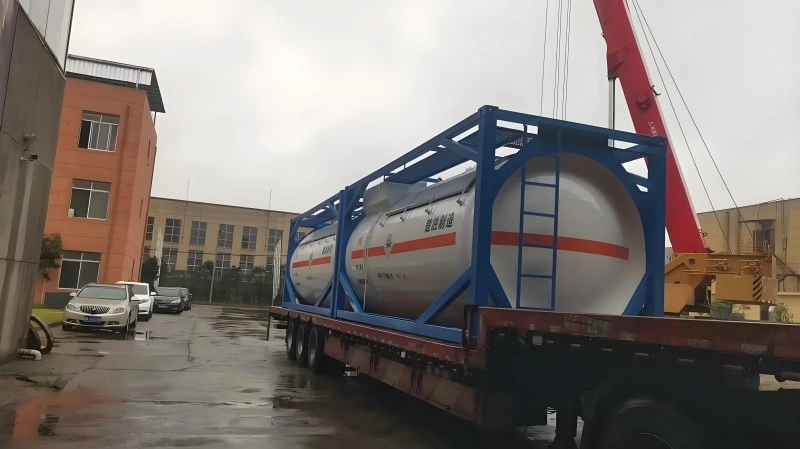
Why Hazardous Cargo Securing Requires Special Attention
The securing of hazardous cargo requires additional attention as a failure may result in damage, delay, safety incident, environmental damage, regulatory violation, or emergency complication resulting from a failure in the securing of ordinary cargo.
Failure to secure can have rapid repercussions. Some of the typical risks are as follows:
| Securing Failure | Possible Consequence |
| Cargo Shifting | Package impact, leakage, or structural damage |
| Poor Weight Distribution | Container instability or handling difficulty |
| Weak Lashing | Cargo movement during braking, lifting, or sea motion |
| Missing Blocking / Bracing | Sliding, tipping, or collision inside the container |
| Damaged Packaging | Spill, vapor release, or exposure risk |
| Hidden Labels | Delayed hazard identification during handling or emergency |
| Environmental Exposure | Corrosion, moisture damage, or packaging weakening |
For shippers using flat racks or open top containers, securing hazardous cargo safely the safe loading of hazardous goods should involve a review of cargo hazards, packaging condition, load distribution, lashing direction, blocking, bracing and emergency access prior to loading.
Flat Rack vs Open Top Containers for Hazardous Cargo
Flat rack and open top containers are each suitable for larger and/or odd-shaped hazardous cargo, but pose different problems when it comes to securing, and exposure requirements, must be matched with the shipment.
Heavy, wide, and unusual loads will require flat racks while open tops will work well for tall loads which are placed by a crane from high. Both are not completely enclosed on the side or top and will need strong protection measures as a result of exposure to weather.
| Container Type | Suitable Hazardous Cargo Scenario | Securing Consideration |
| Flat Rack | Heavy, wide, or irregular cargo that cannot fit inside a standard container | Requires strong lashing, blocking, bracing, and weather protection |
| Open Top Container | Tall cargo that can be loaded from above by crane | Requires vertical clearance planning, top protection, and stable internal securing |
| Flat Rack with Overwidth Cargo | Cargo exceeding standard container width | Needs route, port, and vessel acceptance review |
| Open Top with Liquid Containers | Cargo requiring upright handling and top loading | Needs orientation control, cushioning, and leak prevention |
| Flat Rack with Hazardous Equipment | Machinery containing oils, batteries, or regulated components | Requires cargo securing plus hazardous component protection |
Step 1: Assess Cargo Hazard, Weight, and Center of Gravity
The first step in an effective hazardous cargo securing plan is to do a cargo assessment, not specifying the lashing materials first.
Among them are hazard classification, overall weight, dimensions, the position of the centre of gravity, which plays an important role in lifting, sea transport and road transport.
| Cargo Factor | Why It Matters for Securing |
| Weight | Determines lashing strength and load distribution |
| Dimensions | Affects container choice and restraint design |
| Center of Gravity | Influences tipping risk during lifting and transport |
| Hazard Class | Determines safety, segregation, and emergency requirements |
| Packaging Type | Affects contact points, restraint methods, and protection needs |
| Lifting Points | Supports safe loading and unloading |
| Securing Points | Determines where restraint can be applied safely |
| Liquid Content | May create movement, pressure, or leakage risk |
| Weather Sensitivity | Affects protection method for exposed transport |
Step 2: Inspect Packaging and Cargo Condition Before Loading
Do not load hazardous material on a flat rack or open top until it has been determined that the packaging will resist the forces and restraints that are likely to occur.
Check drums, IBCs, cylinders, tanks, crates and machinery for weakness that may cause them to fail if they’re being lashed or during transportation.
| Inspection Point | What to Check Before Loading |
| Container Body | Cracks, dents, corrosion, swelling, deformation |
| Closures / Valves | Tightness, gasket condition, seal integrity |
| Pallet / Frame | Strength, stability, support points |
| Crate / Packaging | Structural condition and ability to withstand restraint |
| Labels / Markings | Visibility, readability, correct hazard communication |
| Leakage Signs | Stains, odor, residue, wet areas, pressure release |
| Protective Cover | Weather, moisture, or impact protection condition |
Step 3: Plan Load Distribution and Positioning
The stability of the container and its accessibility is ensured while the securing efficiency and voyage hazard minimisation is achieved by proper load planning.
Place loads to ensure balanced weight distribution, keep loads low when possible and keep access to loading points and labels available.
| Load Planning Factor | Practical Purpose |
| Weight Distribution | Prevents overstress and improves transport stability |
| Center of Gravity Control | Reduces tipping risk during lifting and movement |
| Floor Contact Area | Avoids damaging container floor or cargo base |
| Cargo Orientation | Helps maintain upright position and prevent leakage |
| Clearance Space | Supports safe loading, inspection, and unloading |
| Label Visibility | Helps handlers identify hazardous cargo quickly |
| Segregation Space | Keeps incompatible goods apart where needed |
Step 4: Use Lashing, Blocking, and Bracing Together
On an exposed flat deck or an open top, lashing will give some directional constraint, however, with blocking, dunnage, bracing and anti-slip materials, this system will provide a more secure solution for hazardous cargo.
Choose techniques to use because of the anticipated force from each direction: longitudinal, transverse, and vertical.
| Securing Method | Purpose | Common Mistake to Avoid |
| Direct Lashing | Holds cargo against movement in specific directions | Using weak or poorly angled straps |
| Cross Lashing | Controls side movement and improves stability | Crossing straps without protecting edges |
| Blocking | Prevents sliding at cargo base | Leaving gaps that allow movement |
| Bracing | Supports cargo against tipping or shifting | Using weak bracing material |
| Anti-Slip Mats | Increases friction under cargo | Treating them as a replacement for lashing |
| Dunnage | Fills voids and distributes pressure | Using unstable or incompatible materials |
| Edge Protection | Protects packaging and straps | Tightening straps directly over sharp edges |
Step 5: Protect Hazardous Cargo from Weather and Environmental Exposure
Cargo on flat racks and open top containers isn’t as protected from the elements, and environmental protection must be part of the securing plan.
Ensure adequate ventilation where necessary and avoid trapped humidity using tarpaulins, shrink wrap, moisture barriers and anti-corrosion.
| Environmental Risk | Possible Impact | Protection Method |
| Rain | Packaging weakening, label damage, leakage risk | Waterproof cover or moisture barrier |
| Salt Air | Corrosion of metal packaging or equipment | Anti-rust protection and suitable covering |
| Sunlight / Heat | Vapor pressure, instability, or packaging stress | Shade, reflective cover, or route planning |
| Humidity | Corrosion, carton weakening, label deterioration | Moisture control and protected labeling |
| Wind Exposure | Cover movement or cargo surface damage | Secure covers and inspect fastening |
| Temperature Change | Expansion, contraction, or chemical instability | Review cargo limits and use suitable protection |
Step 6: Keep Labels, Documents, and Emergency Information Accessible
The arrangements must not interfere with the critical communication of hazards. Labels, placards, or UN numbers should be kept visible to handlers, carriers, and emergency responders all the way to the destination.
| Information Type | Why It Must Stay Visible or Accessible |
| Hazard Label | Identifies the danger class during handling |
| UN Number | Helps carriers and responders identify the cargo |
| Orientation Arrows | Helps maintain upright handling for liquids |
| Placards | Communicate container-level hazard information |
| Overpack Mark | Shows that inner hazardous packages are consolidated |
| SDS/MSDS | Provides emergency and handling guidance |
| Emergency Contact | Supports faster response during incidents |
Step 7: Supervise Loading and Verify Securing Before Dispatch
The last stage of this is an on-site verification to verify that the securing plan was applied correctly and that no new problems have occurred during loading.
Complete walk around inspection, tension checks, detailed photographs, and all documentation is complete.
| Final Check | What to Confirm |
| Cargo Position | Matches loading plan and weight distribution |
| Lashing Condition | Straps, chains, or wires are suitable and undamaged |
| Lashing Direction | Restraint controls forward, backward, side, and vertical movement as needed |
| Blocking / Bracing | No gaps, weak materials, or unstable supports |
| Packaging Integrity | No deformation, leakage, or damage after securing |
| Label Visibility | Hazard labels and markings remain readable |
| Weather Protection | Covers are secure and do not create unsafe conditions |
| Documentation | Shipping and hazardous cargo documents are prepared |
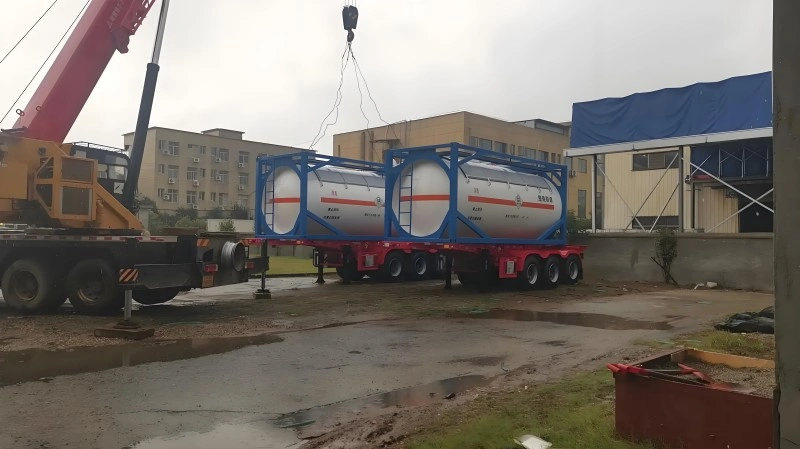
Common Mistakes When Securing Hazardous Cargo on Special Containers
You can end up with bad habits even if you’re an experienced team just treating hazardous cargo securing as any other loads, without being aware of the dangers involved.
Some of the most frequent mistakes involve only considering length and width or not performing center of gravity calculations, or not using enough blocking with lashing.
| Mistake | Possible Consequence |
| Choosing Container Only by Size | Poor securing fit or exposure risk |
| Ignoring Center of Gravity | Tipping risk during handling or transport |
| Weak Blocking / Bracing | Sliding or impact damage |
| Over-Tightened Lashings | Packaging deformation or leakage |
| Hidden Labels | Delayed hazard identification |
| No Weather Protection | Corrosion, label damage, or cargo deterioration |
| Poor Weight Distribution | Container instability or handling difficulty |
| No Final Inspection | Securing defects remain unnoticed |
Pre-Shipment Securing Checklist for Hazardous Cargo
A checklist will ensure that nothing is missed before the container is sent out.
| Securing Check Item | Confirmed |
| Hazard classification reviewed | Yes / No |
| SDS/MSDS checked for handling and storage risks | Yes / No |
| Flat rack or open top suitability confirmed | Yes / No |
| Cargo weight, dimensions, and center of gravity reviewed | Yes / No |
| Packaging and closures inspected | Yes / No |
| Load position and weight distribution planned | Yes / No |
| Lashing points and securing method confirmed | Yes / No |
| Blocking and bracing prepared | Yes / No |
| Anti-slip and edge protection used where needed | Yes / No |
| Weather and moisture protection planned | Yes / No |
| Labels and markings remain visible | Yes / No |
| Emergency information accessible | Yes / No |
| Final securing inspection completed | Yes / No |
| Photo records taken before dispatch | Yes / No |
| Carrier and terminal acceptance checked | Yes / No |
How Logistics Providers Support Hazardous Cargo Securing
There is a valuable role for experienced logistics suppliers in coordinating the technicalities for securing hazardous goods on flat racks and open top container. They can check the cargo specifications against the legal regulations and advise suitable containers for the cargo and recommend integrated lashing, blocking and bracing plans for the route and situation.
On-site supervision, label compliance, and photo documentation and carrier coordination are all benefits of professional teams that keep shippers from incurring damage, delivery rejections, and delays.
Conclusion — Safe Securing Requires More Than Strong Lashings
Lashing is not the only way to secure hazardous cargo on flat racks and open top containers. It requires a comprehensive strategy that involves a detailed cargo evaluation, judicious choice of containers, careful planning of the load, careful use of combined restraint techniques, and protection against the elements, as well as easy access to labels and verification at the end.
These four areas – weight distribution, centre of gravity, packaging condition, hazard specific requirements and environmental factors – can drastically reduce the incidence of shifting, leakage etc during ocean and multimodal transport. A well-managed pre-shipment inspection process is helpful to ensure safe operations and seamless compliance from origin to destination.