
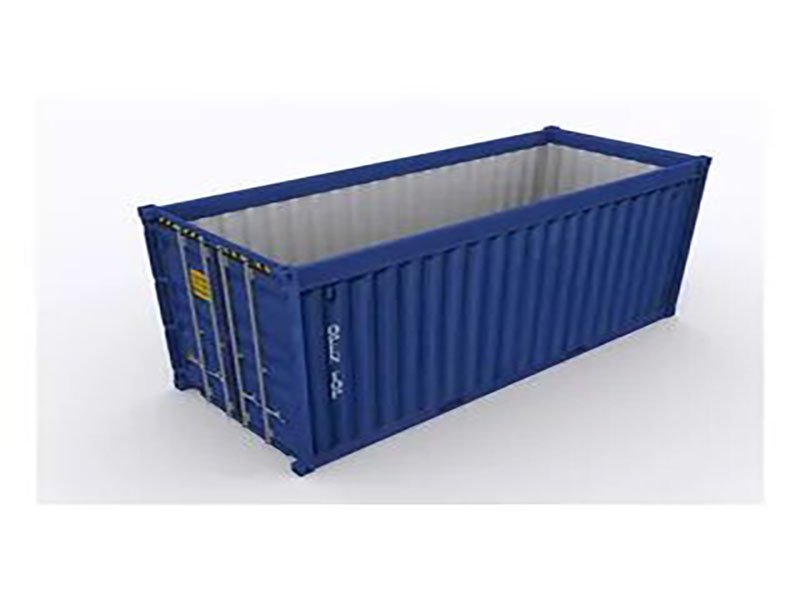
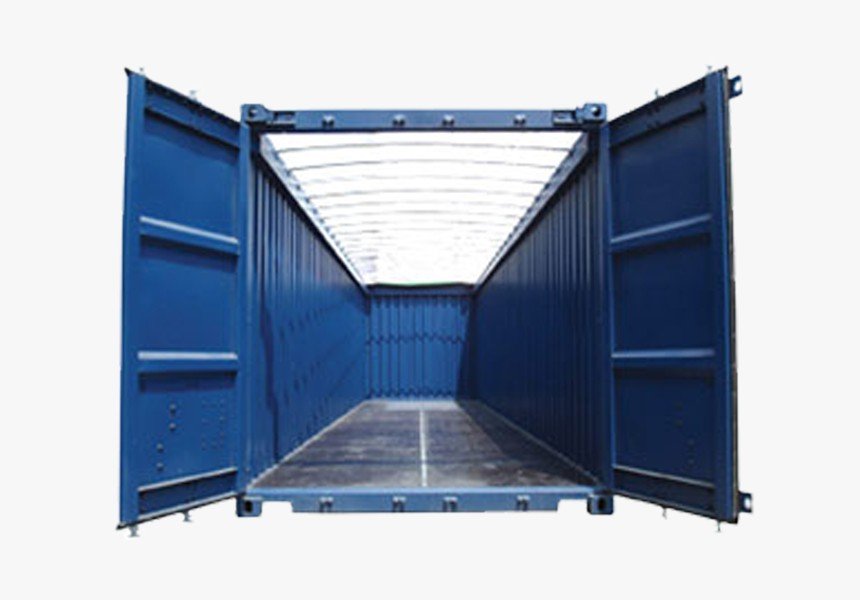
The containers are in the form of an open top created to carry over-height cargo, or that cargo that exceed the size of a standard dry container, which is generally over 2.59 meters (8’6″ internal height) tall. These models are typified with a removable tarpaulin or hard roof enabling the crane loading to be done on the top and not at the rear doors. Although these normally require additional handling processes, open top shipment and a declaration of OOG (out-of-gauge), the cost of open top shipping is usually considered exorbitantly expensive by many exporters.
Practically, the open top against the standard container cost analysis is not as easy. The cheaper appearance of standard containers might be overshadowed by their lower base rates and broader capacity, but when attempted to fit oversized cargo into it, this would cause numerous latent costs such as dismantling, special packaging, reassembly, and additional project time. The real cost analysis on open top shipping and the ordinary containers is based on the total logistics planning and not the base ocean freight.
A cost-effective open top container logistics is based on strategic planning, which considers direct freight costs as well as indirect operational costs prior to the selection of the containers per container.
Base Freight Rate Comparison
Open top container base ocean freight charge typically differs modestly with open top container base ocean freight charge, relating it to the comparable standard container base ocean freight charge, however the difference greatly depends on the trade lane, carrier, and markets.
The advantage of standard dry containers is that there is a lot of equipment on hand and can be stacked on top of ships to ensure that base rates remain competitive. Specialized open top units, such as in repositioning pools, are uncommon and typically have a small premium – usually 1030 per cent over base freight based on the route. During the peak seasons or trade imbalance, availability may narrow further and factor the open top container pricing even more.
The route restrictions are a factor as well: open tops are very likely to be restricted on some of the routes where stacking becomes important, and regular containers are almost always not.
| Cost Element | Standard Container | Open Top Container |
| Base freight | Lower | Slightly higher |
| Equipment availability | High | Moderate |
| Booking flexibility | High | Limited |
| Route restrictions | Minimal | May apply |
These disparities within the oversized cargo freight comparison underscore the reason why quotations should not in any way be standardized but by a route.
Additional Cost Components for Open Top Shipping
The predictable additional costs that are not involved in the standard containers are also present under open top shipping and are mainly related to the classification of OOG and the top loading.
These are expenses that are quoted straight and yet, they may not take long to accumulate especially when they are unexpected. Carriers use them because open tops decrease the use of vessels (they cannot be stacked on top when the cargo sticks out) and also demand special handling.
| Additional Cost | Why It Applies |
| OOG surcharge | Over-height classification |
| Crane handling | Top loading requirement |
| Securing materials | Heavy-duty lashing and tarpaulin |
| Port special handling | Safety compliance and equipment use |
In most incidences, the OOG shipping charges fluctuate between a couple of a hundred to significantly more than a thousand dollars per container depending on protrusion and carrier policy. Top lifts are characterized by crane charges at their ports of origin and location.
Hidden Costs in Standard Container Shipping
Although regular containers will not attract OOG fees, when over-height or awkward cargo must be packed into the normal container, it may end up being a massive hidden cost that can be easily neglected by most planners.
Recycling machinery to meet height specifications, such as, consumes labor time, skilled technicians are needed and there is the risk of getting damaged parts. Re-locating to destinations increases the project time and is costly in downtime- especially sensitive to time-sensitive industrial installations.
| Hidden Cost Factor | Financial Impact |
| Equipment dismantling | Labor expense |
| Reassembly delay | Project downtime |
| Extra packaging | Material cost |
| Higher damage risk | Repair cost or claims |
In comparison projects of over-size cargo freight that I have had an opportunity of reading, such indirect costs have, in some cases, outweighed the savings on base freight that they seem to represent, making the so-called cheaper standard choice appear to be the more expensive one, on overall basis.
Total Landed Cost Perspective
The assessment of container selection limited to ocean freight would not see the forest through the vicious. The total landed cost incorporates freight charges, handling costs, inland transportation costs, customs clearance costs, insurance and time value of money spent on the project delays.
Open top solutions have the capacity of minimizing total exposure through the elimination of disassembly risks, decreases at both ends of the labor, and minimizes critical path schedules. The insurance premiums can also vary whereby standard containers just pay more claims due to forced-fits damage and where open top loads are secured well then the risk profile is low.
It must never take an isolated rate sheet, but an entire project lifecycle as the basis of the decision.
When Open Top Shipping Is More Economical
There are a number of real life situations where open top shipping is more economical to make than when the cargo is of its strengths.
With minor over-height baggage (e.g. 10 to 30 cm protrusion), the OOG price increment can be quite small, yet the cost of putting them apart can be multiplied by time and labour saving considerably. Compact impactful machinery such as generators or press frames are advantageous because of intact transport reducing reassembly downtime which may cost thousands of dollars per day on site.
The tight delivery windows offer another advantage: open top can be loaded faster with the help of crane, and it offers overall project risk.
When Standard Containers May Be More Suitable
Regular containers are always the ideal option when the cargo fits comfortably in regard to height, no protrusion and no declaration of OOG.
Non-urgent, low-value shipments whose schedules are not fixed do not need special handling costs. Considering that crane accessibility at origin or destinations may be constrained or that cargo may be loaded in a standard form without causing problem then the lower base rate and greater supply of conventional units will be the obvious choice.
The matching of the containers choice should be exact to the cargo profile in order to prevent unnecessary cost.
Common Cost Evaluation Mistakes
Several teams fall into the trap of comparing the open top and standard container cost, and it distorts the budgets.
Parameters are most commonly used through the most common mistake of just comparing the base freight and ignoring either OOG premiums, crane fees or dismantling labor. Ignoring port-specific handling slurries or underestimating the effects of the delay of the project (e.g. a week of loss at $5,000-15, 000/day in production loss) makes the problem worse.
Leaving insurance differentials out, that is, a greater premium on risky forced-fit loads, is also distorting. Such omissions may result in a profit loss on a seemingly 1520% freight reduction.
Conclusion — Cost Depends on Total Logistics Engineering
Open top shipment is not necessarily significantly costly than normal containers. Even though it might involve more handling and OOG costs, labor, damage risk, and project delay could be minimized in moving over-height or heavy freight. To compare costs properly one has to compare the entire logistics system- not only base freight rates.
Early and meticulous planning is the key: calculate cargo volume correctly, simulate both propositions and factor direct charges and operational and period effects. Then only can finance teams and planners choose the really cost-effective route.