
How Oversized Cargo Is Loaded and Secured on Flat Rack Containers
The transportation of oversized items to flat rack containers and their loading and securing demand accurate planning, special lifting tools, and professional lashing methods to provide the safety of the transportation. One of the common types of containers used in the transportation of oversized freight, especially where the width or weight capacity of regular containers is far much less than the size, or weight, of the freight, is the flat rack container shipping solution.
Due to the open sides and the strengthened platform, flat rack containers can be loaded at the side or top with cranes or heavy lifting equipment because the equipment can be loaded on to a heavy reinforced platform.
There is a myth that some shippers think that larger items can be just loaded into a flat rack container without any special preparation, when the actual fact is that loading/securing of cargo has to be thoroughly engineered and planned in terms of its safety. The loading and securing process should be conducted properly in order to avoid cargo movement, structural damages, and transport risks when shipping goods internationally.
Understanding Flat Rack Container Structure
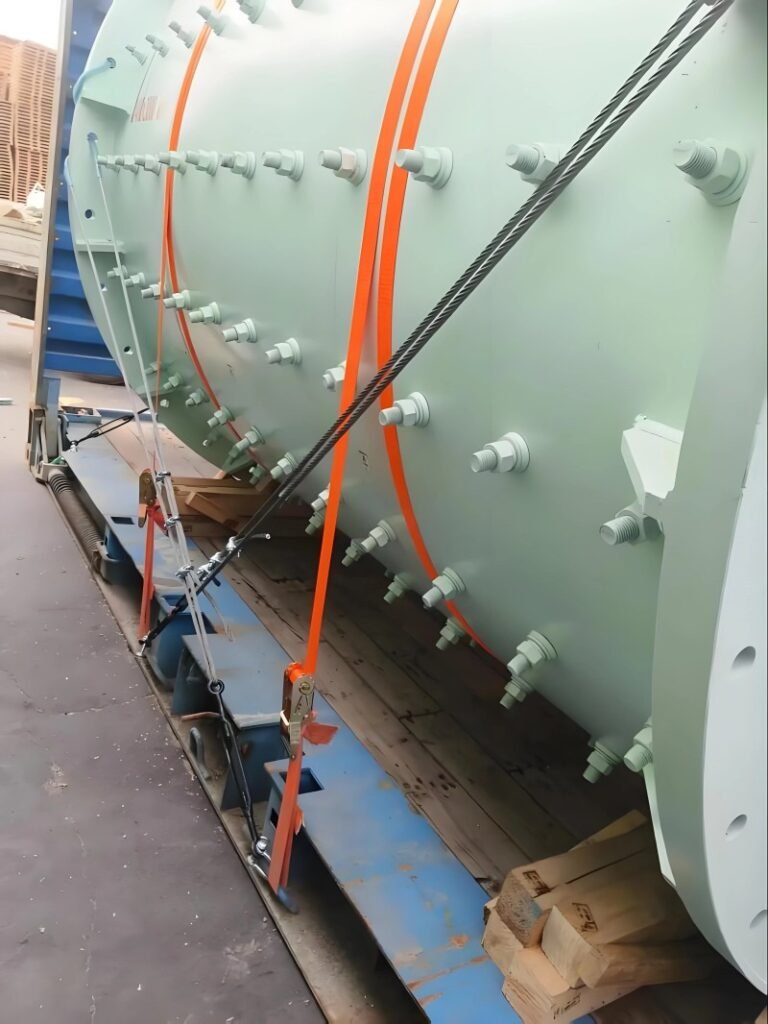
Flat rack containers have been developed to accommodate oversized cargo and therefore offer a strong platform that fits too wide, tall or heavy to enclosed containers. Choosing between Flat Rack vs Open Top depends on your specific cargo dimensions and loading requirements. They are also open-designed, which removes any side walls that allow them to have flexible loading constructions and be more convenient in use.
| Feature | Description |
| Platform base | Reinforced steel frame |
| Side walls | None |
| End walls | Fixed or collapsible |
| Lashing points | Multiple securing points |
This container design is flexible to large or heavy cargo so that it can be safely attached at any point and still at the same time remain stable. The strengthened base equally distributes the weight and this is important in the oversized cargo flat rack application whereby the weight may be more than the normal container limit.
Step 1: Cargo Positioning on the Flat Rack
Proper placement of cargo during flat rack container shipping is essential because it has a direct effect on the stability of the load under the motion force supplied by the load under sea transport. The cargo should be measured in terms of dimensions, weight, and shape before any lifting is done, to ascertain the best way to place the cargo on the platform.
Some of the major factors considered are center of gravity, weight distribution, structural contact points and clearance. On the example, matching the centre of gravity of the cargo with the middle of the container can avoid uneven force on the base.
| Positioning Factor | Importance |
| Center of gravity | Prevent tipping |
| Weight distribution | Maintain container balance |
| Contact surface | Avoid structural damage |
| Clearance | Ensure safe loading |
Poor transportation placement can cause instability of transport like cargo tilt movement as vessels move or road vibrations. Proficient handlers measure and 3D load simulations with the aim of checking positioning which sometimes involves equipment such as laser levels to help in precision.Companies that deal with the transportation of heavy equipment usually apply professional services of oversized cargo transportation to organize the loading, securing and planning of the transportation.
Step 2: Lifting and Loading Methods
To prevent the destruction of the cargo, and the container when loading the flat racks containers, it is necessary to select the right lifting and loading methods. The selection is based on the weight and shape of the cargo and on the equipment that is available in the loading location be it a port yard or some manufacturing plant.
Typical methods are lift operations with the use of cranes, and forklift operation used to place the lifts on the ground. To ensure even distributions of forces, safety measures are to be implemented which include utilizing certified slings and spreader beams.
| Loading Method | Typical Use |
| Crane lifting | Heavy machinery |
| Forklift loading | Smaller equipment |
| Roll-on loading | Wheeled vehicles |
| Heavy-lift cranes | Extremely heavy cargo |
The working of the lifts should have tough safety measures such as pre-lift checks of the equipment and proper communication between the team. Practically, the wind and the stability of the ground are considered to avoid accidents, and the cargo is lowered carefully on the platform without sudden blows that may negatively affect the integrity of the structure.
Step 3: Securing Oversized Cargo with Lashing Systems
The lashing systems are essential in ensuring that oversized cargo on the flat rack containers is secured because they resist the pull exerted by acceleration, deceleration, and wave induced movements during the transit. Our professional lashing techniques follow IMO standards and engineering calculations for maximum safety. Even the properly packed cargo can move without proper lashing that can cause hazards.
This is done by tying restraints on various lashing points on the container in accordance with the cargo profile. As an example, the tensioning of chains is done with the help of turnbuckles to provide the necessary holding force.
| Lashing Method | Purpose |
| Chain lashing | Secure heavy cargo |
| Steel wire lashing | Stabilize large structures |
| Tension belts | Prevent lateral movement |
| Wooden blocking | Stabilize cargo base |
The lashing procedures used in flat rack containers ensure the safety of cargo carried on the sea by distributing the restraining forces in the same proportion. The number and arrangement of lashings are based on calculations of the weight of cargo and anticipated g-forces, and may be based on an international standard such as that of the International Maritime Organization (IMO). In practice, lashings are used in several layers in order to be applied directly to cargo and then to the points of a container, to be more redundant.
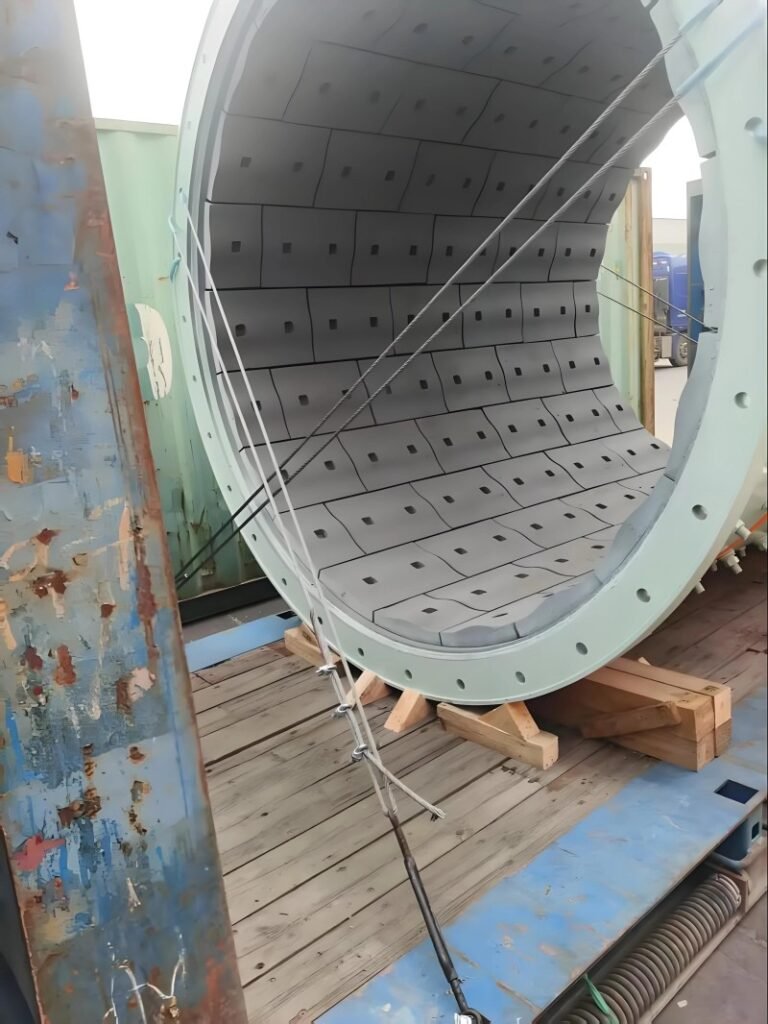
Types of Lashing Materials
Tensile strength and environmental resistance are used by handlers to choose the materials. Chains are highly durable when used in metal to metal contacts and synthetic belts are also flexible and do not scratch surfaces.
Tensioning Techniques
Lashings must be properly tensioned, otherwise they will not work; an over-tensioned lashing will distort cargo, and a under-tensioned one will allow the cargo to move. Instruments such as torque wrenches are used in the attainment of accurate levels.
Step 4: Additional Cargo Protection Methods
Large-sized cargo may need more protection than simple lashing as a preventive measure against environmental factors or mechanical forces in the course of handling. These actions are a part of securing process as they overcome such vulnerabilities as moisture ingress or vibration fatigue.
As an example, tarps are used after tying to keep out of the rain or sea salt in water.
| Protection Method | Purpose |
| Tarpaulin covers | Weather protection |
| Wooden frames | Structural protection |
| Anti-slip mats | Increase friction |
| Steel brackets | Reinforce securing points |
These safety procedures lessen the risk of cargo damages by providing shields against external factors. In operations of irregular shapes, custom frames have pressure points distributed, and the mats do not slide on the steel base. On-the-job implementation entails the application of layers of protection in line with sequencing or progression once lashing is done without interference of inspection.
Inspection and Safety Checks Before Transport
Shipment must also be subjected to thorough inspection and safety tests to ensure that all the loading and securing features are up to operation. This last stage identifies possible problems that may jeopardize safety when in transit.
Checks encompass all the visual and the measured verifications, which are recorded to be used as a means of control.
| Inspection Item | Purpose |
| Lashing tension | Ensure secure fastening |
| Cargo stability | Prevent movement |
| Container integrity | Verify structural safety |
| Documentation | Compliance verification |
Safety and regulatory compliance in transport are checked by making sure that the arrangement can withstand the forces calculated. In ports, certified inspection is done through checklists in accordance with codes such as the Cargo Securing Manual, and in most cases the high value shipments are subject to verification by third parties.
Common Challenges When Loading Oversized Cargo
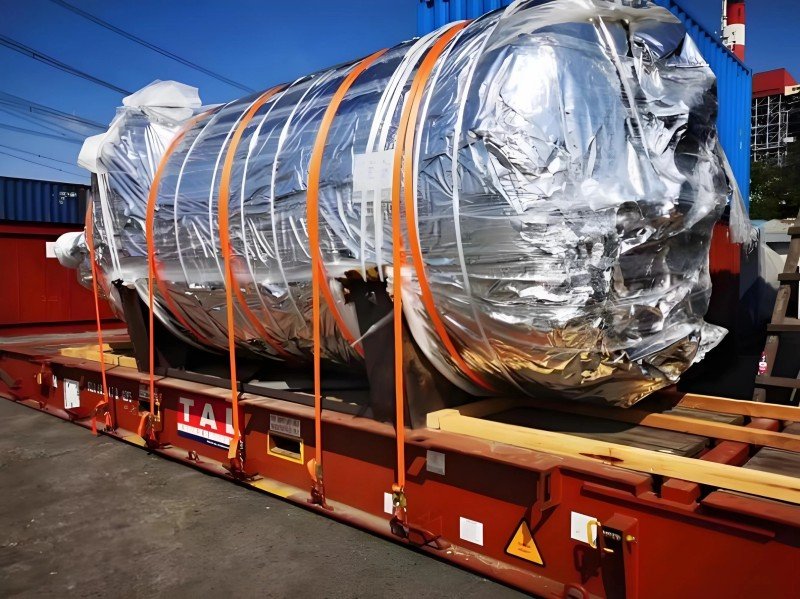
Handling oversized cargo is characterized by some typical problems that can only be solved through intervention of experienced personnel to sustain efficiency and safety. These problems are due to the nature of variability of such loads, which require adaptative measures.
As an example, irregular shapes make it harder to uniformly secure them, frequently making it necessary to devise a solution.
| Challenge | Explanation |
| Weight imbalance | Causes instability |
| Cargo irregular shape | Difficult securing |
| Limited loading space | Port handling constraints |
| Weather exposure | Cargo protection issues |
These issues are dealt with by professional teams in the field of logistics who pre-plan, like site survey and load modeling with simulation software. When weight is not on balance, shimming or counterweights are used and in weather exposure, the risks are reduced through timed operations.
Conclusion — Proper Loading and Securing Are Critical for Safe Transport
Huge cargo transportation demands the accuracy of loading and the use of professional securing mechanisms. The placement of the cargo, the use of appropriate lashing systems, and safety checks are important to make sure that oversized cargo is not unstable and secure during the international transportation. When such practices of operations are followed, handlers reduce risks and ensure that their operations are within the industry safety standards, and finally, they are able to deliver heavy or irregular loads reliably. See our large mold transport case study for a real-world example of successful flat rack loading and securing.