
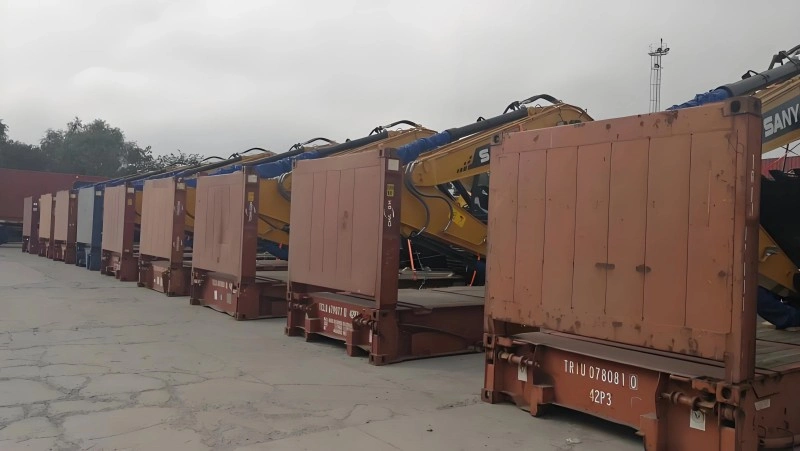
The flat rack containers have been popularly used in terms of shipping oversized cargo since the structure of the containers is open and thus, the cargo can be any length as long as it does not exceed the dimensions of the container. But due to the fact that flat racks do not have side walls, adequate cargo securing is of extreme importance. The adequate disposition of oversized cargo on flat rack containers is a critical element in terms of safety of transportation, stability of the cargo, and adherence to the regulations. Most of the companies assume that heavy cargo placed in a flat rack is automatically stabilized, although in actual sense, there is a possibility that cargo movement in the ocean transport can take place without having the right means of securing them. Cargo securing is effective in maintaining the stability of oversized cargo during loading, the ocean transport and unloading.
Through my years of management of the cargo loading of heavy machinery shipments I have personally experienced the levels of disaster avoided at the sea as a result of careful planning in securing the cargo in the flat racks. Based on the experience gained during project cargo logistics, this guide provides the steps to be followed in order to secure oversized cargo safely on the flat rack containers.
Why Proper Cargo Securing Is Critical for Oversized Shipments
In the absence of sufficient flat rack cargo securing, large shipments are at high risks of operation that may jeopardize the whole transport chain. The risks of inappropriate securing of cargo are minor changes to disastrous failures particularly in the stormy seas or during the handling in ports.
| Risk | Impact |
| Cargo shifting | Damage to equipment |
| Container instability | Transport safety risks |
| Structural stress | Damage to container frame |
| Regulatory violations | Shipping delays or penalties |
The reason behind these problems is that oversized cargo such as cranes, industrial presses are frequently of irregular shapes and high centres of gravity. Safety of transport under proper securing is achieved by distributing the forces and avoiding movement at acceleration, deceleration, or at movement about a wave. As an example, elaborate cargo securing plans are incorporated to provide safe handling of the logistics process in the professional oversize cargo transportation services. This is a method of reducing risks as well as adhering to international provisions such as those of the IMO Cargo Securing Manual.
Common Lashing Methods Used for Flat Rack Cargo
The choice of the most appropriate lashing technique is a core issue in the flat rack lashing techniques, since it directly determines the stability of the cargo under dynamic loads. According to my field experience, the decision will be based on the weight of cargo, its shape, and conditions under which it is going to be transported.
| Lashing Method | Purpose |
| Chain lashing | Heavy machinery securing |
| Wire rope lashing | High tension stability |
| Polyester straps | Lightweight cargo |
| Turnbuckles | Adjustable tension control |
Chain lashing, such as that, is best used to secure huge objects such as excavators, which offer great resistance to sideways forces. Wire ropes can be used to provide flexibility to oddly shaped loads, whereas polyester straps can be used to load any lighter component without damaging their surfaces. Various types of cargo demand specific securing mechanisms since heavy steel constructions may have to have several chain points, and delicate machinery may be better served with padlock strap systems. It is always recommended to compute lashing angles in order to achieve maximum holding force, and generally 30-60 degrees of lashing is considered optimum restraint.
Choosing the Right Lashing for Your Cargo
Practically, one should estimate the coefficient of friction and the contact area of the base of the cargo to use lashings. Use redundancy of high-value equipment by using a combination of methods, e.g. chains with additional straps.
Cargo Blocking and Bracing Techniques
The basis of stability in the flat rack container cargo security is cargo blocking which will inhibit initial shifts that can lead to bigger challenges. In my experience of loading docks, blocking proports to successful blocking all possible movements forward, backward and side to side.
| Blocking Method | Function |
| Wooden blocking | Prevent cargo movement |
| Steel brackets | Structural stabilization |
| Chocking | Wheel stabilization |
| Base support frames | Load distribution |
Wooden blocking which may be designed to cover the shape of the cargo absorbs shocks and keeps things in position. Permanent reusable equipment has steel brackets welded or bolted. Wheeled machinery is required to be chocked to prevent rolling and weight evenly distributed on the floor beams of the flat rack is through the use of base support frames. Blocking ensures that the cargo is not moved during transportation through the formation of friction barriers and structural locks and decreases the use of lashings only.
Implementing Blocking in Real Operations
It is important to use blocks at key contacts and this can be done by starting with a level base. In the case of irregular loads, fabricated braces needed to fill the gaps, and no gaps should be more than a few centimeters.
Load Distribution and Weight Balance
Adequacy of weight balancing is a non-negotiable aspect of ensuring the oversized cargo in flat rack containers since it has direct impact on integrity of the container and safety of handling. Imbalanced loads may cause the crane motion to tip over or overstrain vessel decks.
| Load Factor | Importance |
| Center of gravity | Stability during transport |
| Weight distribution | Prevent container deformation |
| Cargo positioning | Balanced lifting operations |
| Structural support | Reduce frame stress |
The longitudinal axis of the flat rack should be the center of gravity in order to reduce risks of rolling. Weight distribution can be wrong, and equipment can be damaged when excess pressure is placed on the vulnerable parts or when the twist-lock points of the container become bent. When placing, check with use scales or software to confirm balance, and use counterweights to correct where necessary.
Practical Tips for Weight Balancing
Plot the distribution of the mass of the cargo at the beginning of the planning. When using stacked items then the heaviest pieces should be placed at the bottom and always observe the rated capacity of the flat rack usually 20-40 tons to prevent heavy loading.
Weather Protection and Cargo Covering
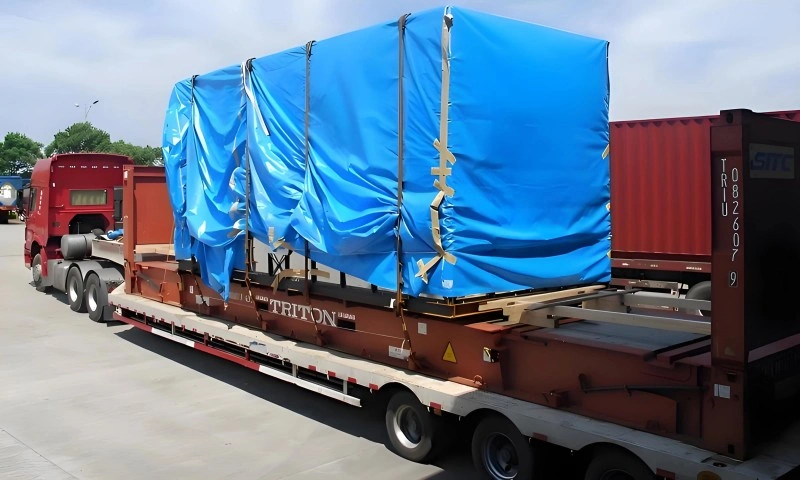
Big size cargo on flat racks is also highly exposed to the environmental factors, so weather protection is a major consideration in flat rack cargo securing methods. Saltwater spray or heavy precipitation exposure may increase corrosion or structural integrity.
| Protection Method | Purpose |
| Tarpaulin covering | Rain protection |
| Shrink wrapping | Dust and moisture protection |
| Waterproof sealing | Long-distance transport protection |
| Corrosion prevention coating | Marine environment protection |
Tarpaulin is covered with ropes or clips and is used to protect against rain, whereas shrink wrap fits under irregular forms to cover the entire area. Water resistant tapes strengthen seams and metal surfaces are covered with metals such as zinc primers. Cargo can be harmed during environmental exposure which enhances rust, mould or degeneration of materials, particularly during long journeys.
Best Practices for Covering
Check tears in junction covers prior to application and generously cover the edges. Use desiccants in wet routes to regulate the humidity.
Inspection and Safety Verification Before Shipping
The last protection in the practice of oversized lashing of cargo is pre-shipment checks, which identify problems that may arise on the way. I have also required checklists to make sure that nothing is ignored as a supervisor.
| Inspection Item | Purpose |
| Lashing tension check | Ensure cargo stability |
| Blocking integrity | Prevent cargo movement |
| Container frame inspection | Structural safety |
| Documentation verification | Compliance requirements |
The tension of lashing must be checked on gauges to a minimum requirement, such as 50 percent of breaking strength. Safe fastening by checking block, checking the flat rack, cracks or bends, and checking paperwork, including the securing of certificates. Transport to verify the setup is of real-world strength is required to prevent accidents, and regulatory compliance.
Conducting Thorough Inspections
Move around the loaded flat rack several times simulating motions. Record photos of document findings.
Industries That Commonly Use Flat Rack Cargo Securing
The use of flat rack containers is high in some areas because of the high number of non-standard products with bulk in supply chain. This renders expertise securing knowledge indispensable.
| Industry | Typical Cargo |
| Construction | Excavators and cranes |
| Renewable energy | Wind turbine components |
| Oil & Gas | Drilling equipment |
| Manufacturing | Industrial machinery |
| Infrastructure | Steel structures |
The industries often transport overweight cargo since the machinery does not fit the standard container sizes- imagine tubine blades that measure 50 meters or trucks of hundreds of tonnes. Flat rack fastening has been modified to meet these needs, whereby it is capable of being shipped globally safely.
Common Mistakes When Securing Oversized Cargo
Experienced teams are not immune to such pitfalls that can destroy flat rack cargo securing and they frequently happen because of hurried preparations or underestimating variables.
- Lacking lashing tension: Results in slack when vibrating so that shifts can occur.
- Wrong distribution of weight: creates imbalance and there will be chances of tip-overs during transportation.
- Poor blocking material: Dilapidated woods or improper location cause blockage to breakdown.
- Negligence in safeguarding the environment: Subjects cargo to the elements, which is likely to damage it.
- Absence of inspection prior to shipping: Oversights failures which are discovered at sea.
Such errors make the transportation process more risky as they enhance the impact of forces on unattached areas and may contribute to a loss of equipment, injuries, or instability of the vessel.
Conclusion — Proper Cargo Securing Ensures Safe Oversized Transport
Securing of the flats racks cargo is a very important aspect of the oversized logistics business. International transportation of oversized cargo is guaranteed by proper lashing, blocking, weight distribution, and inspection procedures. With the help of such systematic approaches, logistics teams will be able to reduce risks and ensure efficiency in operations when making difficult deliveries.