
Power transformers are some of the largest, most useful equipment in electrical infrastructure projects, often weighing tens to hundreds of tons with high profiles that are beyond the normal container heights. Their designs that are filled with oil, their delicate wound-up inner workings and their high center of gravity require a lot of caution way more than routine heavy cargo movements. It is due to this characteristic that open top containers become viable as they allow vertical loading by the crane thus eliminating the height limits of closed containers making it possible to access the vertical load path so that overhead clearance to place the item in a secure location can be achieved.
There is however a mythical belief about it: that, in order to ship it, all one has to do is take a container and a removable roof off. Practically, the open top container transportation of a transformer involves the structured evaluation of engineering, load stabilization planning, and planned lifting, rather than the haphazard process of choosing an open top container with a removable roofing.
The safety of the transport of transformers with the help of the containers of the open type depends not only upon the dimensional approximation, but also upon the correct weight distribution, elimination of vibration as well as the engineered lifting. All measures should be conducted to promote structural integrity, compliance, and risk prevention as a way of avoiding expensive damages or delays, based on initial on-site measurements and final OOG declaration.
Open top containers are applicable in effective transformer logistics which start with checking the dimensions, lifting feasibility, and assessment of center-of-gravity prior to booking confirmation.
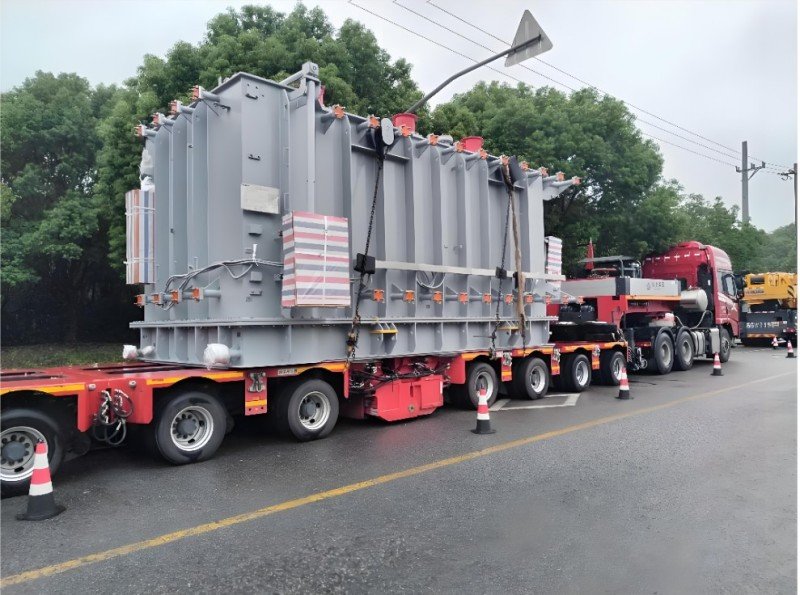
When Is an Open Top Container Suitable for Transformers?
Open top containers are used in cases where height is the main limitation when performing a transformation shipment, although the width and overall structural requirements meet the requirements of containers.
Power converters can be quite taller than the internal clearance of regular dry vans or high-cube containers, and top-loading is necessitated. The removable roof (or tarpaulin system on soft-top models) allows the crane operators to work the unit vertically, preventing the chance of tilting or scraping during side-loading. Lateral containment through sidewalls is natural and can help in lashing and stability as opposed to completely open flat racks.
But the height is not the only criterion of suitability. The width should remain within the limits of the sidewalls of the container (usually about 2.35 m internal), and the base footprint of the transformer should not cause it to distribute the weight unequally to the point of overburdening the floor strength ratings.
Here’s a quick reference:
| Transformer Condition | Open Top Suitable? | Reason |
| Slight over-height | Yes | Roof removable for vertical lift |
| Over-width core unit | No | Flat rack required |
| Compact high-weight unit | Yes | Sidewall containment improves restraint |
| Extremely oversized unit | Case-by-case | Structural evaluation required |
The open top container is an efficient solution in numerous power project applications: a transformer that has been fitted dimensionally but requires side restraint in the ocean due to the use of the open top container.
Weight Distribution and Center of Gravity Challenges
Misbalanced weight is one of the biggest factors, resulting in the most common damage in transformers shipment that may result in the container floor deformation, lashing failure, or cargo shifting.
Power transformers store mass in their windings and magnetic core resulting in a high center of gravity (COG) which increases the risk of tipping during the rolling on the vessel or road slopes. Oil-filled units introduce significant weight mass – up to 2030 percent of overall mass – and cause an upward shift of the COG when not completely emptied or even stabilized.
Inequal base pressure may surpass the ceiling to the floor of the containers (which generally means 4-7 tons per square meter), which may lead to irreversible buckling or point-loading collapses.
The following are some of the key engineering components:
- COG identification- Deters lateral instability through maintaining the load as central.
- Floor load check-up – This prevents structural damage by using a spreader plate or beam.
- Load spreading beams –Spread point pressure over a larger area.
- Symmetrical placement -Enhances stability in general and tension of the lashing.
The project teams should figure out the correct COG coordinates (which are usually supplied by the manufacturer) and apply shimming or cradles to maintain the unit at the level and at balance. The failure to do so may make an otherwise normal journey an insurance claim.
Crane Lifting and Handling Requirements
Crane lifting is the most dangerous stage in the transportation of transformers in the open top containers, one wrong calculation may lead to the damage of the impact or sling failure.
Certified lifting lug- Welded or bolted to the frame of a transformer, as specified by manufacturers, must support the entire load. The slings are attached to these points, preferably with a spreading beam to ensure that they are not vertical to allow friction of the compressive forces to act on the casing as minimal as possible.
The best sling angles are 30 o-60 o as they allow a balance in tension and do not pull too horizontally. It should be lowered at regulated speeds (preferably small less than 0.5 m/s at the point of contact) and the tag lines are under the control of spotters to ensure that there is no swing.
Common risks include:
- Striking of the sidewalls of containers or other cargo.
- Due to dynamic or uneven weight.
- Asymmetrical distribution of loading causing after loading alterations.
Transformer casings (which are usually made of thin steel) are also susceptible to denting or cracking due to even moderate contact. There is no compromise on pre-lift rehearsals and approved rigging plans.
Vibration and Shock Protection During Transit
Transformers have significant vibration and shock sensitivity, with repeated vibrations causing windings to move, insulations to be damaged, or core laminations to loosen, that is likely to go unnoticed until the commissioning stage.
Cargo in sea voyages is subjected to continuous oscillations of low frequency in the direction of sideways and upward motion and in road sections, a greater frequency additional shaking. Unbraced oil-filled units are also vulnerable to sloshing.
Prevention is aimed at the isolation of vibration and movement limitation:
| Risk | Preventive Action |
| Vibration stress | Cushioning materials (rubber pads, anti-vibration mounts) |
| Sudden impact | Controlled loading and soft blocking |
| Lateral shift | Cross-lashing with balanced tension |
| Oil leakage risk | Secure sealing and pre-shipment inspection |
Timber blocking and use of dunnage under the base and use of special anti-vibration pads absorb the energy. There should be even distribution of forces during lashing- when one side becomes too tight it will create stress concentration. In long ocean voyages, observation accelerometers are useful in acquiring information on the real transit situation.
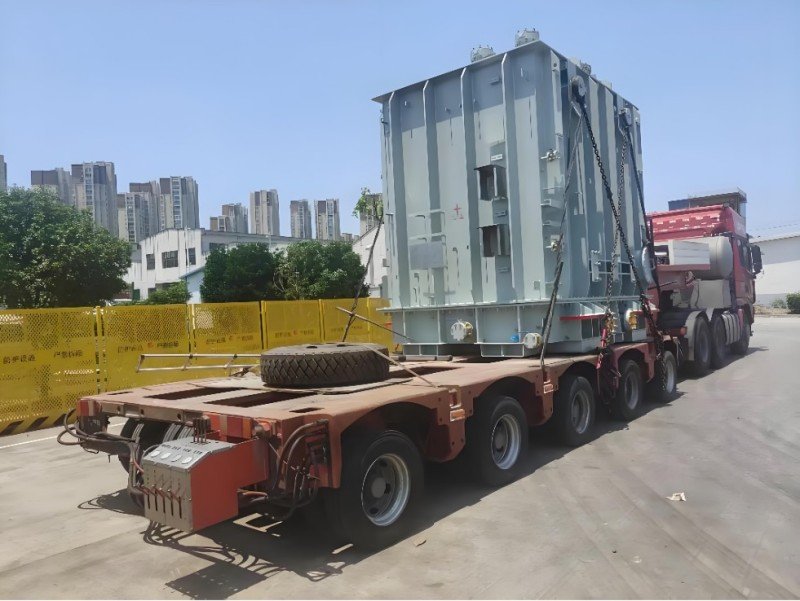
Environmental Protection Considerations
Open top containers are beneficial in loading but leave cargo exposed to weather when loading, stacking and during transit.
Tarpaulin sealing offers the most rudimentary sort of rain protection but extended exposure to saltwater spray or heavy wet weather will lead to the corrosion of unpainted surfaces or fittings. They are heavy, UV resistant tarps that have reinforced edges and tie-downs which are secure.
Further wrapping (a VCI (vapor corrosion inhibitor) film or desiccant pack) prevents moisture intrusion. In case of oil filled transformers, sealed bushings and valves should be checked as a precautionary measure to avoid ingression.
These issues are exacerbated by expected delays in port storage or inland trucking in humid or dusty areas. Pre shipment desiccant adding and post loading integrity tests are used to ensure that the interiors of the protective layers remain dry.
Regulatory and Documentation Requirements
OOG transportation related to shipment of transformers evokes certain compliance requirements to ensure the successful acceptance of carriers and a clearance of customs without any inconveniences.
The basis of the OOG declaration is accurate dimensional reporting (including overhangs and protrusions), and must be made long before slots on the vessel can be granted. Weight certificates confirm that gross mass is within container limits.
In case the type of oil makes the unit hazardous (e.g., according to IMDG of mineral oil), extra declarations are issued. The operations of heavy-lift operations might need prior coordination of the port restrictions.
Essential checklist:
- Measurement, OOG- Carrier approval.
- Weight certificate Structural safety.
- Documentation-Export- Customs compliance.
- Documentation insurance– Risk coverage.
Failure to do this may amount to the rejection of booking, demurrage, or origin/destination ports hold-ups.
Common Mistakes in Transformer Shipping
Even teams that are experienced fail to see details that cause avoidable problems.
The underestimation of base pressure may result in the deformation of the floors in case point loads are concentrated without proper spreading. The disregard of vibration sensitivity leads to internal damage which is manifested after some time. Poor lashing results in shift during rolling and improper angles on slings create overload or compress the casing.
The lack of the reinforcement of the container floor with the beam or plates can compromise the structure. Effects include small dents and total cargo rejection upon discharge, structural deformedness, insurance wrangles and project delays.
Conclusion — Transformer Transport Requires Structured Engineering
Open top containers when transporting transformers require high accuracy in engineering operations, controlled lift and unstructured distribution of weights. Detailed planning reduces the risk of vibration, structural stability as well as facilitates compliant OOG shipment of high-value electrical equipment.
Having each and every shipment as a technical project and with that, complete COG analysis, rigging plans, protection and documentation ensure that the outcomes obtained are reliable, sides of the asset are safeguarded as well as time scales. In logistics of the power infrastructure, where one second of downtime is very expensive, this is an engineering-first approach that is vital.