
The out-of-Gauge cargo of an open top shipping is not merely an oversized cargo, out-of-gauge cargo is a type of cargo that cannot fit inside the container or walls of the normal size and must be formally declared, undergo a technical evaluation, and accepted by the carrier. Practically however, OOG cargo involves any type of freight that exceeds the internal size of a conventional shipping container that requires specialized handling to ensure safety and compliance. In the case of open top containers, this may include excessively high cargo that enjoys the advantage of removable roof but may also include small limitless increases in length or width as long as they fit inside the structural constraints of the container.
One thing that should be understood at the outset is that OOG refers to cargo that is too large to fit inside a regular container larger in size than typical ones such as a 20-foot container 2.33 meters in height, 2.29 meters in width and varying in length such as a 20-foot container is 5.89 meters high and a 40-foot cargo is 12.03 meters in height. In open top shipping, OOG usually consists of over-height shipping and could also consist of length or minor width overage since the open design allows vertical protrusions but the side walls are not allowed to move. Every such dispatch must be formal declared and approved by the carriers to be able to determine structural soundness, stability of vessels and the viability of routes.
Before moving on to discuss a general myth, it is worthwhile to debunk the idea that many exporters have concerning the fact that so long as the cargo fits into an open top container, then it does not need to be declared as OOG. As a matter of fact, the declaration and assessment of any cargo should be considered when it is larger than the normal standards of dimensions to consider the regulations and operational risks.
Consideration and management of OOG Storage OOG cargo is a compliance and risk-management measure not an administrative step undertaken at will. Otherwise, it may result in delay of shipment, increment of expenses or even the rejection of cargo at the port. Having worked several years as a project logistics advisor and having direct experience in handling OOG deliveries in several industrial companies, I have witnessed how the failure to cover these aspects can quickly turn into re-work that proves expensive, or a safety incident.
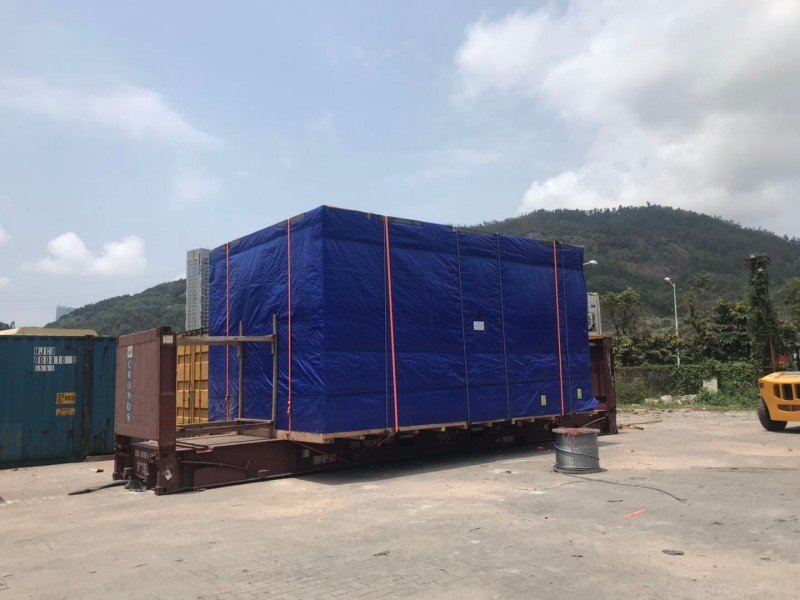
What Qualifies as Out-of-Gauge (OOG) Cargo?
Depending on a certain predetermined set of container dimensions comes the initial foundation of OOG status agreements and every change in these dimensions requires a close consideration. Commercial dry tank sizes are determined by fixed internal dimensions: the height (approximately 2.33 meters) is about 7 feet and 8 inches, the width (approximately 2.29 meters) is about 7 feet and 6 inches, and the lengths of 20-foot tanks (approximately 5.89 meters) are 19 feet and 4 inches, and lengths of 40-foot tanks (approximately 12.03 meters). Cargo is considered OOG in either direction when it surpasses these internal dimensions regardless of the size of the item or the additional features of the item such as a packing.
The difference between structural projection and internal over-dimension is extreme. Internal over-dimension happens when the object inside is simply too large to fit into the enclosed inside of the container, whereas structural projection is that which sticks out of the frame of the container once it has been loaded in, such as objects that are over-high in an open top yardage case. OOG may occur in a single dimension or it may happen in several dimensions making planning difficult.
To illustrate:
| OOG Type | Description | Typical Example |
| Over-height | Cargo exceeds internal height | Tall industrial machinery |
| Over-width | Cargo exceeds internal width | Wide steel components |
| Over-length | Cargo exceeds internal length | Long structural beams |
Personally, an over-height is the most frequently used in open top situations, although some other compromises such as over-height and over-length frequently have hybrid requirements. Always check against ISO (iso 668 containers) not to be misclassified.
Key Factors in OOG Qualification
In addition to the basic dimensions, other aspects such as the shape of the cargo and the distribution of its load determine the OOG status. Parts with irregular shape e.g. machinery, arms that stick out can cause OOG even with measurement of base conforming. The structural projections should not interfere with container integrity or stack in the vessel.
How OOG Applies Specifically in Open Top Shipping
The open top containers are more adaptable to OOG cargo as they can have their roof removed, but they have a limitation because of their side walls. The containers can be loaded vertically, and therefore are suitable to be used in over-height freight where the surplus is above the top rail. Non-standard cargo is frequently tested to excess, though, due to the rigid limits set by fixed sides (the width of which is generally 2.29 meters), which otherwise cannot allow much lateral cushioning before becoming damaged.
Practically, OOG in open top containers is devoted to the over-height cargo shipping as it is the cargo that can be loaded by the crane in an overhead mode. Minor over-length can be occasionally accommodated when the cargo fits inside the end of the door but over-width usually requires a conversion to flat rack containers with no side walls. Over-height projection This is calculated between the floor of the container and a height above the top of the rail and should be stated accurately.
The following will be a comparison of suitability:
| Condition | Open Top Suitable? | Notes |
| Slight over-height | Yes | Requires OOG declaration |
| Significant over-width | No | Flat rack required |
| Tall transformer | Often yes | Needs crane loading |
| Extremely wide equipment | No | Structural limitation |
In my consulting experience with the heavy equipment suppliers, I have observed that the suitability of open top depends on route factors, such as the type of vessel and port equipment. For complex OOG cargo transport using open top containers, dimensional verification and structural evaluation are performed before booking confirmation.
Distinctions from Other Container Types
Open tops are used in place of normal dry containers that limit the height of ingrained cargo but expose the cargo to wind issues when it is protruding. They also provide more weather protection of the sensitive items than flat racks but are less flexible in terms of width.
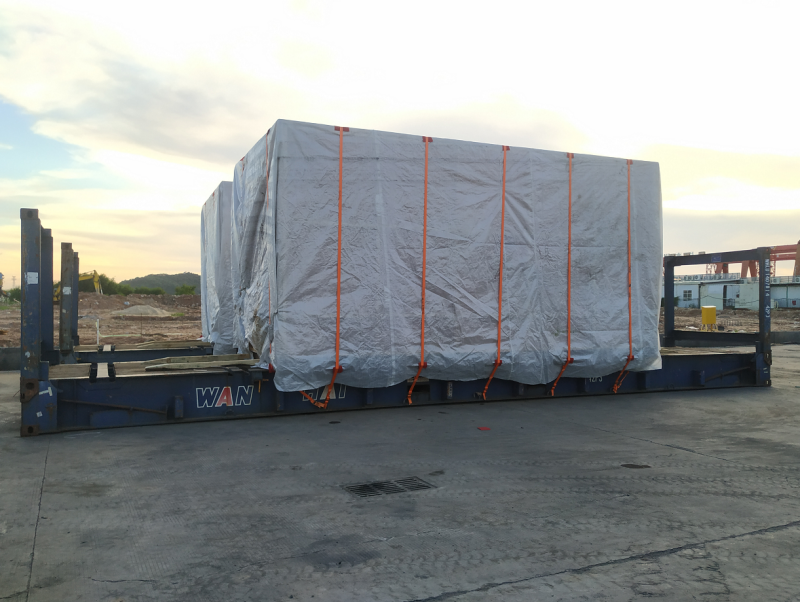
What Qualifies as Out-of-Gauge (OOG) Cargo?
Depending on a certain predetermined set of container dimensions comes the initial foundation of OOG status agreements and every change in these dimensions requires a close consideration. Commercial dry tank sizes are determined by fixed internal dimensions: the height (approximately 2.33 meters) is about 7 feet and 8 inches, the width (approximately 2.29 meters) is about 7 feet and 6 inches, and the lengths of 20-foot tanks (approximately 5.89 meters) are 19 feet and 4 inches, and lengths of 40-foot tanks (approximately 12.03 meters). Cargo is considered OOG in either direction when it surpasses these internal dimensions regardless of the size of the item or the additional features of the item such as a packing.
The difference between structural projection and internal over-dimension is extreme. Internal over-dimension happens when the object inside is simply too large to fit into the enclosed inside of the container, whereas structural projection is that which sticks out of the frame of the container once it has been loaded in, such as objects that are over-high in an open top yardage case. OOG may occur in a single dimension or it may happen in several dimensions making planning difficult.
To illustrate:
| OOG Type | Description | Typical Example |
| Over-height | Cargo exceeds internal height | Tall industrial machinery |
| Over-width | Cargo exceeds internal width | Wide steel components |
| Over-length | Cargo exceeds internal length | Long structural beams |
Personally, an over-height is the most frequently used in open top situations, although some other compromises such as over-height and over-length frequently have hybrid requirements. Always check against ISO (iso 668 containers) not to be misclassified.
Key Factors in OOG Qualification
In addition to the basic dimensions, other aspects such as the shape of the cargo and the distribution of its load determine the OOG status. Parts with irregular shape e.g. machinery, arms that stick out can cause OOG even with measurement of base conforming. The structural projections should not interfere with container integrity or stack in the vessel.
How OOG Applies Specifically in Open Top Shipping
The open top containers are more adaptable to OOG cargo as they can have their roof removed, but they have a limitation because of their side walls. The containers can be loaded vertically, and therefore are suitable to be used in over-height freight where the surplus is above the top rail. Non-standard cargo is frequently tested to excess, though, due to the rigid limits set by fixed sides (the width of which is generally 2.29 meters), which otherwise cannot allow much lateral cushioning before becoming damaged.
Practically, OOG in open top containers is devoted to the over-height cargo shipping as it is the cargo that can be loaded by the crane in an overhead mode. Minor over-length can be occasionally accommodated when the cargo fits inside the end of the door but over-width usually requires a conversion to flat rack containers with no side walls. Over-height projection This is calculated between the floor of the container and a height above the top of the rail and should be stated accurately.
The following will be a comparison of suitability:
| Condition | Open Top Suitable? | Notes |
| Slight over-height | Yes | Requires OOG declaration |
| Significant over-width | No | Flat rack required |
| Tall transformer | Often yes | Needs crane loading |
| Extremely wide equipment | No | Structural limitation |
In my consulting experience with the heavy equipment suppliers, I have observed that the suitability of open top depends on route factors, such as the type of vessel and port equipment. For complex OOG cargo transport using open top containers, dimensional verification and structural evaluation are performed before booking confirmation.
Distinctions from Other Container Types
Open tops are used in place of normal dry containers that limit the height of ingrained cargo but expose the cargo to wind issues when it is protruding. They also provide more weather protection of the sensitive items than flat racks but are less flexible in terms of width.