
The average internal height of the open top is about 2.35 meters though the door clearance is again smaller at about 2.28 meters restricting the rear-loading of taller cargo. Remaximum height is not an absolute number, but it is subject to a carrier grant out-of-gauge (OOG) extensions, which takes into account such issues as vessel stacking, route considerations. A lot of exporters believe that cargo that can fit into the internal height of the container, already is acceptable. As a matter of fact, lifting procedure, tarpaulin design, and port ordinances should be considered as well.
Open top container dimensions is not about remembering unit numbers, it is about the relationship existing between cargo height, lifting technique, and route constraints and coming up with safe and legal shipment allowable.
It is important that prior to the reservation of an open top container, dimensional verification and OOG height calculation should be done correctly because incorrect estimation can lead to shipment being rejected or costly delays.
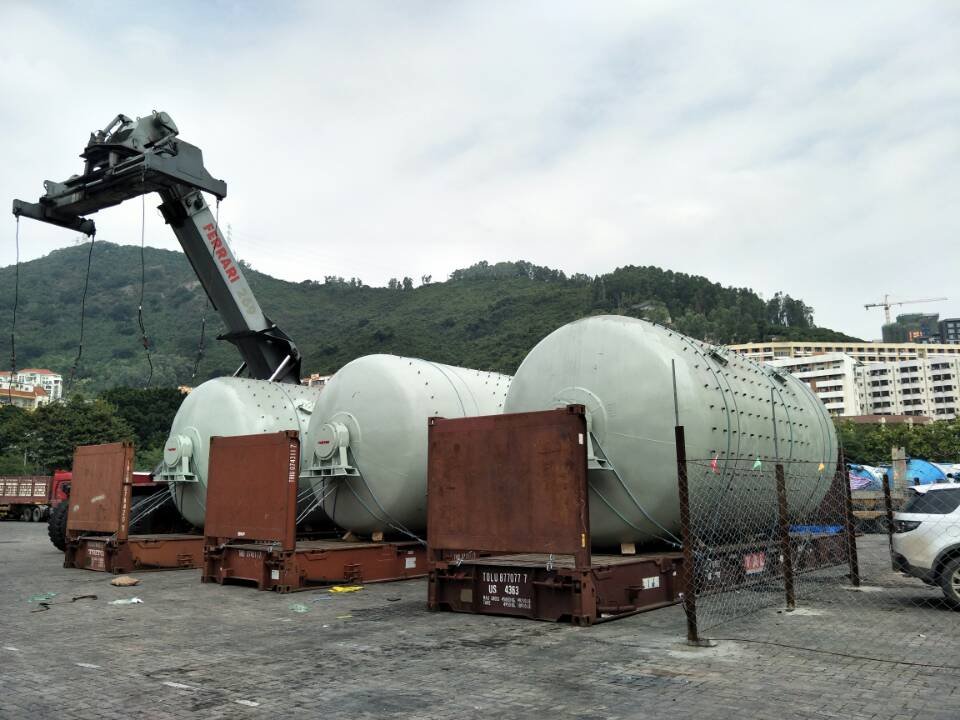
Standard Open Top Container Dimensions
Exact awareness of the LEP dimensions of standard open top containers is the root cause of any OOG planning since it is the size that varies by even a minor percentage that can influence the cargo compatibility.
Open top containers are available in two main sizes, namely, 20-foot containers and 40-foot containers which are flexible in the way they handle the oversized loads by either using top or side access. They have internal height which is usually approximately 2.35 meters and they can be loaded using crane allowing cargo to surpass the normal enclosed container (when fully loaded). The internal length is around 5.9 meters in 20 feet unit and 12.0 meters in a 40 feet unit, and internal width is maintained in 2.35 meters in both 20-foot and 40-foot unit. The height of door opening is also reduced slightly at 2.28 meters and width at approximately 2.34 meters which requires special consideration in case of end-loading.
The roof is made up of removable bow type roof structure and a tarpaulin grid, that can be completely removed to allow top loading. This design offers the essence of advantage when it comes to over-height cargo transportation; nonetheless, the design also brings about factors of stability and weather resistance which would have to be factored during transport planning.
Precision made measurements may not be such that an installation at the both system of the manufacturer and carrier will be exactly the same and therefore this is why when quoting one should always look at the data sheet of the particular equipment.
| Specification | 20’ Open Top | 40’ Open Top |
| Internal Length | Approx. 5.9 m | Approx. 12.0 m |
| Internal Width | Approx. 2.35 m | Approx. 2.35 m |
| Internal Height | Approx. 2.35 m | Approx. 2.35 m |
| Door Height | Approx. 2.28 m | Approx. 2.28 m |
| Roof Type | Removable tarpaulin | Removable tarpaulin |
Internal Height vs Door Clearance: Why It Matters
The difference between internal height and door clearance is also a key factor to determine how a shipment is loaded because failing to take it into account may make the shipment impossible at the very end.
With open top containers, the internal height is about 2.35 meters which is the height to which the roof bows can be pulled off but the door clearance is more limiting at just 2.28 meters as the cargo enters through the rear. This implies that tall items might not be able to move through the doors despite their size fitting in the doorways vertically without using a crane that has to be used to load them at the top. For shipments involving complex height calculations, open top container shipping solutions for oversized cargo typically include dimensional verification, OOG declaration planning, and carrier approval coordination.
Top loading completely removes the height limitation of the door, giving the internal space the full usability however it demands appropriate lifting points on the cargo and availability of appropriate equipment at the origin. When installed, roof bows cause even an additional decrease on effective height by a few centimeters, hence their removal is a routine procedure with OOG applications.
| Height Reference | Limitation |
| Door Opening Height | Restricts rear loading |
| Internal Height | Applies after roof removal |
| Over-Height (OOG) | Requires declaration and approval |
This analogy highlights the importance of engineering teams to incorporate early loading checks because conversion to top loading can have effects on timelines and the cost because of the availability of cranes and site constraints.
How Maximum OOG Height Is Calculated
The calculation of maximum OOG height requires being systematic so that a combination of the specs of containers and the factors associated with operations and regulations are combined to prevent non-compliance.
This starts with the bottom external height of open top container which is normally approximately 2.59 meters including the frame. Measurement of cargo height using the floor and the tallest edge is then taken and any length that passes above the top rail is considered as over-height. The most important equation to evaluate feasibility is: Maximum Height=Container Base Height + Cargo Projection Above Top Rail. This is not however absolute, deliverers consider declarations, but stacking limits may limit between 0.91 and 1.98 meters over-height, depending on the route.
The standards used in over-height measurement must be well documented including diagrams of the position of the cargo in reference to the container rails. Projections over 0.5 meters are also considered to be of critical wind resistance, which determines the lashing requirements and the stability of the vessel. Clearances on port crane, which may be only 45 meters in total height, and route bridge clearances are also restrictive of approvals, which ports such as Rotterdam or Singapore will examine very closely.
This carrier approval procedure entails the filing of elaborate OOG forms, in a few cases including 3D-models, and may require 5-10 days. Inaccuracies in this case may be due to the neglect of dynamic aspects such as settling of cargo during transit which might change effective height.
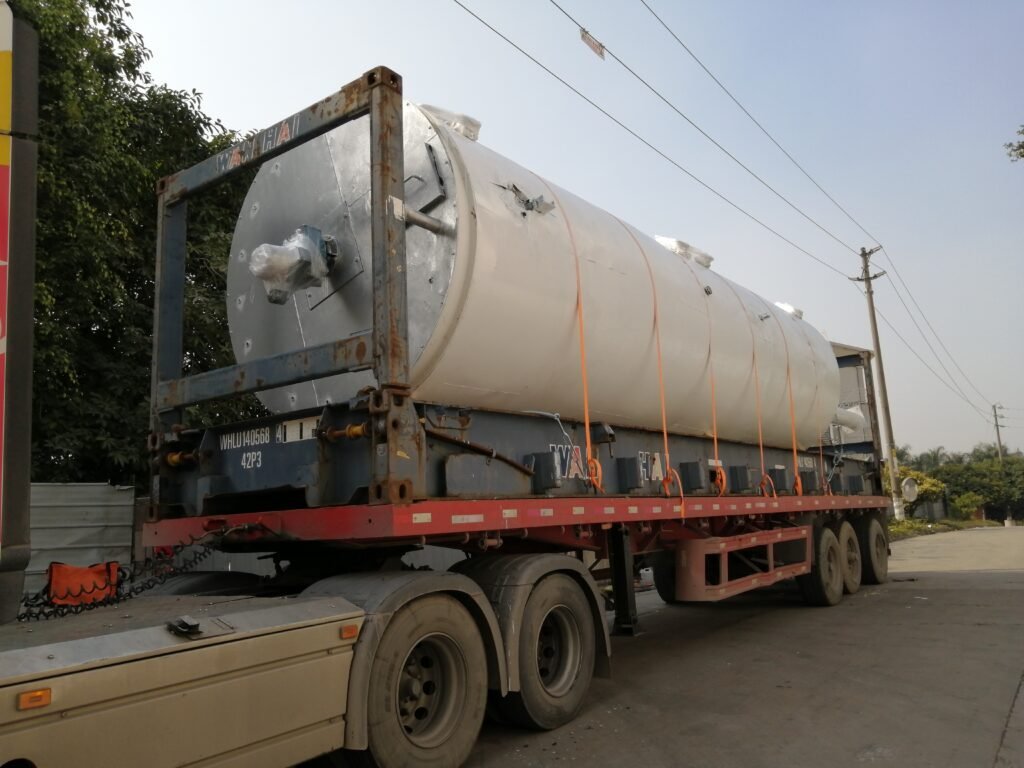
When Height Exceeds Open Top Limits
The surpassing of open top height limits moves the balance towards other equipment, the structural integrity and the cost factor required to be taken into consideration.
Suppliers may continue to use open top containers on OOG approval even when the cargo is a little higher than the internal height though still controllable with moderate over-height, though projections must be secured accordingly. But in cases where loads are much taller, that is, above 1 meter above the rails, then flat rack containers are needed since they do not have a fixed roof, and gives complete access upwards.
For very tall and heavy objects, there might be need to use special solutions such as mafi trailers or modular transport to redistribute the weight and use low center of gravity. High over-height creates structural risks, including distortion of the frame when under-load or exposure to greater risk in the wind shear, which means higher surcharges will be imposed on reinforced lashing and insurance.
| Cargo Height Condition | Recommended Option | Reason |
| Slightly above internal height | Open Top | OOG allowed |
| Significantly over-height | Flat Rack | No roof restriction |
| Extremely tall & heavy | Project cargo solution | Structural risk |
The difference between open top and flat rack is revealed in this height comparison that early evaluation is required to reduce surcharges, which in extreme cases are added as 20-50% to base rates.
Weight Distribution and Center of Gravity Considerations
The correct distribution of weight regarding height is the basis of avoiding transit hazards where tall cargo increases the problem of stability.
During handling or in the rough seas, tall cargo in open top containers increases the center of gravity thus increasing the likelihood of the unit shedding light. This amplifies when weight is not evenly distributed where stress is applied to floor beams that have a load capacity of up to 30-40 tons depending on the container. The angles to which the load is lashed should consider the height with higher loads on taller turnbuckles or chains which may be chains with steeper angles.
Corner castings have more strain on the over-height projections that may result in fatigue unless followed through. When the height is not planned properly, the crane lifts or the turning of the truck will have the risk of going over since we have encountered instances of unbalanced machines in the middle of the voyage. The engineering tests usually involve both the existence checks and ardentty checks representing both bordering and dynamic charge of allotted weight to bring the screenings up to ISO rules, and it is important to remember that the height is not the matter, but the interaction of it with the distribution of mass.
Common Dimension Miscalculations and Their Consequences
The errors in miscalculating the dimensions of the open top containers are often caused by the omission of some details and this leads to large scale failures in the operations.
Common errors include:
- The neglect of packaging size including extra crates or other wrapping papers that cause extra centimetres.
- Flory can forget that slings or hooks can temporarily raise the height of the overall loading.
- Taking measures without taking into account pallet or skid base which may lift cargo above the door clearance.
- Mistakes in the understanding of internal and external specifications, and conclusions regarding the possibility of using the available space that are not based on reality.
The effect of these errors is usually a carrier stage booking rejection where OOG declarations are rejected because of missing data. The repercussions go to a payment in port storage holding until the alterations are made, repacking/unrepacking costs amounting to thousands of dollars, and schedule changes that force a complete project to come to a halt. In my example of the heavy machinery deliveries, those mistakes have resulted in the cut-offs of the vessels and the rerouting of the goods and increased costs by 15-30%.
Conclusion — Height Planning Is an Engineering Responsibility
The dimensions of open top containers are flexible enough to accommodate over height cargo, although this flexibility is limited by engineering assessment, carrier policy and route limitations. Safe and compliant OOG transport is based on accurate measurement and early planning. With a focus on accurate verification, logistics teams will be able to reduce such factors as the structural collapse or regulatory fines and make sure that height limits are observed within the scope of a more general compliance structure. The method does not only eliminate delays, but also ensures integrity of the supply chain.ly chain.