
In massive mould movement, the achievement is not based on the arrival but continuous production following the installation. Precisely this project worked out: a 50-ton injection mold was moved more than 1,200 miles without any hitch in its production in the destination plant. At the very beginning, the risk was defined as the production downtime since the mold was paramount to high-volume production. The mold could be received on time, could withstand all the post-transportal tests, and could be recommissioned without delay, which enabled the operations to be stopped without delay.
Numerous transport case studies consider the success of delivery as opposed to impact of operation and fail to consider the implications of transit decisions on tooling accuracy and manufacturing continuity. In high-value relocation of moulds, the actual definition of success in transport is to avoid production breakdowns. As this case shows, careful planning, starting with risk assessment, down to the choice of equipment, had a direct effect on the outcome. The project ensured that operational readiness was put ahead of logistics and there were unnecessary delays that would be caused by misalignment or damage during transit.
Based on project notes and post-execution analysis, the key phases, decisions and trade-offs involved are broken down in the following review. It points out the role of early interventions in the large industrial mold transportation process as a way of reducing the risks that could cause longer downtime.
Project Background and Transport Constraints
To move large-scale industrial molds, one will need to have a thorough knowledge of the specifications of the asset, as well as the production ecosystem sustained by the animal. In this case, the item to be molded was a 50 ton precision injection molding machine that would be used in the production of automotive components, and it had dimensions of approximately 12 feet long, 8 feet wide and 6 feet tall. Its function was at the center of a just-in-time production line where it manufactured high-precision plastic housings that had a rate of greater than 500 units per hour. Any failure to recommission in time might be carried over into supply chain failures, which would cost the facility tens of thousands of dollars per day in lost production.
Depending on seasonal demand peaks in the automotive sector, the relocation was planned quite sensitively in the production schedule, with only a very limited time time frame between production cycles. Downtime was not acceptable not only due to financial factors but they also contributed to the threat of contractual penalties with the downstream suppliers. Multi-modal transport which uses trucking overland and possibly rail routes over mixed terrains was a constraint that added some variables such as road permits, weight limits and weather contingencies. The source plant was in the Midwest, and the destination was on the West Coast, to which interstate regulations and time zone made the situation even more complex.
Key Constraints in Detail
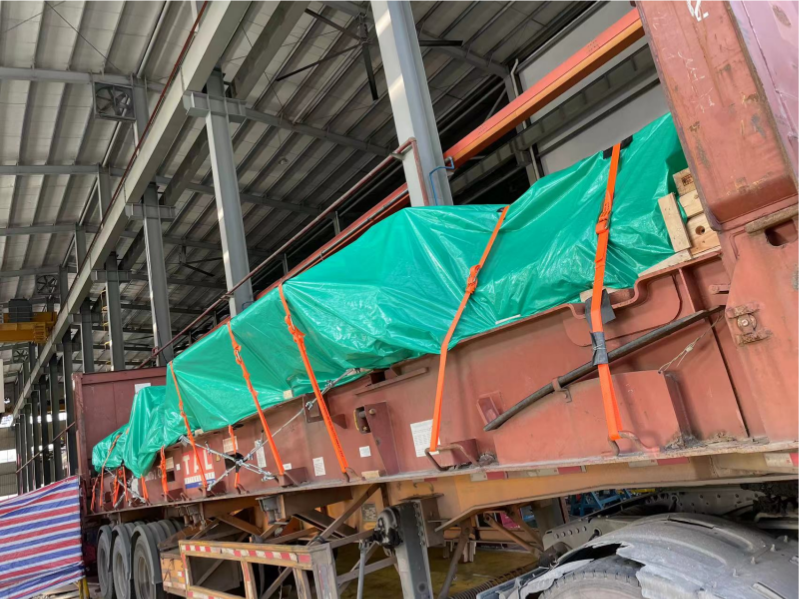
- Weight and Dimensional Constrained: The mass of the mold was too large to fit in the normal container capacity and therefore special flatbed trailers and routing had to be used to prevent low-clearance bridges or roads with weight restrictions.
- Timeline Pressures: The whole move had to be within a time frame of 72 hours to fit in with factory closing, and hence the necessity of the buffer-free execution.
- Environmental Factors: Material integrity may be impacted by temperature variations during transportation, as the mold is composed of steel and has heating elements inside of it.
These factors highlighted the necessity of the transport approach that would not consider the mold as a dead cargo but rather a living production resource.
Risk Identification Before Transport Execution
The risk identification during the transportation of mold should start with the extensive audit of the whole process which can predict the failures before they happen. The main structural risks of this 50-ton mold were caused by uneven mass distribution and complicated geometry with protruding cooling channels and ejector systems that might move during the load. Any deformity in the handling process may need to be recalibrated and this takes days off.
The other important consideration was Vibration sensitivity because a precision mould such as this one requires tolerances less than 0.01 mm; the slightest shock could cause misalignment of cavities and they would require rework. Possibility of being exposed to humidity or ingressing dust was noted as environmental risks whereas timing risks were caused by the unpredictability of delays such as traffic or customs hold but this was domestic where border-like checkpoints on oversized loads were made.
Breaking Down the Risks
- Structural Vulnerabilities: Finite element analysis showed that there were stress points at the base of the mold, which was used to decide on support cradles.
- Dynamic Exposures: It was demonstrated by simulation that in some highways vibrations on the road might exceed the safe limits and force route alternatives.
- Operational Interdependencies: Timeslags in one stage may squeeze the installation time, increasing the risks of errors during the process of recommissioning.
In order to further explore these issues, you can look at typical large mold transportation risks and preventive measures that were applied here.
Preparation and Protection Strategy
The choices to make during preparation in large mold movement can easily be the difference between a regular delivery and an event that will disrupt production. The state of the mold was thoroughly inspected before the loading and the state of the mold clearly recorded by photographic evidence of all surfaces and dimensional measurements in order to have a benchmark against which the condition of the mould can be checked on receipt by the recipient. This action was the only way of reducing conflicts on possible damage caused by transit.
The acquisition of measures was in the form of custom wooden cradles that were attached to the frame of the mold with the use of vacuum-sealed wraps to avoid the penetration of moisture. Shock absorbing pads covering vital points of contact were provided to prevent stability during acceleration and deceleration. These decisions were given the first priority as past experience of other relocations indicated that those who were unprepared presented 60 percent misalignment factors when arriving at their destination and this would directly affect the speed of recommissioning.
Strategic Preparation Elements
- Documentation Protocols: Laser scanning offered a 3D model on which virtual load planning could be done avoiding on-site leveling.
- Material Safeguard: Preemptive use of anti-corrosion coating was done, which dealt with risks of environmental exposure.
- Team Coordination: Cross-functional briefings brought handlers on board with the handling protocols to reduce the human error.
To learn more about organized methods, see best practices in mold transport preparation planning.
Equipment Selection and Load Stability Control
The decision to choose appropriate equipment when transporting oversized molds depends on the capabilities of the vehicles to handle the physics of the load and not the available ones to default. In this case, an ultra-low flatbed trailer having hydraulic suspension was selected instead of ordinary rigs since it was able to experience lower center of gravity thereby minimizing the chances of rolling over during slopes. This was based on load simulations which estimated stability limits at different speeds and turns.
Lashing Systems were used to handle load behavior with evenly distributed forces to ensure no shifting took place. Stability control was based on the minimization of the handling frequency – the load at the origin was loaded once, and the unloading at the destination, no intermediate changes between loads were permitted. There were trade-offs such as increased costs on specialized trailers against a possible reduction in cost by avoiding downtimes, a calculation that was more towards the former.
Equipment and Stability Tactics
- Specifications of the Trailer: Air-ride suspension smoothed roughness of the road and kept the trailer straight.
- Lashing Arrangements: The chains and straps were rated 150 percent higher than the necessary strength and tension monitors were used to check the tension in real-time.
- Gravity Analysis: It was calculated before transportation to maintain the position of the center of mass in safe levels during transportation.
Insights on center of gravity control for large molds were instrumental in these selections.
Managing Vibration, Shock, and Transit Exposure
Controlling dynamic forces when in transit involves disciplined application to ensure that precision components are not damaged due to accumulated use. Highway choice was made to focus on highways that had smoother surfaces and fewer areas of construction which increased the travel time by 10 percent but the exposure to vibration was severely reduced. Speed Limit on secondary roads were also limited at 50 mph to contain pothole shock.
Dealing with discipline meant that the affected trained drivers would be equipped with GPS-controlled telematics which would record accelerations thus ensuring that they are adhering to the set limits. Predictions on road conditions were tested against actual data; e.g. a predicted storm led to the introduction of delay of one day which saved the total schedule by eliminating risks by weather. As a matter of fact, observed vibrations remained below 0.5g, which was far lower than the tolerance of the mold.
Mitigation Techniques
- Route Optimization: Vibration profiles of alternative routes were computed using software and the lowest risk selected.
- Monitoring Tools: Accelerators on the mold were used to obtain data logs to be used in the after analysis.
- Exposure Controls: Tarps and seals ensured a controlled micro-environment, which countered temperature variations.
Understanding vibration impact on precision molds guided these controls effectively.
Installation, Commissioning, and Production Outcome
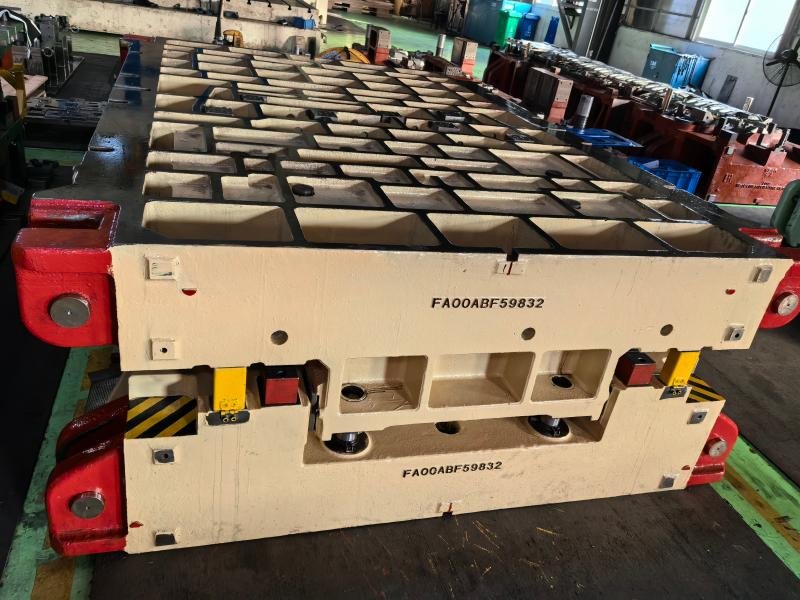
The phases of post-arrival in migration of moulds show the actual effectiveness of up stream decisions wherein alignment test and operational test define operational readiness. After delivery, an on-the-spots inspection was conducted on the state of the mold in comparison with the pre-transport records, and there were no changes or damage. The installation was done using the crane method, being placed accurately within two hours- credit to the pre-marked reference points.
Functional testing of HACU, cooling, and Ejection systems, all passed the first time. The ramp-up in production was smooth, and the line was up and running to full capacity within 24 hours, which met the target start-up. This outcome was bolstered by early permit and compliance planning for mold transport, took care of the fact that there was no regulatory delays to compress the schedule.
Outcome Analysis
- Inspection Results: Dimensional checks recorded variances below 0.005 mm which is insignificant in operations.
- Alignment Efficiency: Prefabricated rigging saved forty percent of the time over unoptimized relocations.
- Production Metrics: The output was the same at the start of the relocation, and it did not incur downtime penalty.
The focus on compliance also helped not only to pass through the door with ease but also to meet deadlines during installations, which highlights its contribution to the overall success.
Conclusion — Lessons From a Downtime-Free Mold Relocation
The project shows that the initial decisions play a very significant role in determining large mold transportation results. Even high-risk relocations of moulds can be accomplished without disturbing the production when risk identification, preparation, equipment selection, and compliance planning are all in harmony. Among the key lessons, there is the importance of considering downtime as a quantifiable risk to begin with, and not an afterthought. The continuity of this can be replicated in future projects through concentrating on cause-and-effect relationships, e.g. how the alignment of vibration controls can be maintained to achieve fast commissioning.When considering the trade-offs, such as investing in specialized equipment to reduce handling, it becomes possible to see that success measures must focus more on production impact than on logistical milestones. These lessons, based on implementation lessons, provide a model within which to measure other relocations of the same kind, focusing more on preventive engineering than on remedial measures.