
Crane lifting Strict weight distribution on the floor and heavy securing against sea forces are necessary to load machinery in an open top container. The weight distribution and securing are very vital, the OOG cargo should never be loaded without the carrier being notified and authorized to proceed. Some individuals think that all one has to do is to take out the container roof and everything is fine but this is not the case. Cargo shifting, frame stress on the container, or even rejection at the port can have a litany of causes due to improper lifting angle, unstable base support, or simple lashing design.
When it comes to safe open top machinery loading, there is no improvisation at the warehouse since the loading process relies on engineering planning. It is a controlled procedure that must be checked in terms of dimensions, weight, organization, and complete compliance consciousness.
When it comes to complex projects, the process of professional open top machinery transportation can most often start with dimensional checking and load viability check prior to crane schedule.
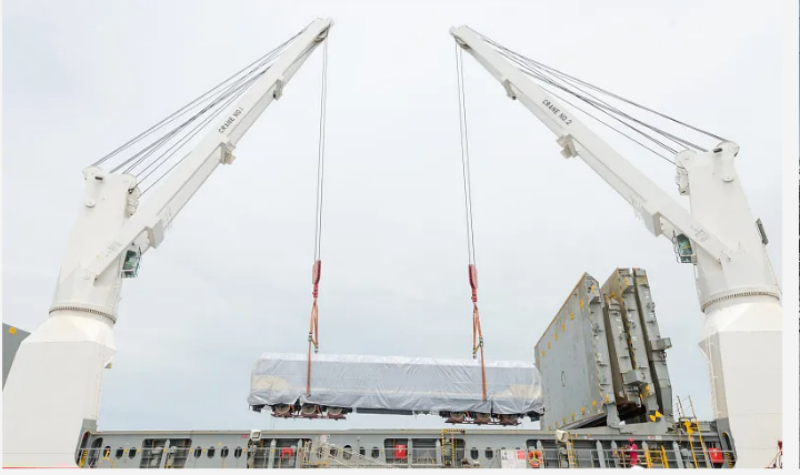
Step 1: Verify Dimensions and Weight Before Loading
Verification is not optional, but the basis of preventing the majority of loading failures further.
Each aspect of dimension and weight should be ensured against the machine and inside dimensions of the open top container before any crane hook touches the cargo. Failure to do this may result in last minute delay, carrier rejection or even unsafe improvisation.
Key aspects to check include:
- Cargo length, width, and height- Take measurements of the machinery after it has been packed out, any skids, wooden cradles or protruding lifting lugs.
- Packaging additions —Provide clearance of any additional clearance required around sensitive parts.
- Internal container sizes — Open top containers that are 20ft or 40ft in length and width — internal clearances are different; compare to these.
- OOG projection- Determine the amount of the cargo that will be projected above the rails or sides of the top many as it is used to classify tariffs and have the carrier accepted.
This is verified by total weight and floor loading – Up to the maximum payload of the container and distributed floor strength (usually 4-7 tons per square meter, depending on the unit).
Use this practical verification checklist on-site:
| Verification Item | Required Action | Why It Matters |
| Total height | Measure including skid/base | Ensures no contact with tarpaulin or overhead restrictions |
| Total weight | Confirm scale reading vs floor limit | Prevents overload fines or structural failure |
| Center of gravity | Identify and mark for balanced lifting | Critical for stable crane handling |
| OOG declaration | Submit measurements/photos to carrier early | Required for booking approval and routing |
The omission of carrier sanction in this case may bring the whole game to a standstill at the gate.
Step 2: Prepare the Container Floor and Base Support
A poor or lopsised base will make even a load that has been lifted ideally become a high risk scenario.
Open top containers used with corrugated floor as to ensure even spread, but heavy machinery causes some concentrated point loads, which may de-form the floor, or twist the frame unless remedied. Early inspection and reinforcement of the base will prevent structural damage during transportation.
Floor inspection should always in order of checking cracks, corrosion or past damages. Stable foundation- Then construct flooring with material that dispenses the load.
| Preparation Element | Purpose | Typical Application |
| Timber blocking | Load distribution | Under main frame points |
| Steel plate reinforcement | Floor protection | High point-load areas |
| Anti-slip matting | Stability during lift and transit | Prevents initial sliding |
| Base alignment | Prevent twisting stress | Align with container cross members |
The way that the loading is uneven, the stress is concentrated on limited floor corrugations, and thus may result in permanent deformation or floor buckling under dynamic sea forces. Given that each strongest cross member is straight beneath the base of the machinery, it is important to bridge any spaces by aligning the father of machinery to the best of its ability.
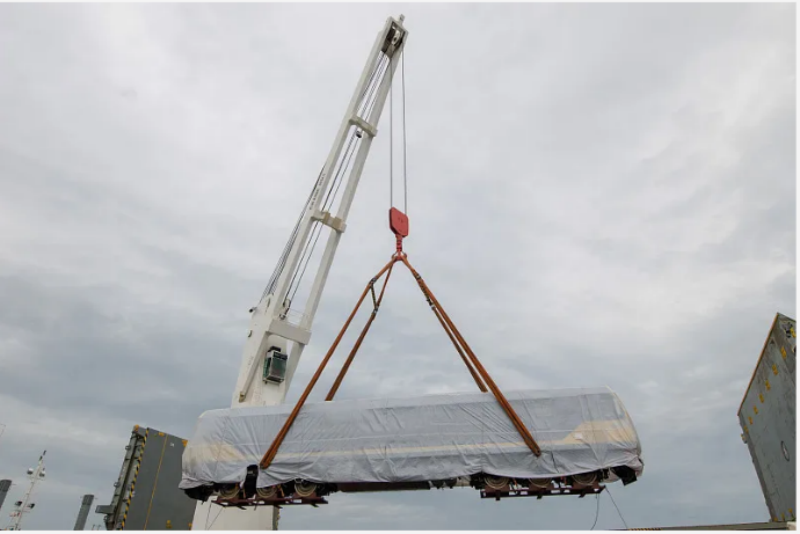
Step 3: Safe Crane Lifting and Positioning
The work of a crane requires a controlled delineated movement, rushing is the worst thing to do.
Are certified lifting slings or chains connected to anything known to be a lifting point on the equipment. The heavy or awkward loads can be made to rest on a spreader beam to keep the vertical lift lines long, and minimize swing.
Key principles include:
- Keeping lifting angles constant (preferably close to vertical).
- The prevention of accidents with crane movements or swings.
- Laying carefully and neatly on ready base supports.
- Evaluating weather conditions (wind) Operations might have to halt in the windy weather.
The ground spotter is not a bargaining factor when it comes to controlling the load and observing clearances.
| Risk | Preventive Action |
| Swing during lift | Controlled crane speed, tag lines if needed |
| Uneven load | Center-of-gravity check before hook-up |
| Structural impact | Spotter supervision, slow descent |
| Height misjudgment | Pre-lift dry run without cargo |
Entry height It has to be high clearance spared of scraping rails. An early-stage detection of the path (a pre-lift dry run) identifies problems.
Step 4: Lashing and Securing the Machinery
Lashing does not involve merely tying it down, but it is designed to resist multi-directional forces of rolling at sea, and Heel and Pitch as well as surging.
Install lashing rings inbuilt on the container (they are usually in form of D-rings or lashing eyes) at floor and top levels. a lashing angle should be 45-60 on average, this reach maximum holding power. Balancing tension in all the lines to prevent easy pulling of the cargo off side.
Chain is very effective in the heavy machinery since it is very strong but polyester straps are very flexible when there is medium load. Intense timber blocking or bracing should also be added to eliminate the voids and to obtain no lateral movement.
| Securing Method | Suitable For | Advantage |
| Chain lashing | Heavy machinery | High strength, durability |
| Polyester straps | Medium-weight cargo | Flexibility, less cargo abrasion |
| Timber bracing | Stability | Reduces lateral shift, fills gaps |
Lashings should be able to withstand the forces of forward, backward, lateral and vertical forces. A excessive tightening may break the cargo or fitting and a loose may move around- it takes trial and error to find the right degree of tightness.
Step 5: Weather Protection and Final Inspection
The work is not completed until the box is completely covered and recorded.
Put the tarpaulin up and take pains to ensure that it is pulled tight to avoid flapping or puddling of water. Make edges sealed and check the tears. Use necessary OOG markings and hazard labels (where possible) and placards that are in plain sight.
Make detailed photos of lashing, blocking, and general positioning, these cannot be valued even at the cost of insurance or legal dispute.
Make a final structural inspection: remove loosened parts, check the tensions of lashing, and check whether there is no obstruction to door/tarpaulin closing.
Common Loading Mistakes That Cause Damage
Even accountable departments lose track of the basics, causing unnecessary claims.
The most common mistakes I have experienced in the field are:
- Not taking the center of gravity into account or not calculating it the right way – this will lead to tipping in case of the lift or improperly settling.
- Poor base blockade- generates point loading and thus distorting the floor or permitting movement.
- Wrong angle of lashings – either too steeper or too shallow – lowers the resistance to the sea motions.
- Marking straps or chains too tight – may collapse packaging or bend machine frames.
- The inability to fix loose parts, bolts, panels, or accessories free up and result in the internal harm.
The results can be scratches, general damage of cargo during a voyage, frame stress of container, rejection in the port due to unsafe securing, or cause of lengthy insurance claims.
Conclusion — Safe Loading Is a Structured Engineering Process
Dimensional verification of machinery, controlled lifting, even weight distribution and engineered securing is needed to safely load machinery into an open top container. Operational risks are reduced to minimum and OOG freights come in a stable condition and unharmed when every step is taken in a well-thought-out action plan.Take everything like a real engineer: take measurements twice and plan carefully, execute step by step and record everything. That is the way in which shipments across oceans involving the heavy machinery remain secure.