
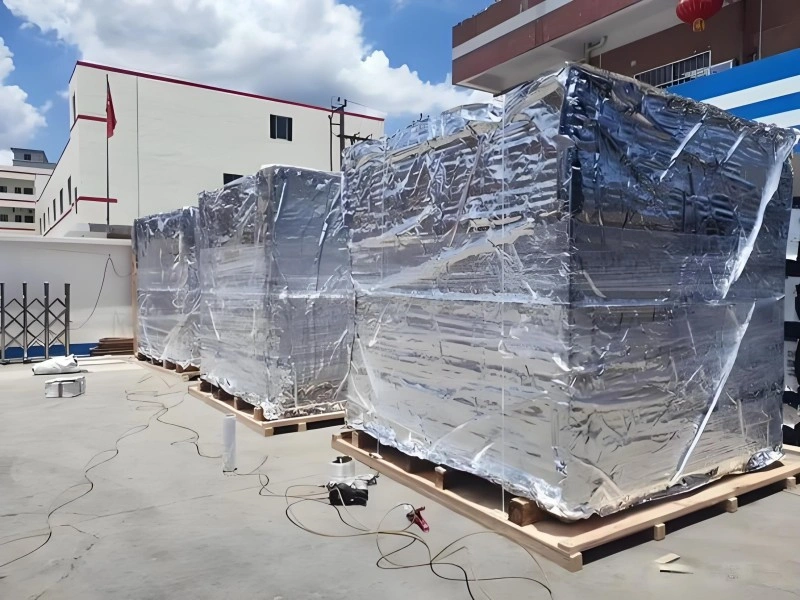
Vacuum packing can reduce a variety of risks that can affect the quality of export cargo, including moisture, corrosion, contamination, repacking, cargo rejection and replacement waste, and can provide more sustainable protection for export cargo, especially high value machinery, metal components, electronics, molds and industrial equipment. The environmental advantage doesn’t just apply to reducing the amount of packaging used, it’s also about reducing the need to repair, replace or dispose of packages.
Many consumers think that the “green” option is always the one that contains the least material. In the real world, however, when it comes to transporting sensitive goods overseas, we’re seeing far more waste in the supply chain due to the lack of protection they receive. The correct use of vacuum packing can eliminate this issue; when used in suitable applications, it can help to minimize the overall logistical risks for exporters due to its ability to provide a consistent protection against moisture, dust and salt water.
How Cargo Damage Creates Hidden Environmental Waste
Exporting cargo damaged will not only impact cargo, but also create waste in the complete supply chain. Bad packaging can result in damaged goods being disposed of, full replacement production, extra repacking materials, return shipping emissions, and extra cleaning/repair labor.
| Damage-Related Waste | How It Happens | Environmental Impact |
| Repacking waste | Packaging fails or becomes contaminated | More film, crates, pallets, and labor needed |
| Replacement cargo | Damaged goods cannot be used | Additional raw materials, energy, and production |
| Return or reshipping | Cargo must be sent back or replaced | Extra transport emissions and fuel use |
| Repair and cleaning | Rust or contamination must be removed | More chemicals, water, energy, and labor |
| Disposal waste | Cargo or packaging is rejected | Adds landfill or recycling burden |
| Project delay | Equipment cannot be installed on time | More storage, handling, and operational waste |
The above mentioned costs are part of the hidden costs, and they show us that this measurement is not enough to assess the sustainability of export logistics.
How Vacuum Packing Helps Reduce Shipping Waste
Vacuum packing ensures higher protection reliability in transport, storage and contributes directly to shipping waste reduction. It eliminates air and ensures that the cargo is contained in a controlled environment, reducing the risk of exposure to the elements which is a common problem in sea freight or long haul routes.
For exporters handling machinery, metal parts, electronics, or long-storage cargo, eco-friendly vacuum packing solutions should be evaluated by how well they reduce damage, repacking, replacement, and unnecessary logistics waste.
| Waste Reduction Area | How Vacuum Packing Helps | Practical Result |
| Moisture damage | Creates a sealed moisture-control barrier | Fewer rusted or mold-affected shipments |
| Corrosion waste | Supports desiccants, VCI, and anti-rust protection | Less surface rework or replacement |
| Contamination | Reduces dust and dirt exposure | Cleaner cargo at destination |
| Repacking | Stronger planned protection reduces emergency repacking | Less material and labor waste |
| Storage damage | Keeps cargo protected during delays | Lower deterioration risk before installation |
| Cargo rejection | Better condition preservation | Fewer rejected or disputed shipments |
This approach helps preserve the resources already invested in manufacturing the cargo itself.
Vacuum Packing vs Traditional Packaging: Environmental Considerations
Two things should be compared: how much packaging used, and how much damage prevented. For delicate industrial goods, vacuum packing can usually be the perfect compromise.
| Packaging Method | Material Use | Protection Level | Environmental Consideration |
| Vacuum packing | Medium | High moisture and contamination protection | Can reduce damage-related waste for sensitive cargo |
| Pallet wrapping | Low to medium | Low environmental protection | Useful for stability but limited moisture control |
| Shrink film | Medium | Medium | May reduce dust exposure but may not prevent corrosion |
| Wooden crate | Medium to high | High physical protection | Reusable or compliant wood may help, but moisture control is limited |
| Tarpaulin cover | Low if reusable | Low to medium | Useful temporarily, but gaps may expose cargo |
| Vacuum packing + crate | Higher upfront material use | High environmental and physical protection | Often justified for high-value or long-haul cargo |
When paired with appropriate outer protection, vacuum packing frequently delivers better overall environmental outcomes by preventing downstream waste.
When Vacuum Packing Can Be the More Responsible Choice
When fewer and fewer of those cargo types and routes are lost downstream, it may be more environmentally responsible to use vacuum packing. It is excellent in areas where there is a high possibility of moisture, corrosion or contamination, and there are high stakes.
| Cargo or Situation | Why Vacuum Packing May Reduce Waste |
| High-value machinery | Prevents large-scale repair or replacement waste |
| Precision molds | Protects surfaces that are costly to rework |
| Electronics | Reduces moisture and dust-related failure risk |
| Metal components | Helps prevent rust and corrosion damage |
| Long sea freight | Reduces humidity-related deterioration |
| Long-term storage | Protects cargo during delays before installation |
| Humid destination climates | Helps preserve cargo after arrival |
| OOG cargo | Reduces exposure during open handling and storage |
| Replacement lead time is long | Avoids unnecessary remanufacturing and reshipping |
In these scenarios, the upfront investment in better protection pays off through meaningful waste reduction.
Reducing Repacking and Emergency Packaging Waste
Another very seldom mentioned advantage of using a vacuum is that it reduces the amount of repackaging needed at the end of the handling or storage period because of packaging failures. Expanding emergency interventions require additional materials, labour and time and can lead to more damage.
| Repacking Trigger | Waste Created | Better Preventive Practice |
| Torn film | Additional plastic wrap and labor | Use suitable barrier film and edge protection |
| Moisture inside package | Repacking, drying, and inspection | Dry cargo and add desiccants before sealing |
| Weak seals | Air leakage and rework | Perform seal inspection before shipment |
| Damaged outer cover | Replacement cover or crate repair | Match outer protection to handling risk |
| Poor packing design | Last-minute changes at warehouse or port | Plan packaging before cargo arrives for loading |
| Missing labels | Extra handling and relabeling | Apply clear marks before shipment |
Proper planning with vacuum packing helps avoid these reactive situations entirely.
How Better Moisture Protection Supports Longer Cargo Life
Vacuum packing prevents corrosion and contamination and can prolong the useful life of cargo and prevent waste caused by premature failure. This is important for products that are going to ports, warehouses etc. before being installed.
| Protection Outcome | Long-Term Environmental Benefit |
| Less rust and corrosion | Fewer parts need repair or replacement |
| Cleaner surfaces | Less cleaning chemical and water use |
| Better storage condition | Less deterioration before installation |
| Reduced hidden damage | Lower chance of premature failure |
| Fewer rejected shipments | Less cargo disposal and rework |
| Longer equipment usability | Better use of manufactured resources |
Extending the functional life of industrial goods directly supports more efficient resource use.
Material Selection and Sustainability: What Buyers Should Consider
The choice of the materials and sustainable packaging solutions must be based on the right materials to the given risk, not on the reduction of the material. It’s not just about minimalism, it’s also about right sizing, compatibility.
| Material Decision | Sustainability Consideration |
| Right-sized vacuum bag | Reduces unnecessary material while improving fit |
| Proper barrier film | Prevents failure from under-protection |
| Desiccant planning | Avoids overuse while maintaining moisture control |
| VCI compatibility | Reduces corrosion risk without unnecessary treatments |
| Reusable crates | May reduce repeated wood use where logistics allow |
| Dry export-ready wood | Reduces mold, moisture, and repacking risk |
| Clear unpacking instructions | Reduces accidental damage and disposal mistakes |
| Accurate material selection | Balances protection performance and waste reduction |
Understanding of cargo type, route conditions, and storage time is provided to experienced teams for finalizing the specifications.
Common Greenwashing Mistakes in Export Packaging Decisions
Environmental claims should be realistic, measurable and outcomes-oriented in logistics. There are a number of common challenges that can hinder meaningful sustainability initiatives.
| Mistake | Why It Is Problematic | Better Approach |
| Choosing least material only | Cargo may be under-protected | Evaluate total shipment risk |
| Ignoring cargo damage waste | Replacement can create larger impact | Include damage prevention in sustainability review |
| Over-packaging every shipment | Uses unnecessary material | Match packaging level to cargo risk |
| Assuming one material is always greener | Context matters by route and cargo | Compare total logistics outcome |
| No disposal planning | Packaging may become unmanaged waste | Provide unpacking and handling guidance |
| Unsupported green claims | Reduces trust | Use practical, evidence-based language |
Consistent with this, total waste risk is the focus that will result in more credible and effective decisions.
How Vacuum Packing Fits into Sustainable Logistics Planning
Vacuum packing is not a material decision but part of the overall logistics plan. It can be integrated with route assessment, loading coordination and post arrival waste management well.
| Sustainable Logistics Factor | How Vacuum Packing Can Support It |
| Damage prevention | Reduces corrosion, moisture, and contamination losses |
| Route-based planning | Matches protection level to humidity and storage risk |
| Material efficiency | Custom sizing can reduce unnecessary wrapping |
| Storage reliability | Protects cargo during delays and long-term storage |
| Repacking reduction | Helps avoid emergency packaging waste |
| Loading coordination | Keeps cargo protected and easier to inspect |
| Traceability | Photos and inspection records support accountability |
| Waste planning | Clear unpacking helps separate and manage materials |
This comprehensive perspective enables packaging decisions to be made in the context of other business and environmental objectives.
Buyer Checklist: Evaluating Environmental Benefits Before Choosing Packaging
When making a decision about sustainability, buyers should consider both the packaging materials and cargo protection. If you ask the right questions early, there’s no need for unpleasant surprises.
| Question to Ask | Why It Matters |
| What is the cargo value and replacement impact? | Higher-value cargo needs stronger damage prevention |
| Is the cargo moisture- or corrosion-sensitive? | Protection may prevent major waste |
| Will the shipment move by sea freight? | Humidity and salt air increase damage risk |
| How long will the cargo be stored? | Longer storage increases deterioration risk |
| Can packaging be right-sized? | Reduces unnecessary material use |
| Are outer crates reusable or compliant? | Improves responsible packaging planning |
| Will under-protection cause repacking or rejection? | Hidden waste may exceed packaging savings |
| Are labels and unpacking instructions clear? | Reduces handling and disposal mistakes |
| Is the packaging matched to the route? | Avoids both over-packing and under-protection |
| Is documentation needed for internal ESG reporting? | Supports transparent decision-making |
This checklist encourages balanced, risk-aware choices tailored to each shipment.
Conclusion — Sustainable Packaging Means Reducing Total Waste Risk
A responsible packaging decision must ensure the protection of the goods and of past investments made in the packaging production. When used and chosen for an appropriate shipment risk, vacuum packing can help minimize waste in many situations, such as with machinery, metal parts, electronics, molds and other sensitive export cargo, by helping to prevent moisture damage, corrosion, contamination, repacking and unnecessary replacement.
Finally, the environmental benefit will be determined by sensitivity of cargo, route conditions, storage time, material selection and execution. Exporters and logistics managers can make better decisions based on the entire logistics impact, not just the quantity of packaging materials, to provide adequate protection and sustainable value.