
Smart load planning is the process of assessing the size, weight, center of gravity, packaging, securing process, access to load areas, and load transport to identify the optimum loading solution, with a consideration for safety. In the case of OOG cargo transport, container utilisation is not limited to loading the container, rather it is a combination of the right container used for the right cargo and the ability to move the load safely from origin to destination.
While price is a primary factor in deciding between flat rack and open top container shipments, in actual logistics of OOG, it is important to consider cargo geometry, weight distribution, lifting methods, securing feasibility, port handling conditions and carrier acceptance rules. By matching the dimensions and weight distribution, as well as the centre of gravity of the cargo with the flat rack or open top container, the lifting method, securing requirements and transport route conditions to the most appropriate flat rack or open top container, and loading configuration, smart load planning enables logistics teams to optimize the utilisation of the flat rack and open top container. But there are still a number of key factors to consider when planning a shipment to OOG that are important to add-up, such as accurate cargo data, engineering review, carrier acceptance, and proper on-site execution. Smart load planning is not a space saving exercise, it is a safety compliance and cost control process and determines whether OOG cargo can be loaded, secured, accepted by the carrier and transported without avoidable risk.
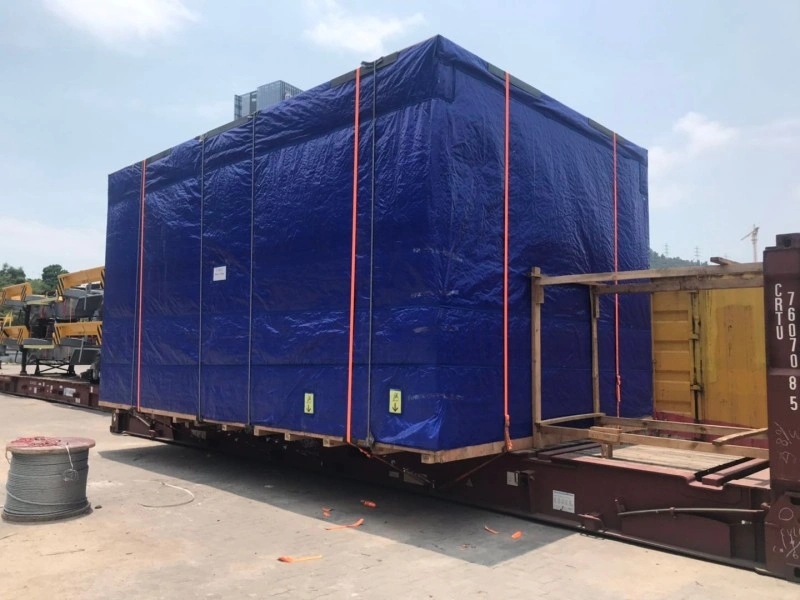
What Is Smart Load Planning in OOG Container Shipping?
Smart load planning is a structured engineering and logistics process to define the positioning, securing and transport of cargo. It consists of cargo data, container properties, route information, lifting information, and securing design. It is particularly significant for out-of-gauge cargo because cargo sometimes “exceeds the normal dimensions of the container or has an unusual shape, weight or balance. Smart load planning can feature carrier acceptance confirmation, center-of-gravity analysis, lashing plan review, 2D layout review, and 3D load planning. It should be done before, not only during, physical loading.
In cases where a container must be selected, weight distribution is reviewed, lashing is designed and the carrier is confirmed, OOG logistics planning should start prior to the booking process for industrial cargo.
| Planning Element | What It Means |
| Cargo Measurement | Confirming length, width, height, gross weight, and packaging size |
| Center of Gravity Review | Understanding how weight is distributed across the cargo |
| Container Selection | Choosing flat rack, open top, standard container, or alternative transport mode |
| Load Positioning | Deciding where the cargo should sit on the container or trailer |
| Lashing Design | Planning how the cargo will be secured against movement |
| Lifting Method | Confirming crane access, lifting points, and loading direction |
| Carrier Acceptance | Checking whether the shipping line will accept the proposed load plan |
Flat Rack vs Open Top Container: Key Utilization Differences
Flat rack and open top containers are all capable of carrying OOG cargo, but can be used to address different cargo profiles and different transport problems.
Flat rack containers may also have a flat roof and lack side walls, and are typically used when cargo is over width, over high, very heavy or irregular and must be loaded from the side and/or onto the flat top. Open top containers are similar to dry containers, but don’t have a fixed top and are frequently used to carry over-height loads which fit within the container sidewalls. Flat racks provide more loading flexibility, but may require more vigorous securing and careful protection of exposures. Open tops offer more side protection and are limited in dimension and loading. This is determined by the size, shape, weight, method of lifting and the route of the cargo.
| Factor | Flat Rack Container | Open Top Container | Best For |
| Structure | No roof and usually no side walls | Side walls with removable tarpaulin roof | Over-width, over-height, heavy, or irregular cargo (flat rack); over-height cargo that fits within container walls (open top) |
| Loading Method | Top, side, or crane loading | Mainly top loading by crane | Machinery, vehicles, steel structures, heavy equipment (flat rack); tall machinery, industrial parts, equipment modules (open top) |
| Cargo Exposure | Higher exposure to weather and sea conditions | Better side protection, but top may still need covering | Balance, restraint, footprint, and carrier acceptance (flat rack); height clearance, wall clearance, and lifting access (open top) |
| Securing Needs | Strong lashing, blocking, and bracing required | Securing inside container walls still required | — |
Why Container Utilization Is Not Only About Space
When operating a container, maximising the utilisation does not mean to load as much as possible, it means to operate the container safely and effectively with due consideration of all operating limits.
In reality, when it comes to weight, load distribution or securing angles, experienced OOG teams understand that refuse can result in carrier rejection or unsafe transport – even if the cargo looks like it fits. Physical space is just as important as other factors like center of gravity, lifting access, port handling restrictions, weather protection and route clearance.
| Utilization Factor | Why It Matters |
| Space Fit | Determines whether cargo physically fits the container footprint |
| Weight Limit | Prevents container overload and handling rejection |
| Load Distribution | Helps avoid excessive stress on container structure |
| Center of Gravity | Reduces tipping, shifting, and securing failure risk |
| Lashing Angle | Affects restraint strength during road and sea movement |
| Lifting Access | Ensures cargo can be loaded and unloaded safely |
| Carrier Acceptance | Determines whether the shipping line approves the shipment |
| Weather Exposure | Influences packaging, covering, and anti-rust protection |
| Route Clearance | Affects inland transport before and after sea shipment |
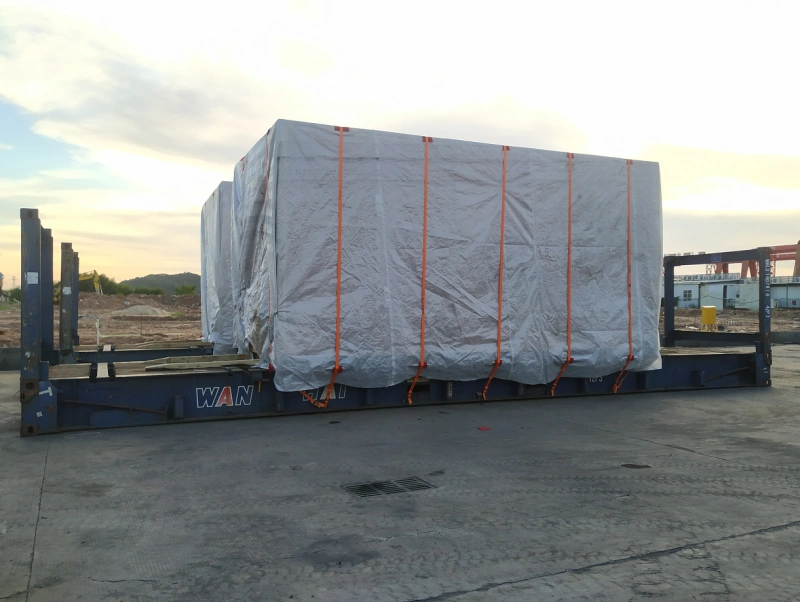
How Cargo Dimensions Affect Flat Rack and Open Top Planning
Smart load planning for flat rack and open top container utilization is based on accurate dimensions.
It is important to use the final packed dimensions and not the bare machine dimensions as crating, bracing, or protective coverings will alter the overall dimension. Over-width planning impacts on flat rack suitability and road permits, and over-height planning impacts on open top feasibility. To prevent last minute rejection for bookings, all protruding parts of the crane, lifting clearance, port or vessel handling limitations should be checked with the measurement tolerance.
| Cargo Dimension Data | Planning Impact |
| Length | Determines container size, deck footprint, and possible overhang |
| Width | Affects flat rack suitability, road permits, and carrier surcharge |
| Height | Determines open top feasibility and over-height risk |
| Packaging Size | Final transport dimensions may be larger than machine dimensions |
| Lifting Clearance | Affects crane loading and unloading feasibility |
| Protruding Parts | May require protection, removal, or special securing |
| Measurement Tolerance | Reduces the risk of booking rejection due to inaccurate data |
Weight Distribution and Center of Gravity in Load Planning
For any kind of cargo load planning that involves OOG (out of gauge) containers, weight distribution and center of gravity are important aspects of safety and container acceptance.
Gross weight determines the container, trailer, crane and permit requirements, and point loads can be excessive in a small area on the deck. Knowing the center of gravity to prevent the trip hazard or an unstable load, and the proper points of support, usually provided by timber bedding, steel beams or engineered blocking, will help to distribute load and ensure the protection of the load during lifting, road movement and sea transport. Inland transportation load conditions with respect to deck strength and axle loading should also be carefully handled.
| Weight Factor | Why It Matters in Load Planning |
| Gross Weight | Determines container, trailer, crane, and permit requirements |
| Point Load | Prevents excessive pressure on a small deck area |
| Center of Gravity | Helps prevent tipping or unstable loading |
| Deck Strength | Ensures container structure can support the cargo |
| Axle Load | Affects inland road transport safety and legal compliance |
| Support Points | Helps distribute load through timber, steel beams, or blocking |
| Cargo Balance | Improves safety during lifting, road movement, and sea transport |
Smart Load Planning for Lashing, Blocking, and Bracing
Cargo utilisation is only successful if the cargo can be safely secured against the dynamic forces of ocean transport.
Planning lashing angles, points for lashing on cargo and container, blocking and bracing design, friction materials, timber support and edge protection need to be done in a coordinated way. Anti-slip materials enhance grip, and wood bedding evenly distributes load and prevents painted or precision surfaces from being marred. On-site supervisor during loading makes the plan come true.
| Securing Method | Purpose | Planning Consideration |
| Lashing | Restrains cargo against movement | Requires proper angle, strength, and anchor points |
| Blocking | Prevents sliding or shifting | Must match cargo footprint and load direction |
| Bracing | Provides structural support | Useful for irregular or unstable cargo |
| Timber Bedding | Spreads weight and protects surfaces | Must be sized for cargo weight and contact points |
| Anti-Slip Material | Increases friction | Helps reduce movement under vibration |
| Edge Protection | Protects cargo and lashing straps | Important for sharp or painted surfaces |
How 3D Load Planning Improves Container Utilization
Theoretical load planning is made to fit reality at the loading site with help of 3D load planning, which makes it possible to visualize any potential problems before the goods are transported.
It enables teams to simulate cargo fit and clearance, to see crane access, to see overhangs or protrusions, to plan lashing points and to visualize weight distribution. This early notice ensures faster communication between shippers, forwarders, carriers and site teams, and it decreases the risk of on-site adjustments which can lead to costly delays.
| 3D Load Planning Function | Practical Value |
| Cargo Fit Simulation | Confirms whether cargo can be loaded as planned |
| Clearance Review | Identifies height, width, or protrusion conflicts |
| Load Position Visualization | Helps stakeholders understand placement before loading |
| Lashing Point Planning | Supports safer securing design |
| Weight Distribution Review | Helps reduce imbalance and point load risk |
| Loading Method Review | Confirms crane access and lifting sequence |
| Communication Support | Makes plans easier to explain to shippers, carriers, and site teams |
How Smart Load Planning Helps Control OOG Shipping Costs
While cost reduction is possible by means of smart load planning, this must not be at the expense of safety.
Preventing the wrong container, minimizing booking rejection, eliminating reloading fees, and avoiding over-dimension surcharges leads to improved container utilization and operations. Better accuracy in documentation and earlier assessment of transport options also helps to manage port waiting times and reduce the risk of damage to cargo.
| Cost Risk | How Smart Load Planning Helps |
| Wrong Container Selection | Reduces the chance of rebooking or changing equipment late |
| Poor Space Utilization | Helps select the most efficient container or transport option |
| Booking Rejection | Provides clearer load plans for carrier review |
| Reloading Costs | Reduces surprises during physical loading |
| Cargo Damage | Improves securing and protection planning |
| Port Delay | Supports smoother terminal handling and documentation |
| Unnecessary Surcharges | Helps evaluate over-height, over-width, and overweight impact earlier |
When Flat Rack or Open Top May Not Be the Best Option
There are some instances where a flat rack or open top container is helpful and others where it is not.
If cargo is too heavy or too large for the flat racks, or if the load must be fully protected from the weather or is simply not secure to be placed on a container base, other methods may be more suitable. There may also be alternative restrictions on inland transport or special rolling capability that makes alternative transport more desirable.
| Situation | Possible Better Alternative |
| Cargo exceeds flat rack carrier limits | Breakbulk or heavy lift shipping |
| Cargo is extremely heavy | Modular trailer plus heavy lift vessel |
| Cargo needs full weather protection | Enclosed special transport or protective packaging |
| Cargo cannot be safely secured on container base | Engineered transport frame or breakbulk solution |
| Inland route cannot handle containerized OOG load | Lowbed trailer or customized inland transport |
| Cargo has rolling capability | RoRo shipping may be considered |
What Information Shippers Should Provide for Load Planning
The right information from the shipper means fewer mistakes and a better logistics team load plan in place earlier.
Smooth and reliable process with full cargo data early on from drawings, photographs, lifting points, etc. and conditions at the loading site.
| Information to Provide | Why It Helps |
| Cargo Dimensions | Determines flat rack or open top feasibility |
| Gross Weight | Supports container, crane, trailer, and permit planning |
| Packing Dimensions | Shows the final size after crating or protection |
| Center of Gravity | Helps plan stable positioning and securing |
| Lifting Points | Supports safe crane loading and unloading |
| Drawings or 3D Model | Helps create accurate load planning visuals |
| Cargo Photos | Reveals protrusions, weak areas, and securing challenges |
| Fragile Components | Helps plan protection and shock prevention |
| Loading Site Conditions | Determines crane access, trailer movement, and loading sequence |
| Delivery Requirements | Supports route, vessel, and schedule planning |
Common Mistakes in Flat Rack and Open Top Load Planning
Even the most seasoned teams can fall into the same issues and cause downstream problems.
Some of the most frequently made errors are using machine dimensions rather than final packed dimensions, overlooking the center of gravity, booking the container based on price alone, assuming open top containers can accommodate all over height cargo, not asking for a weather confirmation before the shipment is booked onto the ocean, not providing drawings, photos or lifting information before the booking, and not having the information required before the container is booked.
Conclusion — Smart Load Planning Makes OOG Container Shipping Safer and More Efficient
Smart load planning optimizes the use of flat racks and open top containers by linking information on transport, securing design, load positioning, container specifications, and cargo information. The objective is not just to load cargo into a container; it’s about designing a loading plan that is safe, compliant, carrier-acceptable and cost-effective.
Whether it’s flat rack or open top containers, it’s always a decision based on information and engineering review of the OOG cargo. As detailed cargo information is generated ahead of time and logistics teams are informed on all aspects of measurement, 3D load planning, lashing, route and carrier requirements, industrial exporters and project cargo managers can minimise delays, safeguard valuable equipment, and ensure cargo moves smoothly. Ultimately, intelligent load planning is the key to solving complex OOG problems efficiently and successfully on a regular basis.