
Choosing the correct container type is one of the most critical decisions in oversized cargo transportation, as it directly affects cargo safety, loading feasibility, and overall logistics efficiency.
Oversized cargo transportation requires specialized container solutions because many industrial cargo types exceed the dimensional limits of standard containers. The most common container solutions include flat rack containers, open top containers, platform containers, and breakbulk shipping solutions. These options allow for the secure handling of loads that don’t fit into conventional setups, ensuring compliance with transport regulations and minimizing risks during transit.
Many shippers assume oversized cargo can simply be forced into larger containers, but in reality container selection must match the cargo’s dimensions, weight, and loading requirements. Selecting the correct container type ensures cargo stability, safe loading operations, and efficient international transportation for oversized freight.
Why Standard Containers Are Not Suitable for Oversized Cargo
Standard shipping containers are designed for uniform cargo, but they fall short when dealing with oversized loads due to their fixed dimensions and weight restrictions.
These containers, commonly used in global trade, have strict limitations that make them impractical for anything beyond standard sizes. For instance, a typical 20-foot container measures about 5.9 meters in length, 2.35 meters in width, and 2.39 meters in height, with a payload capacity of around 28 tons. Exceeding these parameters classifies the cargo as out-of-gauge (OOG), necessitating alternative configurations to avoid damage or regulatory issues.
| Container Type | Length | Width | Height | Payload |
| 20ft container | ~5.9 m | ~2.35 m | ~2.39 m | ~28 tons |
| 40ft container | ~12 m | ~2.35 m | ~2.39 m | ~28 tons |
| 40ft high cube | ~12 m | ~2.35 m | ~2.69 m | ~28 tons |
Cargo that surpasses these specs—whether in height, width, or girth—requires careful evaluation to prevent structural failures during loading or en route. Companies shipping industrial equipment often rely on professional oversize cargo transportation services to determine the most suitable container configuration.
Flat Rack Containers for Oversized Cargo
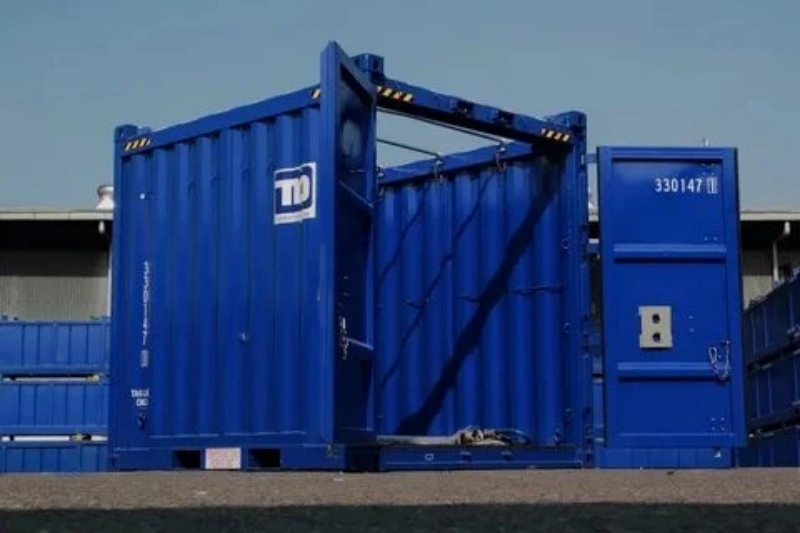
Flat rack containers stand out as a versatile choice for handling oversized cargo that demands side or top access during loading.
These containers lack side walls, providing the flexibility needed for wide or irregularly shaped items. With fixed or collapsible end walls, they support secure fastening while allowing cranes or forklifts to position cargo efficiently. This design minimizes handling time and reduces the risk of damage from constrained spaces.
| Feature | Description |
| Side walls | None |
| End walls | Fixed or collapsible |
| Loading method | Side or top loading |
| Best for | Wide or heavy cargo |
Typical applications include construction equipment like bulldozers, industrial machinery such as presses, and large vehicles including trucks or tractors. Flat racks excel for these because they accommodate widths exceeding 2.35 meters, distributing weight evenly across the base to maintain stability on vessels or trucks.
Advantages of Flat Racks in Practice
In operational settings, flat rack containers for oversized cargo allow for better lashing points, which are essential for securing heavy loads against shifting during ocean voyages. Their open structure also facilitates inspections at ports, speeding up customs processes.
Limitations to Consider
However, without full enclosure, flat racks offer limited protection from weather, so additional tarps or coverings are often required for sensitive equipment.
Open Top Containers for Tall Cargo
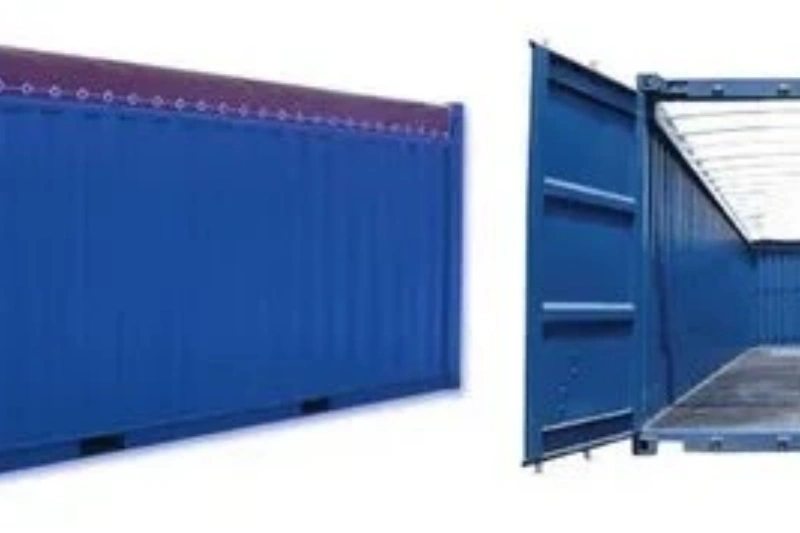
Open top containers provide an effective solution for cargo that exceeds height restrictions, enabling straightforward top-loading operations.
By featuring a removable tarpaulin roof instead of a solid top, these containers allow cranes to lower tall items directly inside. This is particularly useful when standard container heights of 2.39 to 2.69 meters prove insufficient, preventing the need for disassembly or awkward angling.
| Feature | Description |
| Roof | Removable tarpaulin |
| Loading method | Top loading with crane |
| Best for | Tall machinery |
| Protection | Tarpaulin weather protection |
Common uses encompass generators, industrial machinery with protruding parts, and equipment with tall structures like silos or towers. The tarpaulin ensures some shielding from elements, though it’s not as robust as fully enclosed units.
Key Operational Benefits
From a logistics standpoint, open top containers streamline workflows at terminals, where overhead cranes can access cargo without dismantling side panels. This reduces labor costs and turnaround times.
Potential Drawbacks
One limitation is the reliance on weather-resistant coverings; improper securing can lead to exposure issues during long-haul shipments.
Platform Containers for Extremely Large Cargo
Platform containers offer the utmost adaptability for cargo that defies conventional containment, essentially serving as a reinforced base without walls or roof.
Consisting solely of a sturdy floor with lashing rings, they cater to loads that are too bulky for any walled structure. This bare-bones approach maximizes space for protruding elements, making them indispensable for extreme cases.
| Feature | Description |
| Structure | Container floor only |
| Side walls | None |
| End walls | None |
| Cargo type | Extremely large equipment |
Examples range from turbines in power generation to large industrial components like boilers and heavy structural equipment such as bridge sections. Platforms are chosen when cargo dimensions make other options unfeasible, allowing for custom securing methods.
Practical Applications in Logistics
In field operations, these containers facilitate roll-on/roll-off methods, ideal for integrating with specialized trailers during intermodal transfers.
Challenges in Usage
The complete openness demands meticulous planning for protection, often involving shrink-wrapping or custom crates to safeguard against environmental factors.
Breakbulk Shipping for Extreme Oversized Cargo
Breakbulk shipping emerges as the go-to method when even specialized containers cannot accommodate the cargo’s scale, involving direct loading onto vessels without containers.
This approach treats each piece individually, using heavy-lift cranes and customized stowage plans. It’s reserved for scenarios where containerization would compromise safety or feasibility.
| Feature | Description |
| Cargo handling | Loaded individually |
| Container requirement | None |
| Best for | Extremely large cargo |
| Common vessels | Heavy-lift ships |
Frequently applied to mega project cargo like entire wind farm assemblies or oversized transformers, breakbulk relies on vessels equipped with onboard cranes capable of handling hundreds of tons.
Operational Considerations
Planning for breakbulk involves detailed route surveys to ensure port infrastructure can support the lifts, often extending transit times compared to containerized methods.
When to Opt for Breakbulk
It’s typically the last resort, but essential for items that exceed platform limits, ensuring no compromises in structural integrity.
How to Choose the Right Container for Oversized Cargo
The selection of the best container for oversized cargo hinges on a thorough assessment of multiple interrelated factors to align with transport demands.
Key considerations include matching the container to the cargo’s profile while accounting for operational constraints. For example, dimensions dictate whether walls or roofs need to be absent, while weight influences base strength and vessel compatibility.
| Decision Factor | Impact |
| Cargo dimensions | Determines container structure |
| Cargo weight | Determines load capacity |
| Loading method | Crane vs side loading |
| Transport route | Infrastructure limitations |
| Weather protection | Cargo exposure risk |
Container selection is one of the most important steps in oversized cargo logistics planning, as mismatches can lead to delays, increased costs, or safety hazards. Evaluating these elements early in the process allows for optimized routing and equipment allocation.
Industries That Frequently Use Oversized Cargo Containers
Various sectors routinely encounter the need for oversized cargo containers due to the nature of their equipment and project scales.
These industries depend on tailored solutions to move components that standard logistics can’t handle, integrating container choices into their supply chain strategies.
| Industry | Typical Cargo |
| Construction | Excavators and cranes |
| Renewable energy | Wind turbine components |
| Oil & Gas | Drilling equipment |
| Infrastructure | Steel bridge components |
| Manufacturing | Industrial machinery |
In practice, these fields benefit from the specialized handling that oversized cargo shipping container types provide, ensuring timely delivery for time-sensitive projects.
Conclusion — Container Selection Determines Transport Safety and Efficiency
Oversized cargo transportation depends heavily on choosing the correct container solution. Flat rack containers, open top containers, platform containers, and breakbulk shipping each serve specific roles in oversized cargo logistics, and selecting the correct option ensures safe and efficient transportation. By prioritizing cargo specifications and operational needs, planners can mitigate risks and streamline global movements.