
The essence of the restrictions placed on open top containers by ports is to ensure the safety and effectiveness of operations of the vessel loading and crane handling, the storage of vehicles in the yard, and the overall terminal throughput.
Stability of the vessel is one of the priorities: the wavey sea may seem to make the cargo to move the center of gravity, and then some special stowage may be needed to prevent this. The next factor is crane capacity limits, majority of the terminal gantry crane has elucidated safe working loads (SWL) and clearance envelopes that an oversized projection can infringe. Yard stacking limit also creates another problem as too tall units usually cannot be stacked and thus take up precious ground space. These indirect controls are required by safety regulations such as IMO regulations and local port regulations to avoid accidents, damage of equipment or operational inconvenience.
The following are a breakdown of some of the main drivers of the operations and other port related concerns:
| Operational Factor | Port Concern |
| Over-height cargo | Crane clearance risk |
| Excess weight | Handling equipment overload |
| OOG projection | Yard space limitation |
| Hazardous classification | Regulatory compliance |
These limitations guarantee that terminals will be able to process cargo without interfering with efficiency or safety.
Dimensional Restrictions and OOG Limits
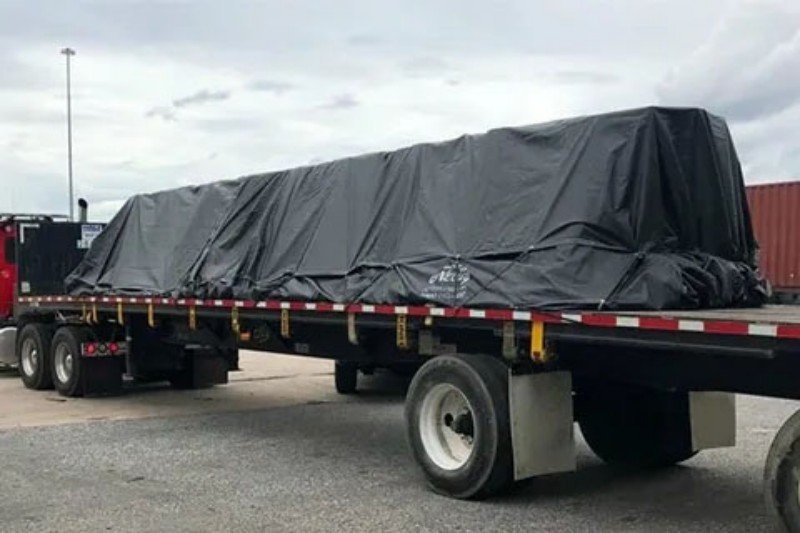
The basis of port dimensions restrictions are the foundations of port rules applicable to the open top containers since the overly protruding projection directly affects the crane reach, vessel sloting and the viability of road transport.
Standard open top containers (20′ and 40′) have the same ISO footprints, though OOG cargo can usually go outside internal dimensions – especially the top rail height or side/rear projections. Typically ports have some tolerance to over-height (e.g. cargo sticking out of the roofline) though facility tolerances are widely different. Other large ports will limit vertical projections in order to maintain clearance between crane hooks, others may allow higher in case prior permission is obtained.
The important dimensions that evoke the scrutiny are:
- Height over roofline — The control of cranes operation is also critical; high height is dangerous as it can be caught in the snare in the lifts.
- Side projection -9 The side projection will affect the vessel slot-placed as well as can demand lost slots on deck.
- Rear overhang — Affects road transport compliance and terminal gate entry.
- Total weight – Bound to that of equipment.
Reasons these are important:
- Height above rooflinea Crane handling safety
- Side projection to Vessel slot allocation.
- Rear overhang – Road transport impact.
- Final figure of weight of equipment weight/capacity.
Vertical projection is only limited in most ports especially due to excessive projections making vessel and terminal operations difficult.
Weight and Handling Capacity Restrictions
There are additional weight limits imposed on open top containers over and above the payload rating of the container, terminals impose their limits through crane SWL, yard equipment limits and internal axle limits in roadways.
Although open tops will usually carry small payloads of approximately 28-30 tons (depending on size and line), ports can have a lower internal limit to damage infrastructure. The load may not evenly be distributed or concentrated in a point or damage the terminal gear during lifts.
Other typical weight problems are:
| Weight Factor | Risk |
| Excess gross weight | Crane overload |
| Uneven weight distribution | Handling instability |
| Concentrated point load | Equipment damage |
Even when a carrier has cleared the cargo, ports commonly refuse that cargo that is above their safety limits, making the declaration of realistic cargo to the terminal capabilities important.
Documentation and Advance Approval Requirements
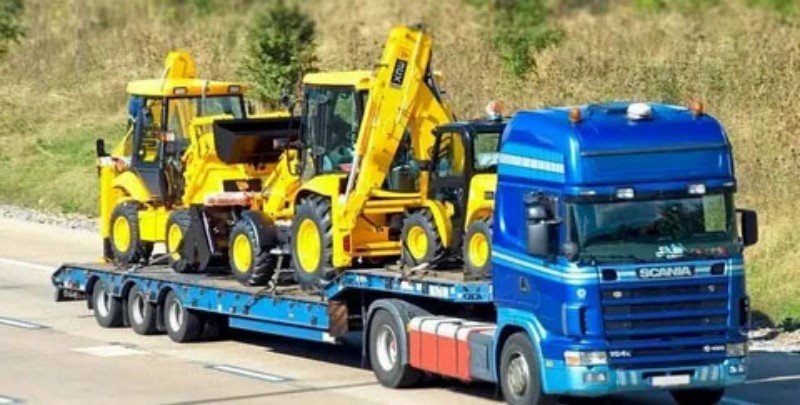
Open top container shipments that entail OOG cargo require advance documentation and approvals that cannot be bargained with- terms require full transparency on the part of the terminals to understand the viability of handling the shipment.
The necessary supplies are usually an OOG declaration form describing the precise dimensions, weight, and center of gravity, clear sketches in multiple views or photos of the cargo, a detailed securing plan that is in line with IMO CSS Code, and documents on dangerous goods when needed. In most ports, there is a good deal of policy of booking well in advance, usually a 7-14 days window (or longer) to look over submissions.
Critical papers and their functions:
- Dimensional approval OOG form.
- Photos of the cargo are sent to the Handling assessment.
- Plan assurance to Safety validation.
- DG declaration Regulatory compliance (where applicable)
Particularly delayed or incomplete filings always cause a delay of terminal clearance and in some cases may lead to rescheduling or extra costs.
Terminal Handling and Stacking Restrictions
Open top containers also become more complicated by terminal handling regulations: in particular, stacking and placement.
Over height open tops are mostly not stackable in yard or on the vessels so that they may not be available on more than the first level where they can be stacked. Depending on the vessel design, deck placement may be more desirable as tarpaulins are easier to remove and it is possible to access them easier compared to below-deck placement. OOG units can be segregated with yards in special areas, and the additional handling costs are often imposed because of the specialized equipment requirements.
These limitations have a direct effect on the logistics planning- shippers need to consider the possible additional space needs, increased dwell time and cost implications at the beginning of the process.
Common Causes of Port Rejection or Delay
Preventable omissions are the common causes of port rejection or delay of open top containers, which compromises safety evaluations.
Underreported OOG dimensions (thus causing out of balance sheets handling plans), poor securing which does not pass inspection, late documentation submissions without an approval window, previous terminal approval (then) and misclassified hazardous cargo are the most common problems which cause regulatory holds.
They can be harsh: pay immediately port storage charges, roll to happen on the following sailing, attract demurrage and demurrage, or completely reschedule the shipment and rebook.
How to Avoid Port Restriction Issues
The best solution to overcome the constraints of the port with open top containers is proactive planning that can keep the shipments on schedule.
Begin with dimensional checking at an earlier stage or verify the dimension on the spot, and then thereafter one should pre-book with the carrier to verify compatibility of the vessel. Get prior authorization at the destination terminal with regard to tolerances in particular and get approvals well ahead of time. As complicated, a separate survey can offer impartial securitizing evaluation.
The steps on practical prevention include:
| Prevention Action | Benefit |
| Accurate measurement | Avoid rejection |
| Advance submission | Smooth approval |
| Engineered securing | Reduce inspection issues |
| Carrier coordination | Vessel slot confirmation |
Authority-controlled port approved open top container transportation starts with the correct reporting of the dimensions and preplanned communications with both the carrier and terminal.
Conclusion — Port Compliance Is an Operational Responsibility
Open top container port restrictions are safety measures that are organized so as to safeguard operations at the port and stability of the vessels. Dimensional reporting, securing designed, and prior coordination of shippers, carrier, and terminal is critical to handling in compliance and preventing the risk of expensive delays. Taking compliance as an integral operation process and not as an after event, the project cargo managers will be able to have smoother operations and secure the project timelines.