
In large-scale transportation of moulds, the major cause of structural damage is not the lack of lifting capacity, but faulty assumptions about the center-of-gravity. The lifting capacity by itself is not sufficient to assure safety in transport- most of the mold transport breakdowns start at the lifting point because of the unnoticed imbalances. The most common team practice is to assume that a load can be moved by a crane or a trailer because it is capable of supporting the weight and ignoring the dynamic forces involved. One of the most widespread causes of preventable structural damage in large mold transport include incorrect assumptions about the center-of-gravity.
The center of gravity (COG) of large molds (usually huge, asymmetric objects utilized in injection molding or die casting) cannot be known by a simple examination. The moulds may be tens of tons, with complicated internal cavities, cooling channels, and ejector systems which cause the actual centre of gravity not to coincide with the geometrical centre. Disregard of this results in the risks that are not only evident during transit but also much later, with impacts on the quality of production and the life of the tooling.
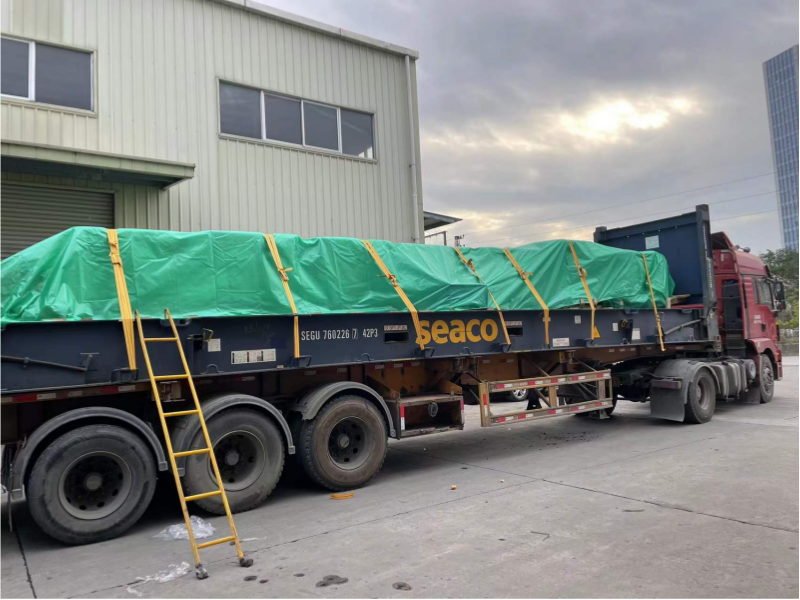
Why Weight Alone Is an Incomplete Measure of Transport Safety
The crane/trailer total weight ratings give an illusion of safety during the transportation of such large molds. The distinction between total weight and load behavior lies at the core: weight is a condition value of static stature whereas load behavior comprises of the vector forces, the moments and distributions that determine how the mold reacts to acceleration, deceleration and external loads.
Intricate tooling used to form parts of an automotive or aerospace tendency comprises asymmetric forms, which influence lopsided load tracks. An example of this is a mold with offset core pulls or plate thicknesses that are not centred, the COG will be off-centred, and the mold will tend to rotate when under loading. This is also complicated by internal structures – the cooling lines will contain residue or embedded inserts, so the balance can be disrupted in subtle ways that will invalidate any assumptions drawn by the exterior size alone.
In practice, during the large industrial mold transportation process, the engineer needs to consider these when he or she does not want to start micro-cracks or stress concentrations, which spread with time. Using weight capacity does not take into account the interaction of the mass distribution of the mold with the support points, and may result in local overloads in the case of what appears to be sufficient overall lift.
Understanding Static vs. Dynamic Load Considerations
The most common measurements made by teams are the static weight, but any imbalance is exaggerated by dynamic situations, like the vibrations of the road or abrupt stops. The internal voids in a mold or the density of its materials (e.g. steel vs. aluminum components) imply that the COG of the structure can be lower or compensate, causing the transference of forces through the COG.
Common Pitfalls in Initial Assessments
Calculations are simplified to make them easier to compute, such as uniform density, which does not hold in the case of moulds with mixed constructions. This partial measure may cause the inappropriate choice of rigging, when slings or chains are not oriented to the actual force vectors, preconditioning instability.
How Incorrect Center-of-Gravity Assumptions Create Structural Risk
Visual estimates of the center of a mold can tend to be under-developed with regard to the complexity of the mass distribution; hence causing setups that create undesired stresses. Off-center lifting places torsional forces, which bend the frame of the mold, and may deform precision surfaces such as parting lines or cavity walls.
The deformation process is not always apparent as the molds have to be constructed to endure high pressures during the process, but the stresses during transportation may cause fatigue on the inside. With time, they develop cracks or misalignments in them, which are only realized when the high-cycle production runs.
Mechanical Risk Explanation
As an example, in the case of the COG errors, the following scenarios would translate to certain risks:
| Scenario | COG Error | Resulting Risk |
| Lift-point misalignment | Offset COG | Twisting stress |
| Uneven support | Shifted load path | Frame distortion |
| Dynamic movement | Moving COG | Progressive fatigue |
In the former, misalignment can happen when rigid points are not picked using calculated COG but according to the symmetry and cause uneven tension leading to the twist of the mold. The second is support during transit, whereby an offset route overloads some regions, which causes distortion of the entire frame. Lastly, the effective COG can be displaced by dynamic changes due to motion, resulting in accumulated fatigue which undermines the structural integrity.
Why Visual Cues Deceive
Externally, the COG is balanced, however internally, the COG was skewed by design features of slides or lifters. Experience shows that engineers can easily tell that 10 percent offset can increase torsional moments by two times and transform an otherwise ordinary lift into a dangerous task.
Hidden Indicators of Imbalance
Symptoms such as excessive creaking whilst lifting or minor imbalances on the trailer bed are symptoms of COG problems which can be detected too late as micro-damages can be taking place. These are avoided by properly analyzing with 3D modeling or real-life measurements to make the forces match.
The Relationship Between COG Analysis and Transport Stability
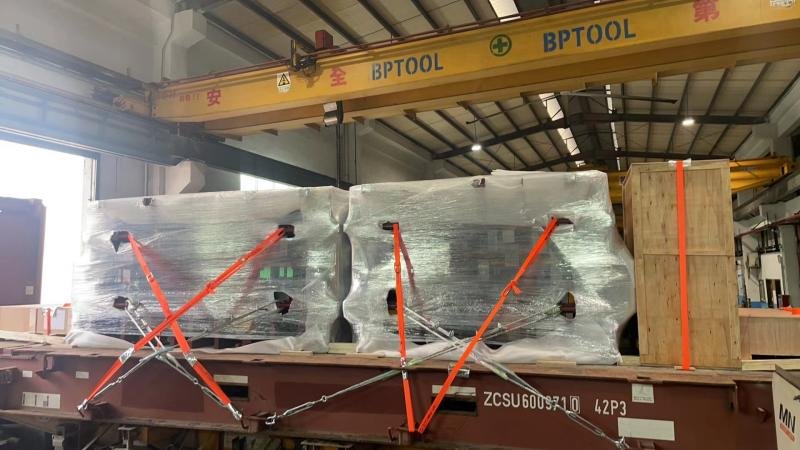
The proper identification of COG is the foundation of stable lifting and transport since it makes certain that all forces are balanced, including the gravitational, inertial, and reactive ones, throughout the structure of the mold. Any COG errors are increased by dynamic forces, including road irregularities or acceleration which makes small imbalances a serious instability risk.
This association goes to the strategies of securing: since the COG is known, optimality is achieved in the placement of tie-downs and cushions, which will avoid locational changes that may result in the increase of the stress. And selection of trailers is also connected – lowboy trailers may be selected because of low COG to increase the stability, and regular flats may be enough when the load is placed in the center.
In essence, center of gravity analysis for large molds incorporates the general planning in minimizing the risk of vibration and shock to the assurance of the mold being delivered in working condition.
Enhancing Stability Through Precise Calculations
Engineers can locate the COG with the help of such tools as finite element analysis (FEA) or simple pendulum tests, and make changes in rigging angles or counterweights. This accuracy lowers the influence in transportation that keeps it in line.
Interplay with External Factors
The effect of stocks on the wind in open transports or incline negotiations further underscores the purpose of COG, an offset center will raise the risk of rolling over, which requires trailers with adjustable axles or special securing.
Consequences of Ignoring Center-of-Gravity Analysis
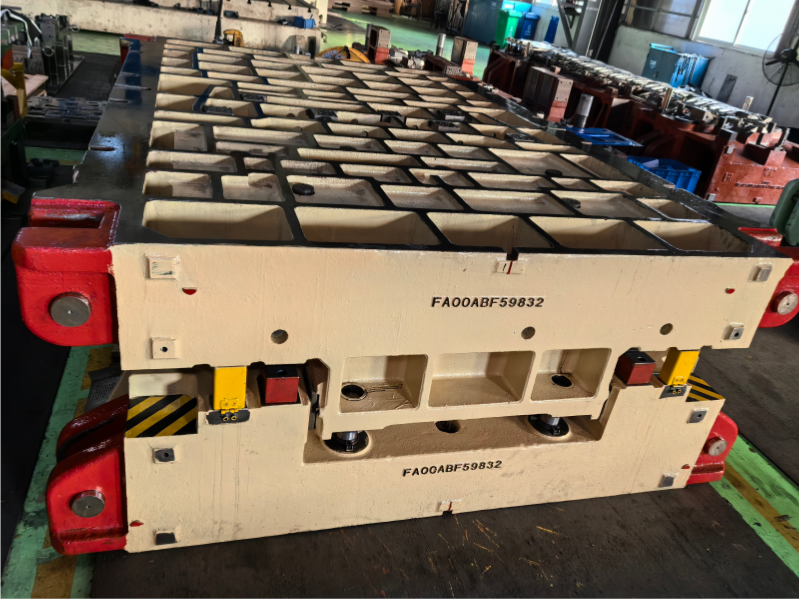
Failure to consider the COG analysis would lead to alignment problems which would manifest themselves in a delayed start up of production by weeks or months. The reason is that more time is needed in recommissioning because ejectors, cores, or cooling systems are misaligned due to stresses during transport.
The most insidious effect is, possibly, the hidden adverse effect on mold life in the long term: micro-stresses repeated up to 20-30 percent of cyber cycles and cause minor parts to wear prematurely. This does not only increase maintenance expenses but also puts quality problems in parts inconsistency in high-precision production.
For instance, vibration damage to precision molds may add to the problems of COG, a chain reaction of failure due to inherent imbalance up to functional failure.
Short-Term Operational Disruptions
Inspections after transport may indicate distorted plates or moved inserts, which require on-site repair, which affects timing schedules and explodes budgets.
Long-Term Structural Degradation
Unbalanced load stress builds up to the point that the effective life of the mold can be cut in half, and that it will have to be replaced prematurely in areas of high stress such as automotive tooling.
Economic and Safety Implications
In addition to the mold itself, the neglected COG risks may pose a threat on the personnel, and unsteady lifts would create an immediate danger that would be averted by a thoughtful analysis.
Conclusion — Load Balance Is an Engineering Responsibility
The key to possessing large moulds and making them transport safe is not the amount of weight that can be raised but the way it performs in reality. The necessary means of safeguarding the integrity of the tooling and the reliability of production is the treatment of center-of-gravity analysis as an element of the engineering responsibility, rather than a logistical consideration. With a focus on an accurate COG assessment during the design stage to the implementation stage, the engineers can avoid the procession of risks caused by the imbalance and make sure that molds manage to survive the challenges of transportation without any harm to their functional life cycle. It is a proactive strategy that highlights the mechanical facts of safe heavy-lift operations that focus on preventing rather than fixing expensive mistakes.