
Mass industrial transportation of moulds is by default controlled by the sheer size and the possible effect of such loads on civic infrastructure. The compliance problems also tend to emerge long before the actual motion, requiring the initial examination of routes, vehicle formations, and permissible limits. The biggest mistake that many teams make is that during the planning phase, they think that permits are a formality to be done after getting transport capacity but this does not take into account the fact that regulatory hurdles can cause the whole project to run off the rails in the first place. One of the first and most crucial risk factors in big mold transportation is regulatory compliance.
Transporting of large-industrial molds Compliance decisions can frequently define the risk exposure, rather than transport equipment or capacity. Personally, as a project engineer, with several projects, where a single permit requirement was overlooked, I have witnessed the effect of that one requirement being neglected and the resultant weeks of time wasted, or resulting unforeseen expenses. The article dissects the regulatory environment beginning with the reason these transports cause oversight, types of permits that are common, dangers of failing to comply and the difference between domestic and international moves. Realizing these aspects will help OEMs, tooling suppliers, and project managers incorporate compliance into their planning.
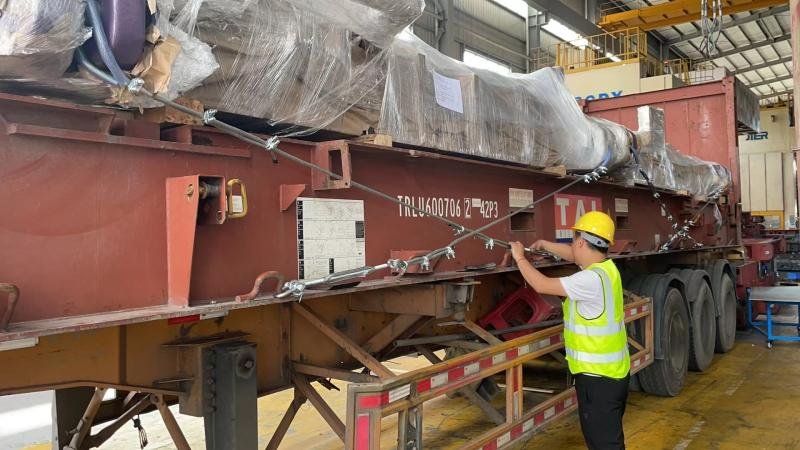
Why Large Industrial Mold Transport Is a Regulated Activity
Significant industrial molds instigate regulatory investigations as their sizes and weight exceed the standard cargo size therefore requiring specialized monitoring to safeguard roads, bridges, and safety of people. The central element in this is the fact that molds, which can be longer than 20 feet or heavier than 50 tons, are not handled as normal freight. They are instead classified as being under special transport, whereby the authorities enact regulations to ensure that they do not cause any damage to the infrastructures and they reduce the chances of accidents.
Think about the fundamentals: dimensions of moulds often exceed the legal width (generally 8.5 feet) or height (13.5 feet) restrictions, and the weight on axles can be higher than the conventional limits on weights (i.e. 20,000 pounds per axle on highways). It is not random; regulations are closely connected with infrastructure protection. Load-bearing capacities of roads and bridges are in normal traffic operation and overloaded capacity may create additional stress resulting in wear or structural failure in case not handled adequately. In my previous work on die casting molds of auto components, as an example, we have been forced to model axle distribution at the start of the project to prevent activation of bridge-specific constraints.
Special transport and normal cargo classification are simply a matter of scale and level of impact. Normal cargo is small enough to fit in the ordinary dimensions and weight of the truck enabling easy routing without permits. The special transports, such as big molds, need case-by-case approvals since they change the flow of traffic, such as wide turns, reduced speeds, or even a temporary road closure. This regulatory structure means the transport does not harm to the assets of the population, but it further implies that the planners need to be aware of such limitations since the first survey of the site.
To dive deeper into the broader regulatory context, check out our overview of industrial mold transport regulations. This background can be used to understand how compliance is not an added-on factor, but rather a fundamental engineering aspect.
Common Permit Categories Affecting Mold Transportation
Large mold transportation permit requirement varies by jurisdiction but always deals with size, weight and movement limits and usually involves application processes which are well detailed and require submission of applications weeks prior. Being a person who organized permits of molds that travel across several states, I can confirm that these are not just a bunch of bureaucracy wills, but a direct influence on the manner in which a transport may be carried out, through the choice of a vehicle to use, as well as its timing.
Oversize and Overweight Permits
The simplest permits are the oversize and overweight loads. Oversize permit takes effect in cases of a mold that is above the legal size, which requires the route planners to choose routes that have sufficient clearance to enable bridges, tunnels, and overhead lines. The overweight permits concentrate on the axle loads so that the weight is redistributed so as to not cause the destruction of pavements or buildings. This could technically include carrying more axles or special trailers to meet the requirement.
Route-Specific Approvals
In addition to the simple size and weight, approvals on route, particularly highways or urban areas, are common. These analyze the feasibility of the suggested path taking into consideration such factors as the road curvature, slope, and the density of traffic. An inadequately selected route without authorisation may result in immediate refusal leaving the load stranded.
Time-of-Day and Escort Requirements
Numerous permits have time-of-day restrictions, so that movement is only possible during the off-peak times to minimize the risks of congestion. Specifically large loads are required to be accompanied by escort vehicles, usually with pilots or police, to show the way that the transport is going and to alert others. This brings in coordination levels but is imperative to safety.
To better demonstrate these categories, here is a table of permit overview in accordance with the most frequent situations I have encountered:
| Permit Type | Trigger Condition | Operational Impact |
| Oversize permit | Exceeds width/height limits | Route restriction |
| Overweight permit | Axle load exceeds limit | Speed and axle config |
| Special movement approval | Urban or port areas | Time window limits |
To learn how to do this in high-risk situations, explore oversize mold movement permits. Integrating these permits early prevents last-minute scrambles.
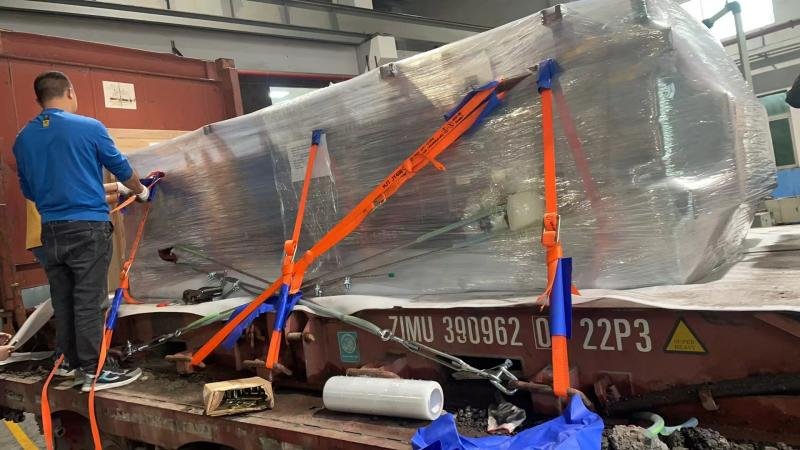
How Compliance Gaps Increase Handling and Damage Risk
Compliance gaps in mold transportation don’t just cause administrative headaches—they directly amplify physical risks to the mold itself through forced adjustments and extended exposure. Drawing from projects where overlooked permits led to rerouting, I’ve observed how these disruptions create a chain reaction of vulnerabilities.
Forced Rerouting and Re-Handling
The non-commercial aspects of transporting the molds do not necessarily only create administrative pain, but directly increase the physical risk to the mould itself by causing forced modifications and prolonged exposure. Based on initiatives that used neglected permits to reroute, I have been able to see how these interruptions produce a domino effect of weaknesses.
Temporary Storage and Exposure Risk
In cases where a permit is refused on route, teams will have to undergo forced rerouting, and this implies loading and offloading the mold onto other vehicles or highwayways. This additional handling enhances the possibility of scratches, dents, or lack of alignment precision components. Molds are especially vulnerable, with their tangled cavities and smooth surfaces, even a slight impact of any material in re-handling can damage tolerances in the micron range.
Why Delays Amplify Vibration and Corrosion Risk
Rerouting often results in short-term storage, in which the mold could be left in unsecured yards and warehouses. This exposes the mold to humidity or dust or temperature changes which increases corrosion on metal surfaces without the appropriate climate control. In a case that I handled, storage delay of two weeks caused surface rust that would have cost me a lot to refinish.
For insights into mitigating these, review transport-related mold damage risks. Addressing gaps proactively keeps risks in check.
Compliance Differences Between Domestic and International Mold Transport
Domestic and international mold transports have a big difference on the complexities of compliance with international moves introducing the stratified jurisdictions requiring further upfront planning to conform to different standards. In my view of engineering, it will be relevant to treat them as different disciplines in order to prevent bottlenecks.
Jurisdictional Variation
Locally, compliance can be sometimes state-by-state in such countries as the U.S., where national rules dictate minimums, and local rules dictate details, such as the higher axle weight restriction in California than in Texas. This difference necessitates mapping of the permits per segment, but it is more predictable within a single country.
Customs Clearance and Transit Permits
In other parts of the world, clearance of customs will take center stage, with value, origin, and hazardous goods (where applicable, such as residual chemicals in molds) declaring. There is an additional layer of transit permits to en-route countries, e.g. EU-wide authorizations on moves across two or more member states. These may include inspections that would halt the progress in case documentation is not complete.
Why Cross-Border Moves Require Earlier Planning
International compliance lead time is generally twice that of domestic one, that is, think 4-6 weeks instead of 2-3, because it involves agency coordination. Delay in this case is not only logistical, but even leads to tariffs or quarantine. We have learned in projects where the molds are shipped out of China into the U.S the issue of matching the export permits with the import regulations at the beginning of the project to avoid delays at the ports.
To prepare effectively, consider international mold transport preparation. Such insight turns the traps that might happen in the way into smooth-flowing procedures.
Conclusion — Compliance Is a Planning Discipline
Before the load of the mold, permit and compliance requirements are in effect shaping the transportation of large molds. Regulatory planning should be viewed as an engineering and project management task in order to manage risk, prevent delays, and make sure that transport execution is carried out as per schedule. By being proactive and foreseeing such constraints instead of responding to them, teams are able to keep the project schedules on track and defend some precious resources. Finally, compliance is not an obstacle, it is a framework that with early integration it allows safer and more efficient results.