
When it comes to oversized cargo transportation, there is no universal answer to the question of developers of open top container or flat rack. Both are not always better than each other; it all depends on the details of the shipment. To get cargo whose size is more over-height than width but sufficiently within standard width limitations, an open top container frequently offers the required accommodation using the removable roof as well as including side walls to enhance stability. At the opposite end, flat racks dazzle over-width loads in which side walls would be an inconvenience and permit the extension to take place laterally without restriction.
Another common myth among the exporters is that any over-sized item automatically requires a flat rack. My experience with project cargo over the years has witnessed this to cause unnecessary headaches such as expose the cargo to the elements so much more and the extra effort put in place to secure it, when an open top could be as sufficing given not a width restriction as it is also more protective and may cost less.
Dimensional analysis, a large load distribution, method of handling and even suitability of the route should be considered in the correct choice of container holding OOG cargo and not just convenience or custom. The decision to have an open top container or a flat rack is not a matter of choice, but a matter of engineering that has to be determined by the size of the cargo, the structural limits, lifting needs, and route adherence. This system eliminates threat areas such as destruction of freights, breach of regulations or high cost expenditures.
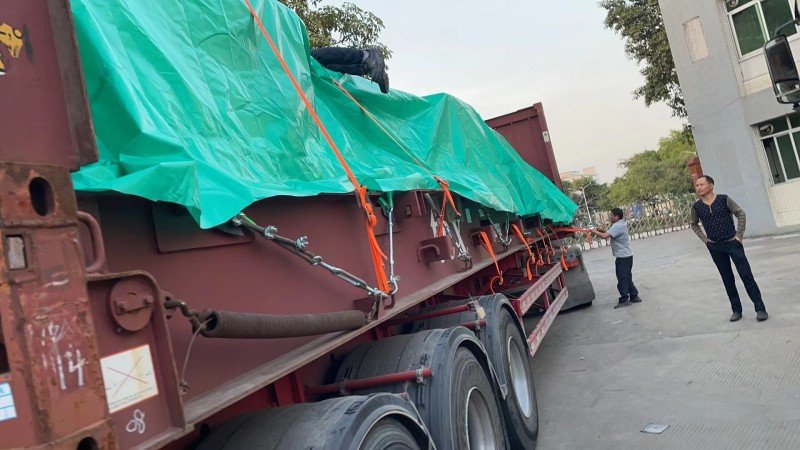
Structural Differences Between Open Top and Flat Rack Containers
The inherent design variations are the initial step toward making a well-informed decision since it directly affects the treatment of OOG cargo by each container.
Open top containers are similar to a standard dry van except one important adjustment namely: a removable tarpaulin lid that can be removed to permit topping of tall goods. They have complete side of the walls and offer a closed form on the sides and end. Flat racks in their turn remove the roof and side walls completely, only leaving the floor and end walls (they can be collapsible). This free design valuizes flexibility, both with wide and irregularly shaped loads.
Another important factor is floor strength, the two types have reinforced base which helps support heavy weight but open tops have additional rigidity of their side walls and this improves the structural integrity. Open tops have corner posts that are usually more robust to stack, whereas the flat racks concentrate on the foldable ends so as to be bundled in the event of return shipments.
The levels of protection vary significantly: open tops will provide good protection against weather through the tarpaulin, but flat racks will be able to offer little protection by their own means; shrink-wrapping or custom-made crating may be required.
Why do side walls matter? They also enhance lateral stability in transit where the cargo is held together so that it does not tip over making the ship unbalanced and resulting in accidents during the transit, particularly the rough seas.
| Feature | Open Top Container | Flat Rack Container |
| Roof | Removable tarpaulin | No roof |
| Side walls | Yes | No |
| Top loading | Yes | Yes |
| Over-width cargo | Limited | Suitable |
| Cargo protection | Moderate (covered) | Minimal |
| Structural containment | Higher | Lower |
Dimensional Limits: Height vs Width Constraints
The size of the cargo is a determinant of the suitability of containers more than any other aspect, not taking it into account might translate to carrier rejections or safety risks.
When the height of shipment is initially above the standard 8ft 6in internal limit but the width is less than the 8ft, open top container vs flat rack comparison usually works against the flat rack. Because it enables vertical extension, which does not sacrifice side containment, it has an open roof. On the other hand, when width surpasses 8′ flat rack is necessary since the absence of sides will allow protrusions which would otherwise conflict with walls.
Door clearance is a minor though significant factor, open tops have standard end doors, and cargo will need to fit through them unless it is loaded by getting it up the side (collapsible ends to flat racks present more options). Both involve OOG declaration to carriers, however, flat racks often may lead to more disciplined analysis, as they can be exposed, which in turn may delay approvals.
The carrier policies are different: on some lines, open top height limits are more restrictive to guarantee the safety of ta rapaulins; flat racks may be limited by width depending on stacking arrangements in vessels.
| Cargo Condition | Recommended Container | Reason |
| Slight over-height | Open Top | Allows top loading |
| Over-width | Flat Rack | No side wall restriction |
| Heavy transformer | Open Top (if width fits) | Better containment |
| Extremely wide steel beam | Flat Rack | Width flexibility |
Where the height of the cargo is more than the internal limits but not more than the width an engineered open top container transportation service evaluates lifting strategy, structural support, and lashing design before confirming suitability.
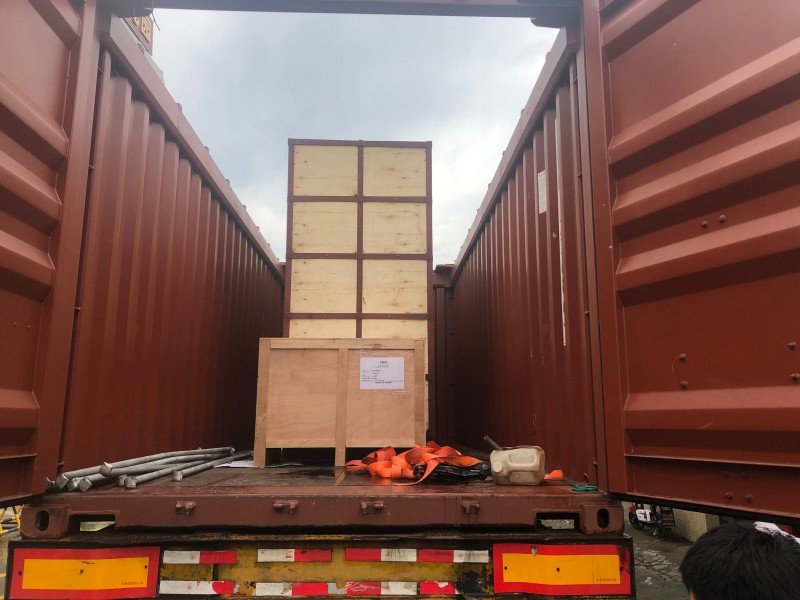
Loading Method and Lifting Requirements
The manner in which cargo is loaded and lifted can either pass or fail a shipment and the two types of containers will require more accurate planning to prevent accidents.
They are both top loaded using crane but open tops need tender removal and tarpaulin reinstitution after loading. Open design in flat racks makes it easy to access but increases the risk of tipping due to the requirement to stabilize the base.
Spreader beams tend to be used in the heavy lifts, which requires even distribution of weight, which is important in balancing the center of gravity of the container. Open tops have lashing points that are built into the walls and the floor and this provides multiple anchors. The flat racks are more dependent on floor and end fittings making it difficult to obtain wide loads.
In my handling with industrial machines, both machines require engineered planning simulations of load paths, a special cradle to provide support, and that based on a route. Going unmindful of them, such as assuming that a flat rack being open justifies the aspect of bad lashing, puts risks such as cargo movement during transit.
Cost Comparison: Is Flat Rack Always More Expensive?
Costs do not only surround the sticker price but rather this cost is a compounded aspect and assumptions on this regard can make budgets swell out of proportion.
Base freight on open tops is normally moderate and is nearer to the conventional container rates, whereas flat racks attract higher premiums since of the specialized handling and lower stacking ability on a ship. For the case-to-case OOG charges, they tend to get higher in the event of flat racks due to the larger area that will be taken in the holds or the decks.
The processing of the fees in the ports is a reflection of this: the open tops may mean the usual crane fees, whereas flat racks may need specialized tools to cover broader distances, which increases the fees. Open tops have tarpaulin sealing built-in, but flat racks might require additional coverage such as bespoke covers, which counts in the case.
Complexity Lashing complexity also contributes, the simplicity of open tops walls in securing may reduce labor costs, which flat racks would require a lot of chaining and blocking.
| Cost Factor | Open Top | Flat Rack |
| Base freight | Moderate | Higher |
| OOG surcharge | Case-by-case | Often higher |
| Handling charges | Moderate | Higher |
| Weather protection cost | Included (tarpaulin) | May require extra |
Flat rack container transportation is often charged high rates because of excessive OOG exposure, although it is not always the case: route-specific factors such as ship supply can skew the ship.
Risk Exposure and Cargo Protection
Risk management begins at the point where every container is identified in respect to its interaction with environmental and operational risks.
The weather factor is an obvious point of concern: the option of open top container transportation is made in the form of the tarpaulin, resistant to the elements or debris, whereas flat racks exposes the cargo to further risks, requiring proactive efforts such as vacuum bagging of delicate goods.
In transport on the sea, the important factor is stability–side walls on open tops prevent the lateral motion and consequently limit the dangers to tall loads in case of the winds. Flat racks, which do not have this, increase the likelihood of slides particularly during heavy winds or swells which require innovative lashing.
Since dealing with wind resistance on high cargo to adjusting to port limitations, open top containers offer side containment, eliminating some of the stability risks associated with flat racks. I have given an opinion on cases where an open top can help to prevent claim due to unsecured lateral protrusions.
Common Mistakes When Choosing Between Open Top and Flat Rack
Even experienced teams end up in traps that undermine deliveries and this is when only awareness serves as a defense.
- Choosing a flat rack without determining the width requirements, resulting in an unnecessary cost incurred in the deal because an open top would be enough.
- Disregarding the advantages of side walls, which may improve the stability and security of the loads fitted in these walls.
- Calculating poorly, lacking the understanding that the design of the lashing design requirements needs to be open, attached to raised racks assumed to be open, requiring less securing, whereas sometimes it requires increased.
- Selecting on the basis of cheapest freight quote ignoring charges in total, surcharges and handling fees that swell prices.
- Neglect to take into account the limitations of port handling, e.g. crane capacities or stacking regulations that prefer one type to the other.
Conclusion — The Better Container Is the One That Matches the Cargo
When closing this comparison of oversized cargo transport, keep in mind that when choosing an oversized cargo container, size cannot make the difference between the more and the less advantageous choice but the compatibility with the structure to be carried, lifting plan, route restrictions, and regulations. Promote engineering-first mentality: make sure to first perform a proper dimensional verification to prevent mismatches that increase risks or expenses. Helping to get there safely, as well as efficiently by early stress compliance checks, carrier approvals, port feasibility checking and load distribution analysis are all concerned with making sure not only that it arrives, but that it delivers with safety and efficiency. Such tactical practice is informed by the real life experience of project logistics ensuring that you avoid the trappings of making decisions based on assumptions, which guarantees consistency throughout your chain of supply.