
Not every heavy cargo is equal in terms of risks of transportation. Big molds, which are critical to accuracy in manufacturing such as in injection molding or die cast, are much more than mere bulky objects, since they represent functional precision equipment that must be handled with special care. It is a trap that so many organizations commit to believe that any logistics company that can make heavy machinery move is also the one that can safely transport large molds. The myth does not take into account the particular weaknesses of the molds, which may result in the insidious damages affecting the quality of production.
Preventable damage and downtime are common when large molds are considered as normal heavy equipment on the transport.
Massive mold transportation is a precision based logistics business, whereas, regular transport of heavy equipment is more of a load based business, which is bewildered by the amalgamation of both, posing unnecessary danger. In this paper, we shall deconstruct the major variations in the technical requirement, structural behaviors and risk controls. The awareness of these differences allows OEM tooling engineers, mold manufacturers, project managers, procurement teams, and engineering leaders to make more informed decisions that will protect their assets and prevent causes of discontinuity production.
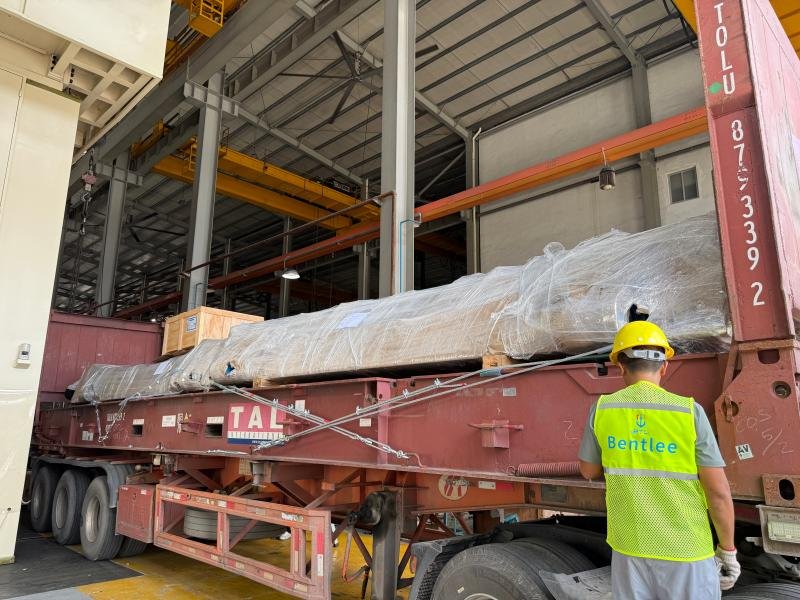
Why Large Molds Are Not Just “Another Type of Heavy Equipment”
Big molds need a radically different transport method since this value is in precision functionality, not only in operation utility.
The large molds are, essentially, the basis of tools of shaping products in manufacturing – consider them as the complex dies that determine the geometry, tolerances, and surface finishes of millions of parts. By comparison, typical heavy equipment, including excavators or cranes, is suited to rough field applications, in which durability to rough handling is part of the design. This functional role disparity implies that the molds cannot withstand the same intensity of stress, which puts their very existence in danger.
The sensitivity of such important components as alignment pins, parting surfaces, internal cooling channels, etc. is one of the problems. Even insignificant misalignments in the course of transportation, which are caused by insufficient fixing or vibrations in the course of road routes, may bend these elements resulting in flaws in shaped products. Heavy equipment, though, may be more forgiving in their design; a forklift may have a rough ride and still be able to keep working well by lifting its cargo.
The most sinister thing about the damage of mould is that it does not always occur immediately after the installation process and even during the first production runs. A mold that has been transported may appear to be in good condition but, with the presence of undetected stresses, may result in flash lines, non-uniform cooling or even premature wear once in operation. This delayed discovery makes what appears to be a successful deliverance into an expensive production stop, large industrial mold transportation process demands expertise in precision logistics from the outset.
As a project logistics engineer who has been in charge of several of these molds relocations, I have witnessed firsthand how such problems can arise because of the tendency to treat molds as generic heavy loads. An example is where in one instance, die casting mold was shipped following standard equipment protocols which generated micro-cracks that did not manifest until 500 cycles thus set back the schedule of one of the largest automotive suppliers by weeks.
Functional Vulnerabilities in Detail
Speaking deeper, the purpose of molds in keeping tight tolerances- frequently in microns. Such precision is rarely considered in heavy equipment transport since even the assets are designed to be robust. Molds are, however, precision tools; a mistake in the design of the mold may increase the inaccuracy of the final product, with all the part fit to material flow.
Structural and Load Behavior Differences
The load behavior peculiar to the large molds is predetermined by its structural structure which does not resemble heavy equipment but requires a particular analysis in order to avoid failures.
The presence of large molds usually results in a concentrated load flow because the design of such molds is such that the cavity, cores, and ejector systems produce a disproportionate weight distribution that can be easily displaced during acceleration or during turns. Normal heavy equipment, such as bulldozers, is more distributed in its mass, and the frames are designed to live with uniform loads and no significant internal geometries.
The presence of large molds usually results in a concentrated load flow because the design of such molds is such that the cavity, cores, and ejector systems produce a disproportionate weight distribution that can be easily displaced during acceleration or during turns. Normal heavy equipment, such as bulldozers, is more distributed in its mass center of gravity analysis for large molds becomes a critical step in planning, ensuring stability during transit.
Another problem is asymmetry: molds tend to be off-center, i.e., protruding slides, asymmetrical parting lines, which makes it more difficult to calculate the center-of-gravity. Heavy equipment has higher symmetry, and can have simpler rigging and tie-downs. That is why the center of gravity analysis of large molds is a significant stage of planning, which guarantees the stability of transportation.
In order to demonstrate such differences in a clearer way, a comparison table follows:
| Aspect | Large Molds | Heavy Equipment |
| Load distribution | Highly concentrated | More uniform |
| Structural tolerance | Low | Higher |
| Deformation sensitivity | Critical | Often acceptable |
This table shows the reason why common transportation means which works well on equipments are ineffective on the molds- concentrated loads may create concentrated stresses, which may produce cracks or distortions unless countered.
Addressing Asymmetry Challenges
Asymmetry in the molds necessitates in practice specific cradles or fixtures to redistribute the forces, as opposed to the simple chaining commonly employed to hold equipment. The neglect of this may bring the risk of falling over in sharp manoeuvres, which explains why planning should be led by engineers.
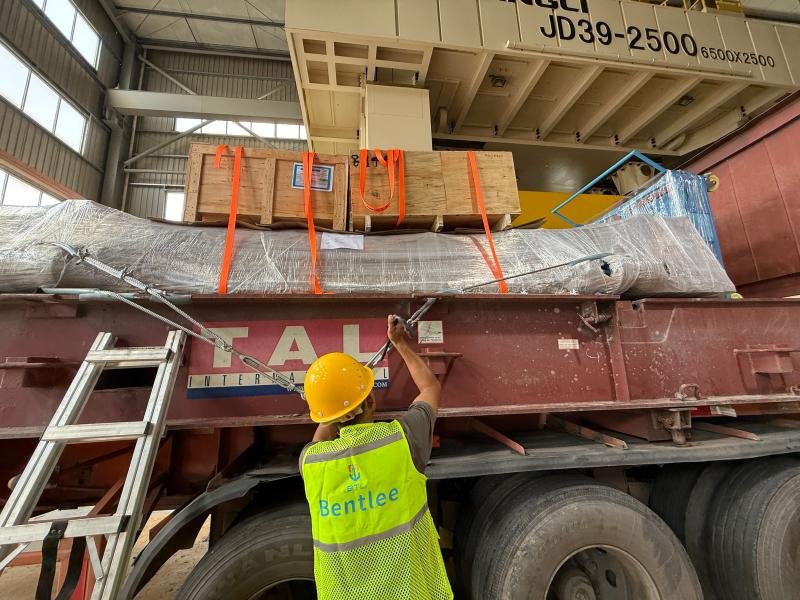
Precision, Shock, and Vibration Sensitivity
Even the slightest shock and vibration are very sensitive to precision molds and heavy equipment can hardly be as fine-tuned because of its crude nature.
Molds require fine alignments to work, pushing the lines of parting to be airtight and the ejector pins to move freely. Micro-traces during transportation, e.g. potholes or rail shake, can cause these alignments and cause operational balance. Constructed equipment such as that of heavy machinery can take significantly more jolts without degrading its operation.
Vibration is an insidious danger: constant exposure to it may wear out mold material, particularly where there are thin walls or complicated internal structures. This vibration damage to precision molds Vibration is an insidious danger: constant exposure to it may wear out mold material, particularly where there are thin walls or complicated internal structures.
Tolerance to shock is radically different as well. What seems to be a simple fall or blow that may deform the frame of a machine might crack a mold in two and its core may not be used. Through engineering projects that I have handled, I have learnt the molds usually need to be isolated by systems such as air-ride suspensions or damping materials that are not commonly available in equipment hauls.
Quantifying Sensitivity Risks
In perspective most molds may withstand a vibration of less than 0.5g and heavy equipment will withstand up to 2g or more. This difference in thresholds implies that routes used by molds should be carefully designed to eliminate high-vibration areas, which is not normally prevalent on machinery.
Differences in Protection, Planning, and Risk Control
Large molds need more than basic securing, and their protection and planning include the levels of risk control that make them stand out as a significant difference between them and heavy equipment logistics.
Mold protection may include purpose-designed packaging, including vacuum-sealed crates filled with foam cushions to prevent moisture and impact intrusion and to prevent corrosion and surface finishes by impact. At the same time, heavy equipment may require the usage of simple tarps or chains because they are less likely to cause harm to the environment.
Another major differentiator is planning depth. Simulations in transporting the mould are in detail, with 3D modeling of the load paths and survey of the routes to tell about the hazards such as low bridges or sharp curves. This precision is not typically required since complex but not standard heavy equipment moves because the assets are much more forgiving.
The meaning of successful delivery is different. In the case of molds, it is considered successful when it comes to the arrival ready to become integrated without the need to recalibrate it again; any divergence would postpone the production. In the case of equipment, it is just a matter of having it onsite in a functioning condition, even though it may require slight modification. This is why contrasting with construction equipment transport services will allow better understanding that the risk management of molds is much stricter, although both activities are accompanied by oversized loads.
During my tenure to manage the relocations of factories, I have noticed the fact that poor planning, where molds are regarded as equipment, results in the hidden cost, such as rework or idle time, hence the importance of specialized procedures.
Layered Risk Mitigation Strategies
The precautions towards molds are comprised of various steps such as inspections that can be done before the load, after delivery, and that there were no shifts. These may be omitted by heavy equipment hauls because the visual checks are not adequate with respect to precision assets.
Conclusion — Choosing the Right Transport Logic Matters
Finally, it is important to note that big molds and heavy equipment might have the same dimensions and weight, still, they should not have the same logic of transportation. This difference is simply a matter of classification: molds require a more precision-oriented approach in order to reduce the unique vulnerabilities, whereas equipment requires a more load-oriented approach.Focusing on risk differentiation, manufacturers can safeguard the tooling investments and guarantee the flow of production because they focus on the structural sensitivities, vibration controls, and planning in detail. The bad categorization of these transports is not merely an omission but a move that can trigger logistical hitches. Engineering managers and project teams are advised to consider their capacity when choosing partners, but rather on their knowledge in these nuances to make decisions that are consistent with long-term reliability.