
The act of transporting mining equipment entails the transportation of huge, frequently disproportionate shaped items e.g. 400-tonne electric rope shovels, ultra-class haul trucks, gyratory crushers, or modular concentrator segments, on tough terrain, between nations, and also between multiple media. These deliveries are high-stakes: failure accidents, rules breaches, structural defects or delays can have a ripple effect of millions in missed production or fines.
Many companies still approach logistics sourcing primarily as a cost negotiation exercise. In reality, choosing the right logistics partner for mining equipment transport logistics sourcing is an exercise that remains focused on cost negotiation by many companies. The fact is that when selecting the appropriate logistic partner in the transportation of mining equipment, one should consider the competence in engineering, the ability to comply, and risk management solutions rather than only freight rates. When it is viewed as a simple procurement formalism, the structural risks, which can bring down even well-financed projects, are not considered.
In expansive development projects, either in the greenfield mines in remote areas or the brownfield developments, the engineering capability test should be the starting point of selecting the appropriate logistics partner to the transport of mining equipment instead of focusing on the rate. A technically robust partner will eliminate the downstream effects that low-bid selections usually cause.
Evaluate Engineering and Technical Capability
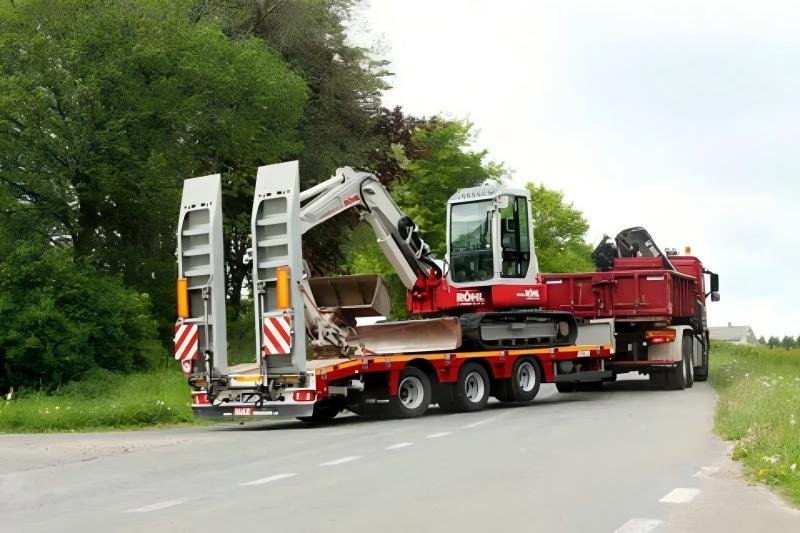
Any success of the mining equipment move depends on the engineering depth and not the size of the fleet. Oversized and out of gauge (OOG) cargo requires use of accurate calculations to prevent falling and drifting and road-bridge collapses.
The partners should exhibit known experience with OOG and oversized cargo common in the mining industry such as excavators larger than standard container sizes, dismantled dragline booms or wide bodied haul trucks. Identify places where 3D load planning is regularly conducted so that the location can see center-of-gravity changes, stress areas, and securing patterns. Rigorous lashing and fixing of calculations (noted by IMO/CTC guidelines or other national standards) are final since inadequate fixing has led to many high profile incidents.
The feasibility analysis of the routes must extend further than desktop mapping and involve physical duplication of the overhead clearance, turning radius, load rating of the bridges and seasonal limitations. The flexibility that is not available in regular equipment is the availability of dedicated trailers in the form of modular lowbeds, extendable beam trailers, or self-propelled modular transporters (SPMTs).
| Evaluation Factor | Why It Matters |
| OOG experience | Handles irregular cargo shapes and weights without improvisation |
| 3D planning ability | Ensures stability and identifies risks before loading |
| Load engineering | Prevents structural stress or deformation during transit |
| Route planning expertise | Avoids infrastructure conflicts and costly reroutes |
| Equipment availability | Provides operational flexibility for last-minute adjustments |
Assess Regulatory and Compliance Knowledge
Shipments of mining often transcend boundaries, have dangerous residues (even in the clean equipment), and demand specific oversized/overweight permits. Poor knowledge of compliance results in detentions, fines, or even rejection at ports or border.
An effective partner keeps abreast of the dangerous goods handling (IMDG/ADR/UN classifications) even without equipment that is out of line being drained and being categorized as residue. They ought to have a history of obtaining permits to carry oversized transport under the lowest cost possible – to local road authorities, as well as national highway agencies – and usually arranging police escorts or temporary traffic management. Port compliance experience is critical in breakbulk or RoRo in which case terminal operators provide stringent lashing certifications and stability requirements. The international transport regulations as well as the customs valuation of temporary imports and re-exports of leased machinery require proper accurate and timely documentation to avoid delay in clearance.
| Compliance Area | Risk If Weak |
| DG declaration | Shipment detention or seizure |
| Road permits | Fines / delays / forced offloading |
| Port handling | Cargo rejection or additional surcharges |
| Customs documentation | Clearance delay or storage fees |
Review Operational Infrastructure and Equipment
It is operational muscle that would dictate the survivability of a plan as it comes in contact with reality. Dedicated trailers are sufficient, but the partner must have combined supply chain capabilities.
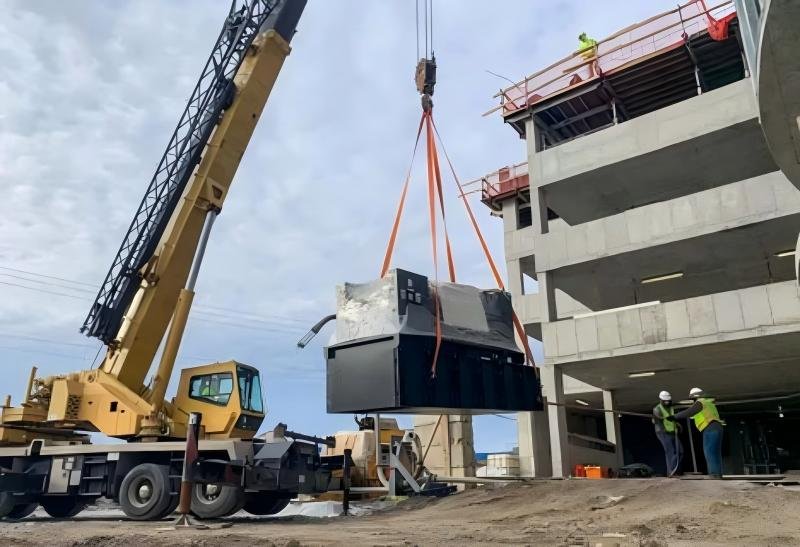
The exceedingly heavy and sizable weights of mining fleets are handled with access to low-bed trailers or ultra-low flatbeds or hydraulic goose-neck configurations. Crane coordination, i.e. heavy-lift units, or mobile units on shore, to complete remote staging, involve relationships that are established to prevent bottlenecks. Close relations with the port handlers make the vessel operations faster and less expensive in terms of laytime. The coordination of escort vehicles such as pilot car procedures and route pre-clearance is vital on small mountain roads or congested urban routes. Warehousing and staging services permit dismantling, storage on-site, or covered prep on off sites.
| Operational Asset | Strategic Advantage |
| Low-bed trailers | Heavy load capacity and ground clearance |
| Flat rack access | OOG flexibility for awkward dimensions |
| Port coordination | Faster handling and reduced dwell time |
| Escort network | Compliance assurance on restricted routes |
Analyze Risk Management Systems
Strong risk management transforms the hypothetical strategies to solid actions. Seek networking processes that involve more than simple checklists.
Pre-shipment checks ought to have condition-survey examinations,拍照 records, and co-signing with the shipper. Routine survey operations Route survey: physical survey, laser-based clearance surveying and load testing of suspicious buildings reveal problems at an early stage. The coverage should be based on the true replacement value, and should have delay-in-transit and general average coverage. The contingency plan includes weather, equipment failures, or permit suspensions that have an alternative determined. Emergency response procedures will guarantee the speedy gathering of rescue crews or diversion in case of accidents.
Financial Stability and Cost Transparency
The price is important but the issue of excessive exposure by opacities or unstable providers much higher than average premiums to time-tested providers.
Insists on clear cost summaries between ocean deliveries, inland shipments, permits, escorts, insurance, and possible additional charges. Knowledge in working with demurrage and detention, in particular at busy ports, or the delay associated with permission, avoids the sudden growth. The partners provide predictable budgeting because they provide realistic forecasting instead of low-balling at a cost to get bids. Inspect insurance form and losses experience; late and contested claims increase project risk. Good financial stability guarantees the partner to be in a position of absorbing the unexpected expenses without interference of service.
| Financial Factor | Impact on Project |
| Clear pricing | Cost predictability |
| Insurance coverage | Risk mitigation |
| Claims history | Reliability indicator |
| Budget forecasting | Project control |
Common Mistakes in Logistics Partner Selection
Project teams constantly get into pitfalls that can be learned by team coordinators:
- Promoting the lowest bid without engineering inspection – usually resulting in insufficient securing or route shocks.
- Disregarding OOG specialization – that general freight forwarders will be able to handle mining-scale moves.
- Neglecting permit experience – will cause weeks of delays in the portals or highways.
- The lack of checking the past project cases – lack of red flags in history of project execution.
- Failing to review insurance coverage, which results in a gap in high-value assets protection.
- Diversifiable risks- Based on an assumption that all freight forwarders process mining equipment – the underestimation of engineering and compliance gap.
Structured Evaluation Framework for Decision Makers
A selection process requires a systematic selection as opposed to random comparisons.
Establish the weighted evaluation tests such as 40 per cent. technical/engineering capability, 25 per cent. compliance and permits, 20 per cent. operational infrastructure, 10 per cent. risk management, 5 per cent. financial factors to compel balanced decisions. Technical interview with the suggested engineers of the project, not only the sales teams. Request chart case studies of previous like moves of mining (dimensions, weights, routes, challenges faced). Request the sample load engineering proposals as early as possible to have a feel of the depth prior to commercial talks. This model transfers the price-first to the capability-first logic, which diminishes considerably the exposure of downstream.
Conclusion — Logistics Partner Selection Is Risk Governance
The success of the mining equipment transport works is made possible by the fact that the logistics partners are not chosen due to low prices but due to their engineering capacity, competence in the regulatory field, and stability of the work. The move percolates on safety programs, compliance, reliability of timelines and eventually on project economics. Project teams applying partner selection as a considered risk management instead of a commodity purchase safeguard people and capital in one of the most inexcusable chain supply chains in the industry.