
Transportation of dangerous goods in open top containers should be in strict accordance with the internationally accepted regulations, which govern the handling of dangerous goods, organized risk evaluation, as well as engineered securitization, rather than availability of containers. Dangerous goods are controlled in accordance with the International Maritime Dangerous Goods (IMDG) Code that provides the obligatory requirements of the goods transportation by sea to avoid accidents, environmental damage and unsteadiness of a vessel.
Occasionally, open top containers are chosen because unsafe cargo is too high or too large, as they can be loaded at the same place, and have projections that will not fit the conventional dry vans. That said, the option also creates some difficulties: because of the absence of a permanent roof, the structure will be more exposed to the elements, the pressure exerted by the wind, and possible contamination, and the open structure will require heavier support in order to avoid displacement or seepage.
It is an account of numerous presumptions that cargo that is already regarded as hazardous does not show a significantly different risk when it comes to selecting a container. As a matter of fact, open top containers bode on a new level of environmental exposure and ensures difficulties that have a potential to elevate risks such as spillage, corrosion, or cargo movement dealing with turbulent seas.
The use of open top containers in hazardous goods transportation requires compliance with the regulations, structural evaluation and calculated risk management at each shipment phase.
When Can Hazardous Goods Be Shipped in Open Top Containers?
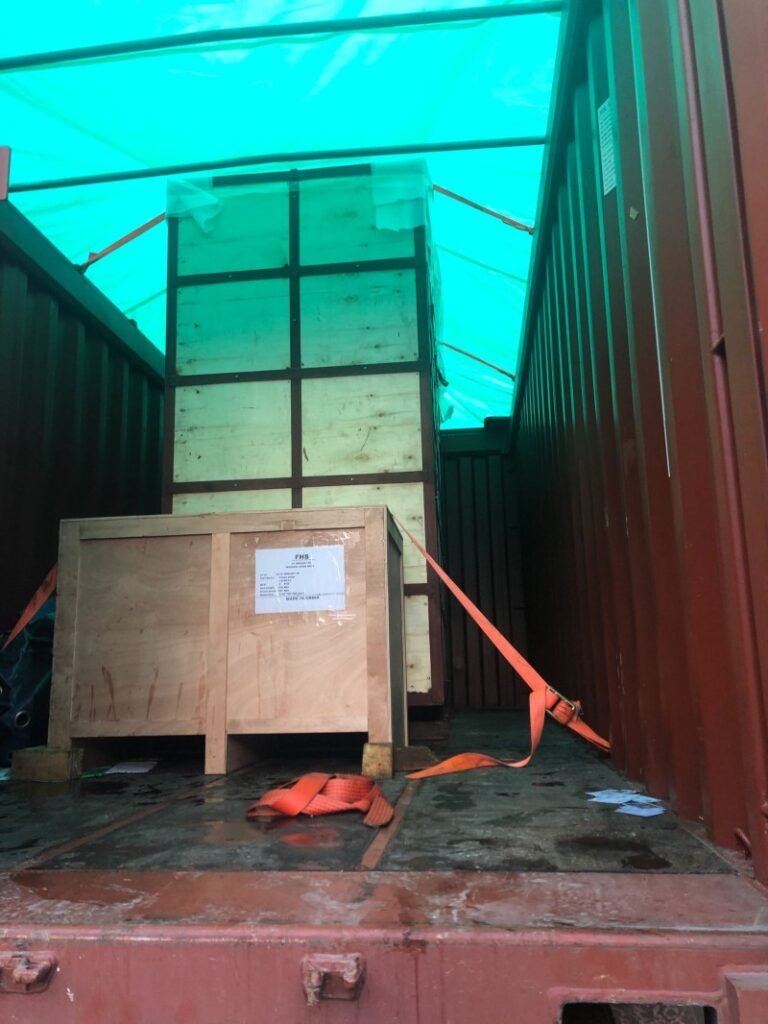
Open top containers may be used to transport hazardous goods only the dimensions, the classification, and the risk profile of the cargo match IMDG requirements and carrier approvals, – never used as a fallback option.
Open top containers are applicable in some of the risky situations where they cannot use the closed units due to over-height. Examples include large industrial equipment that has dangerous parts, generators with fuel leftovers, or tank units that are over-sized housing confidential liquids. In such instances, the open design helps in loading the cranes and tolerates projections without subjecting the structure to an unnatural compressive and tilting.
The approval of carriers is obligatory. Before accepting bookings, the lines check the UN classification, packaging integrity and projected exposure risks. Explosives (Class 1) are very limited in terms of the acceptance as in open configurations they are usually not allowed because of the dangers of detonation.
These are a few examples of common situations:
| Scenario | Open Top Allowed? | Notes |
| Over-height DG machinery | Often yes | Requires IMDG approval and reinforced securing |
| Flammable liquids in bulk | Rare | Depends on packaging; closed units usually preferred |
| Battery-powered heavy equipment | Case-by-case | Classification review required; ventilation and stability critical |
| Explosives | Highly restricted | Special approval needed; often prohibited in open top |
Hazardous goods transporting through the open top containers must be effectively done using the IMDG classification verification and dimensional planning as well as authorization of carriers followed by confirmation of booking. Always check with the line early – in rejections they are so frequent unless pre-approval is arranged.
IMDG Classification and Documentation Requirements
IMDG is the motivator of all decisions related to hazardous open-top shipments; otherwise, the whole consignment is not accepted.
It begins by assigning the UN number, correct shipping name, hazard group (1 through 9) and packing group (I, II or III according to degree of severity). These facts determine the packaging, labeling, segregation and stowage regulations. To use open top, the classification should not prohibit on deck or ventilated stowage where needed as some classes are restrictive.
Key documentation includes:
- UN Number Academy of Medical Surgical Nurses, 2015.) — Uniquely identifies a hazard.
- Dangerous Goods Declaration (DGD) A shipper who intends to have the cars transported by another carrier must provide a formal statement of compliance whereby the required shipping name, class, packing group, quantity and emergency contacts are outlined; such a declaration is required before carriers will accept the shipment.
- Material Safety Data Sheet (MSDS)/SDS – This offers all necessary safety, handling, and exposure information to serve as a reference to all.
- Packing Certificate – – Certifies that the packaging was done in accordance with IMDG.
Use this checklist to ensure completeness:
- UN Number into Hazard identification.
- DGD → Carrier compliance
- MSDS → Safety reference
- Packaging certificate Packaging compliance
Uncompleted or incomplete paperwork practically always results in booking rejection, delays in putting cargo hold in or out of the terminal, or fines. Turn in all entries with reference to the current IMDG Dangerous Goods List.
Additional Risks of Combining OOG and Hazardous Cargo
The addition of out-of-gauge (OOG) dimensions and hazardous properties pose a high risk of hazardous transport to DG shipments that are normally defined by normal DG shipping.
Unnaturally high hazardous material raises exposure to natural factors within open top units- there is no roof, hence it is not affected directly by the rain, salt spray, or by UV and thus it does not damage the packaging integrity. The aggressiveness of the wind forces can be exerted on tall or protrusive loads and this can sometimes impose a stress in the lashings or the container floors. Leakage risks increase due to failure of seals, both during vibration or under shifting, whereas high center of gravity (COG) increases tipping or stability risks during vessel rolling.
DG shipments are also prone to increased scrutiny; introducing OOG variables only increases the number of inspections as regulators and carriers pay attention to combined environmental and structural weaknesses.
Common risk factors include:
| Risk Factor | Impact | Mitigation |
| Over-height DG cargo | Exposure to weather | Reinforced tarpaulin coverage |
| High COG | Stability risk | Engineered weight placement |
| Structural stress | Leakage risk | Floor reinforcement |
| Inadequate lashing | Cargo shift | Chain securing with proper tension |
These dangers require aggressive engineering never count on conventional securing of loaded OOG-DG combos.
Securing and Segregation Requirements
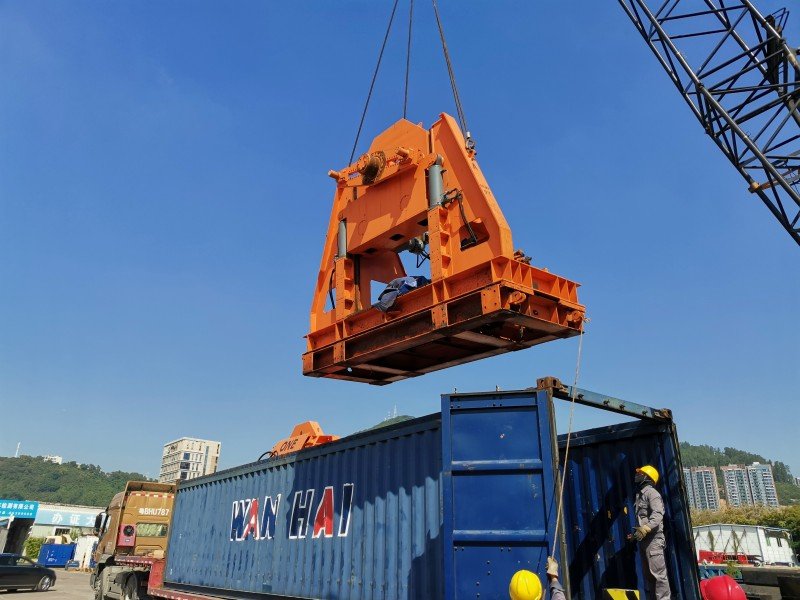
Hazardous goods can only be transported in open top containers with the principles of IMDG and CTU Codes of securing the contents to be followed- failure to do this can be catastrophic.
Chain lashings should be used in place of straps on heavy or high-risk hazardous units where chains will be better against the dynamic forces. Blocking and bracing avoid movement and dunnage stuffs fills empty spaces to equalize loads. Strict segregation rules are enforced where there are multiple classes of DGs within the same unit to prevent incompatible reactions (e.g. acids and bases to be separated).
Ventilation is essential in some classes (such as under flammable gases) but open top construction does this automatically- though IMDG stowage category authorises it.
Misuse of segregation is against the law and results in the possibility of violent responses or regulatory fines. Always look at forces depending on the route of the vessel, the weather condition and the specifications of the cargo and then make the final decision.
Environmental and Weather Protection
There is no compromise on hazardous cargo in open top containers about environmental protection; exposure may affect packaging or induce reactions.
The tarpaulin envelope is not absolute; it does not stop but only minimizes rain penetration and salt rusting particularly on long trips. Climate control is important in accelerated risks of temperature-sensitive materials (e.g., peroxides or some flammables), in the absence of climate control. The beginning of the world of corrosion prevention includes compatible coating, the use of desiccants, and barrier wrappings.
Reduce exposure: Routing should be done to avoid extreme weather areas and always ensure that tarps have extra strapping to resist wind uplift.
Port and Carrier Approval Procedures
There is stringent and time sensitive carrier and port approval procedures of hazardous open top shipments- begin early.
Checking of advance booking involves filing of complete DG information, drawings and ensuring plans. DG acceptance confirmation makes sure that there is IMDG compliance. Labeling, placarding and physical condition inspections may be additional to terminals.
Use this checklist:
- DG review/ Compliance validation
- Carrier acceptance Vessel safety
- Port clearance Handling authorization.
- Insurance confirmation → Risk coverage
Delay usually comes about due to unfiled submissions – submit it all at the start.
Common Compliance Mistakes in DG Open Top Shipping
Even highly veteran crews fall off on the details in the dangerous open topped deliveries, resulting to severe ramifications.
Some of the common mistakes include wrong UN classification (resulting in rules being applied incorrectly), not declaring OOG projections (which results in rejection), insufficient securing (which results in shifts), and underestimating environmental risk (packaging failure).
Some consequences include rejection of bookings, fines in the port, detention of cargo, loss of insurance, or even the environmental accidents.
Conclusion — Hazardous Goods Require Engineered and Regulated Control
Risky goods require more than dimensional planning to handle in the open top containers. It requires the firm compliance with the regulations of the IMDG, developed securing, and risk assessment to provide safe and compliant and responsible movement of regulated goods.Shippers with such complex shipments can deal with the difficulties by ensuring the number of classifications, documentation, securing tailoring, and coordination with carriers in advance through prioritizing accuracy and proper documentation, securing tailoring, and focusing on managing people, ships, and the environment. Compliance is not an option it forms the peace of any successful hazardous OOG move.