
The decision between a flat rack container and a lowbed trailer can be reduced more than just to logistics basics when the industrial mold in question is very large, like an injection molding machine or die casting machine. These two alternatives appeal to different situations in oversized cargo handling with one performing well in international sea transportation and the other performing well in overland domestic transportation. The question of which type of large mold transportation to use: a flat rack or a lowbed trailer is not a cost decision but rather a risk and suitability decision. The assumption that flat rack containers and lowbed trailers can be interchanged provided weight limits are achieved is made by many teams but fails to take into account other important factors such as stability of loaded goods, exposure during handling and limitations of routes. The choice of transport equipment is a determining factor in large mold safety, stability, and exposure to handling because the incompatibility may cause unnecessary reloading, higher risks of damage, or project postponements that interrupt the production schedule.
In this comparison, we will define each approach first, then divide the differences between them along major engineering and work related dimensions, and then provide a rationale framework of decision making. This will allow you to compare alternatives depending on the size, the weight distribution, and the requirements of the destination of your mold, and will provide you with the safety over the simplistic comparisons.
Understanding the Role of Transport Equipment in Mold Safety
The selection of equipment is the basis of reducing risks in large-mold transportation, and it has a direct bearing on the way the cargo will react to the environmental forces, during the transit. Massive molds with complex geometries and weighing, on average, multiple tons are especially susceptible to movements, vibrations, and impacts that may break their accuracy of alignments or structural integrity. By optimizing load securement and minimizing unwarranted movements, which are the main threats, the right transport mode minimizes them.
Why Equipment Choice Affects Load Behavior
Load behavior is defined as the behavior of a mold to acceleration, deceleration, and other outside influences such as waves at sea or waves at the road. Containerized shipments are made using flat rack containers that wrap the mold within a fixed structure, which is compatible with international intermodal structures. This has the ability to stabilize the load even when making ocean trips but can pose difficulties when carrying out crane lifts at ports. Lowbed trailers, in contrast, do not elevate the mold so much, causing the sway to be less but leaving it more vulnerable to road anomalies. Misuse of equipment may increase these behaviours and make petty transit stresses more significant alignment problems that need expensive re-calibrations in the factory.
Relationship Between Transport Mode and Handling Frequency
Treatment of frequency- the number of times a mold is lifted,repositioned or transloaded is much different between modes. Crane operations over sea-based flat rack transport usually have several crane operations within the origin, port, and destination, which introduce an element of risk. The number of handlings may be smaller in overland lowbed trailer moves, but such moves require road infrastructure, as they may be direct. The cumulative exposure to human error or mechanical failures are heightened with high frequency of handling and that is, which is why understanding the large industrial mold transportation process is essential for planning routes that minimize these touchpoints.
Why Molds Are Sensitive to Reloading and Repositioning
Precision molds are designed with tolerances of just a few microns and therefore sensitive to any small distortions, when they are reloaded. Micro-shifts in components due to repositioning in transits will result in defects in subsequent production runs. This sensitivity leads to the importance of equipment that is sensitive with the center of gravity of the mold and its overall fragility so that the transportation is not accidentally a bottleneck in the OEM supply chains.
What a Flat Rack Container Is Best Suited For
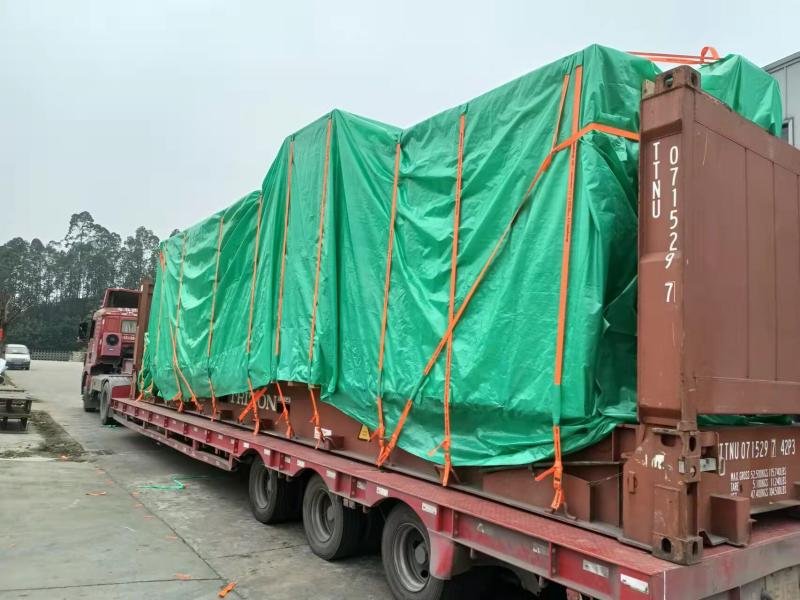
Flat rack containers are the best in a situation where shipping internationally requires standardized, well-secured enclosure in a large size load and there is a balanced protection and ease of access. These units consist of basically an open ended container with a strengthened floor and end walls which are perfect in the event of an extension of molds which do not qualify as a standard container but fit within the ISO shipping standards.
Structural Characteristics of Flat Rack Containers
A flat rack is generally made of heavy-duty steel base that can support up to 45 tons with collapsible sides that are able to make it easier to load. This design can be accessed through crane or fork-lift on the top or sides and hence can be applied to molds that are irregularly shaped. The twist-lock system of the container guarantees that the system will be compatible with ships, trains and trucks and make it easy to transfer between the intermodal. The fixed height and width, however, may restrict the use of very tall molds and lashing points must be pre-planned to avoid this movement when sea swells occur.
When Flat Racks Are Preferred for International Shipping
In the case of cross-continental shipments like the transport of molds between Asia and North America, flat racks are the usual choice because they can be combined into the global container fleets. They are as well protective against the weather when covered with a tarp and affordable in large ocean transportation. However, they are not as perfect in short-haul domestic flights where flexibility of the roads is important. In container mold shipping on a flat rack basis, In flat rack container mold shipping, the emphasis is on minimizing port delays through precise documentation and securing methods.
Constraints Related to Securing and Lifting
Flat rack securing entails the use of chains, straps and dunnage to fix the mold in position, but the lifting requirements present a problem since overhead cranes may also be weather dependent and may create a risk of shock unless perfectly installed. These factors need to be reflected in risk analysis conducted by engineers to ensure that the situation when the molds have to withstand too much G-force during hoisting is avoided.
What a Lowbed Trailer Is Best Suited For
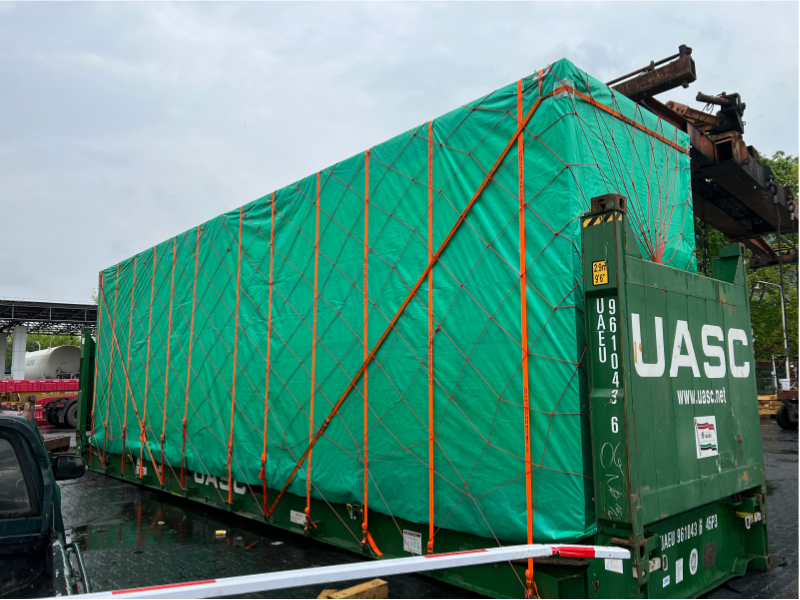
The lowbed trailers are designed to carry heavy, low-profile products, which are designed to transport over-the-road, giving excellent ground clearance control of loaded products, which are oversized such as large molds. The trailers come with dropped deck between the wheels which give them a lower load height that is stable on highways.
Load Height Advantages
The first benefit is its lower deck height – it can be almost as low as 18 inches above the ground and provides a lower center of gravity in tall molds. This reduces the chances of tipping over when turning or descending slopes so that lowbeds can be used in molds as high as 20 feet without going beyond the clearances of bridges. This arrangement offers enhanced control of dynamic forces when compared to a flat rack in changing road conditions.
Suitability for Domestic or Cross-Border Land Transport
Lowbeds are also bright when it comes to regional relocations such as moving molds within the same country as well as cross-border such as US-Mexico line. They are able to make their way in cities with due escorts and they do not have to face the multimodalities of sea transportation. In lowbed trailer mold transport, the focus is on route scouting to ensure compatibility with infrastructure.
Route Dependency and Permit Considerations
Bridge weight limits and overpass height limits, which may require special permits, are considered route dependencies. Although the lowbeds are more manageable than the sea routes, they need prior surveying to avoid detours, which might take days to transit.
Load Behavior and Center-of-Gravity Considerations
The center-of-gravity (COG) analysis is vital in the establishment of transport stability as the misalignments may result in disastrous changes irrespective of the type of equipment. COG is treated different with flat racks and lowbeds because of their natures.
How Load Height Affects Stability
Increased weight on flat racks will increase sway on sea voyages where instability is increased by the movement of waves. Lowbeds, as they are ground hugging, are more resistant to the lateral forces on the roads, and both need the careful calculations of the COG to distribute the weight evenly.
Differences in Dynamic Behavior Between the Two Modes
Ship movements on a flat rack create more vertical and rolling movements that could be a stress factor on mold fixtures. Lowbed trailers are affected by horizontal impacts of potholes or abrupt terminations and require bodies that are highly supportive undercarriage. These differences highlight why center of gravity analysis for large molds to use a center of gravity model of large molds in predicting and alleviating transport-induced strains.
Why COG Misjudgment Impacts Each Option Differently
Any COG misjudgment on flat rack could end up in uneven lashing failure at sea and imbalance in trailers in case of a rollover on a lowbed. The engineers are required to simulate these scenarios with 3D simulations to customize the selections to definite moulds.
Handling Frequency, Shock Exposure, and Damage Risk
Frequent handling is one of the major factors that should be reduced to maintain the integrity of the mold because more often, the frequency increased the possibility of having shocks that may distort precision surfaces.
Lifting and Transloading Differences
The international transportation of flat racks usually takes 4-6 lifts in each voyage, where the goods are loaded on the ships, as well as the unloading at ports. Lowbeds may not require 2-3 during domestic hauls which will reduce exposure. Every lift is associated with such variables as the skill of crane operator, which might be different worldwide.
Shock Exposure During Port Handling vs Road Transport
Flat rack port handling causes molds to experience sudden drops or swings whereas road transport on lowbeds is influenced by constant vibrations caused by uneven surfaces. Micro-damage due to accumulative shocks may accumulate, influencing the disc life of mould. . Understanding vibration and shock impact on molds helps quantify these risks through sensor data and historical case studies.
How Cumulative Handling Increases Risk
Handling of hardware repeatedly adds to fatigue in securing hardware, which raises the risk of failures. In the case of fragile molds, it is possible to use the mode that considers fewer touchpoints to maintain the production readiness at the arrival point.
Route Flexibility, Permits, and Compliance Differences
The practicality of each of the options is determined by route flexibility, where permits serve as gatekeepers to oversized loads. The flat racks and lowbeds have to move through various regulatory environments.
Height and Width Constraints
Flat racks are compliant with the stack limits of container ships and tend to have heights of 8-9 feet loaded. Lowbeds are constrained by road characteristics, such as height restrictions in most states in the US, 13.5 feet.
Permit Requirements for Road vs Port Routes
Lowbeds also have road permits that require approvals state-by-state on weight and dimensions, which may postpone commences. The flat racks port routes are concerned with the compliance on customs and IMO on hazardous elements in molds. Neither should be done without detailed documentation to escape fines.
Delay Risk Associated with Each Option
Weather delays at ports will have more effect on flat racks, whereas traffic or construction will have more effect on lowbeds.. Factoring in oversized mold transport permits early can streamline compliance and reduce downtime.
Real-World Decision Logic — Choosing Based on Mold and Route
The logic behind the choice of equipment depends on combining both the specifications of the mould with the reality of the route, and not attempting to provide a generalized equipment. Begin with evaluation of dimensions followed by superimposition of destination factors.
How Mold Size, Weight, and Destination Drive Selection
In the case of molds above 40 tons that are to be transported abroad, the flat racks are cost effective. Domestic movements up to 100 miles prefer lowbeds due to their speed. Distribution of weights affects both since imbalanced weights make securing difficult.
Why Hybrid Solutions Are Sometimes Required
During complicated transfers, such as sea-to-land transfers, hybrids will be used that have lowbeds on the final delivery and flat racks on ocean legs to fill in the single-mode restrictions.
Emphasize Evaluation Logic, Not Preference
Assess through the mapping of risks: Checklists on COG, handling and permits. This logic, informed by large mold transportation risks, where choices do not follow expediency, but engineering priorities.
Conclusion — Equipment Choice Shapes Transport Risk
Both flat rack and lowbed trailers are acceptable alternatives in terms of moving large molds, but they cannot be substituted. To understand which method of transport is the safest and most appropriate, it is important to know how each of the options influences the load behavior, address exposure issues, and route limits. With the emphasis on suitability, including taking into account the sensitivity of mold and dynamic forces and compliance requirements, teams are in a position to mitigate risks that might otherwise result in downtime and repair. The final point is that this equipment option has an impact on the overall risk profile, and it focuses on an engineering outlook, rather than short-term considerations.