
The use of open top containers is crucial in the delivery of machinery which is over-height and oversized project cargo which cannot access the normal doors. The loading of these units nearly always requires a crane to be loaded at the top, and this introduces real lifting forces – forces which can impose realistic stresses on either the cargo, the container structure or the rigging unless carefully done.
Most individuals believe that crane loading is easy whereby you can attach and raise the load when you remove the roof. In reality, however, incorrect sling positions, improper angles of lift or omission in pre-lift inspections may cause tilted loads, broken lifting points, deforming of the frame of the container, or much worse, severe injury.
The preparation with regard to the engineering of crane loading procedures on open top containers includes controlled executions of lifting and securing of their positioning after placement. It is actually a controlled engineering process, which involves lift planning, structural evaluation and orchestrated implementation- it is not just vertical lifting at the top.
On complex project shipment safe crane loading solution of open top containers combines lift planning, structural check and OOG compliance prior to crane mobilization.
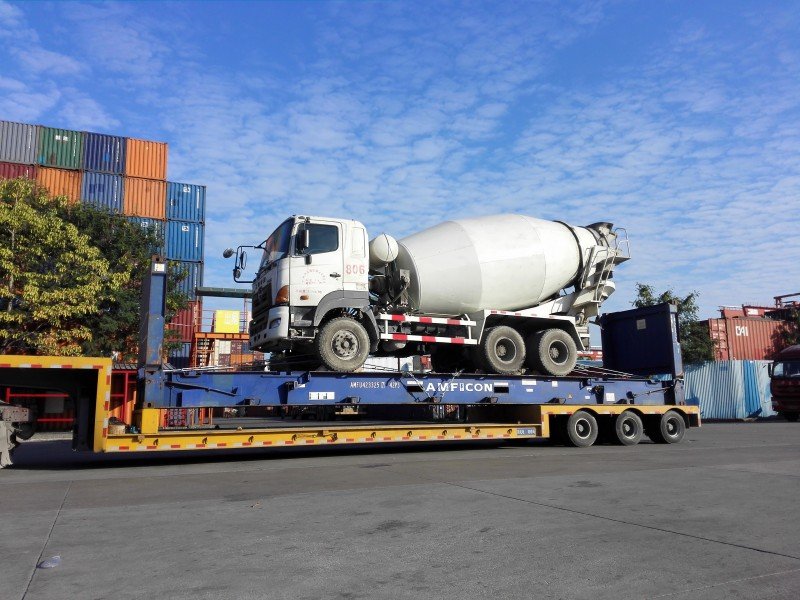
Pre-Lift Engineering Assessment
All safe crane loading begins way back before the hook takes motion – a comprehensive pre-lift check, which ensures the program is practical and shows key points of failure.
and one of the greatest causes of accidents in OOG lifting of machinery is neglect of this step, which is often shortcut or hurried.
The main aspects that should be checked are:
- Weight of carriages — It is always important to ensure that the weight stated reflects the crane capacity at the planned radius and boom angle. Add in any blocking, packaging or transient attachments to the total.
- center of gravity (COG) Find it Choosing a point, usually marked by the manufacturer or by way of calculations based on drawings. An offset COG results in tilting of the load during the lift and slings and container floor under uneven loads.
- Lifting points– CHECK Tester of certified lifting lugs or pad eyes by checking their condition, checking to ensure no damage, corrosion, or deformation. Ensure that they are of the correct design and of sufficient strength to carry the loads.
- Container floor capacity — Check the load on the floor that is to be carried against point loads of cargo that is being moved. Containers with open tops contain cross members that should be in the right proportion to prevent any localized overload.
- OOG projection limits- Measure height, width and overhang to give a carrier approval and adhere to route limitations.
Use this structured checklist during assessment:
| Assessment Element | Required Action |
| Cargo weight | Verify against crane capacity and documentation |
| COG location | Confirm lifting balance and mark if needed |
| Lifting lugs | Inspect certification and condition |
| Container structure | Confirm floor integrity and cross-member alignment |
| OOG height | Confirm carrier approval for projections |
Most of the surprises are eliminated by this prior work, besides keeping the lift within safe limits.
Crane and Lifting Equipment Selection
The difference between a controlled and safe placement and a high-risk operation is the right crane and rigging arrangement.
Never just a site condition, load weight, radius, height- choose based on the conditions of the site.
The use of mobile cranes provides flexibility in loading the yard, whereas, the overhead gantry systems are precise in controlled settings. Always use maximum capacities of the cranes of at least 20-25 percent of the crane capacity to cater to dynamic elements such as wind or even minor COG changes.
Even load distribution, when using a wide or asymmetric OOG machine, can frequently require spreader beams. They minimize the angles of slops and transform the forces into compression on the beam and not tension on the slings.
The type of sling used is also relevant since chain slings are used with heavy and abrasive items whereas the synthetic slings are used with medium weight cargo but they need to be covered to prevent cuts.
All the gear should be certified, examined and labelled with the current safe working load (SWL).
| Equipment | Purpose | Risk if Incorrect |
| Spreader beam | Even load distribution | Sling angle stress, uneven loading |
| Chain sling | Heavy machinery | Overloading or failure under shock |
| Synthetic sling | Medium-weight cargo | Abrasion or cut damage |
| Certified shackle | Secure connection | Failure under load or pin ejection |
Also, there is never a need to use uncertified or damaged equipment and this makes a simple lift a possible disaster.
Sling Angle and Lifting Geometry
Sling angle is another poorly understood aspect when loading a crane but the angle of the sling is directly proportional to the tension that each leg undergoes.
The optimal inclination is 30 -60 degrees off the ground. The tension increases very quickly below 30.0, and a 30.0 angle increases the force applied on each sling on average two times oblique with a vertical.
Horizontal pull is heightened by shallow angles and may result in overloading lifting points or compression of the load.
In the case of asymmetric cargo, geometry is even more important: sling lengths should be adjusted or a spreader can be used to balance forces and avoid twisting.
| Sling Angle | Load Effect |
| <30° | Excessive tension, high overload risk |
| 30°–60° | Optimal range for most lifts |
| >60° | Reduced lateral stability, potential sway |
Poor angles normally result in overloading lugs or side wall stress on containers in the initial lift-off in open top container crane loading.
The sling load charts must be computed or consulted always and never guessed.
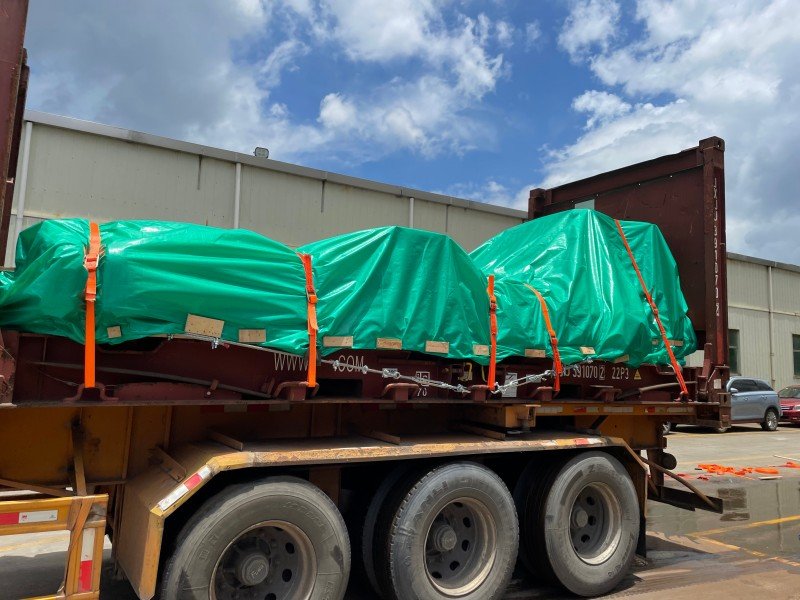
Controlled Lowering and Positioning
When the load is cleared out of the ground, the actual art comes in ease of descent and accuracy of placement.
Hurry in this stage, and you might not get the outcome of a blow or swing that will trouble the container floor.
Utilise capable spotters who are positioned in a manner that they can provide clear hand signals or radio signals to the operator. Slow, gradual reduction, no abrupt diminishing.
Always check the side clearance on the monitor wall in order to prevent such contact which may cause denting on the panels or displacement of the load.
The crane operator and the ground staff should be in continuous contact because failure to pick a signal may result in a good lift becoming a bad one at any point.
Where the longer pieces are involved, tag lines are used to manage the swing, and not to get pinched.
Base Alignment and Load Placement
Using a proper base placement discourages most problems of the post-loading such as twisting stress or unbalanced floor loading.
Locate machinery base on container cross members – this is the major load paths.
Timber blocking or dunnage should be used to evenly spread both point loading and fill in the gaps.
Early checking level; a little inclination may aggravate in-sea movement.
| Placement Control | Purpose |
| Cross member alignment | Prevent floor stress |
| Blocking installation | Load spreading |
| Level positioning | Avoid tilt |
| Clearance check | Avoid wall contact |
Always double-check before the release of the crane hook after the initial set-down.
Securing After Crane Placement
Crane loading does not terminate as soon as the load has landed onto it, there must be temporary securing bridges in place before any permanent lashing can be done.
Install temporary braces immediately to avoid shift as final lashings are installed.
Re-check container frame alignment and outlook container frame deformation as a result of lift.
Installation of tarpaulin should not start before full securing.
Keep in mind that crane placement and securing are inter-dependent because a good lift can be compromised by poor securing when the cargo is being moved.
Common Crane Loading Mistakes
Even the most experienced teams are not always able to prevent certain slipups, these are the ones I see most of the times in the field.
- COG shift during the lift not taken into consideration: The load may turn when it is not lashed up evenly which also overloads one side.
- Lifting gear of under-rated: Inspections given a pass or old slings result in the sudden collapse.
- Wrong sling angle: Too shallow, and tension spikes – which can be the cause of lug or shackle problems.
- Sudden release or sudden decrease: Effect produces cracks foundation or deforms floors.
- Liberty to not inspect once placed: Minor motions or contact injuries are not detected in time.
The consequences can be such as cargo shift and structural container stress, rejection by the port, re-work, or insurance issues.
The majority of them are due to not checking what is going to be lifted or to a hurry in doing it.
Conclusion — Crane Loading Is a Precision Operation
The design operation of crane loading of open top containers should consist of engineering evaluation, correct lifting equipment choice, controlled positioning and after placement fitments.
Cautious handling reduces strengthening and cargo breakage, as well as secure OOG transportation.
Once each of the steps is carried out with known engineering principles in mind, such as COG checks and sling geometry to end sling checks, the risks are insignificantly lower.
In cargo related to project work, there is no other way to replace preparation and discipline.