
The preferred choice of OOG (out of gauge) or over-height shipment such as heavy machinery, industrial equipment, or parts of a project that just will not believe under a regular roof is open top containers. Elimination of the roof will give loading flexibility through overhead crane, however, it eliminates the protective enclosure, exposing the cargo to the environmental dangers, as well as, dynamic sea forces and operational strains, which would be significantly prevented in regular containers.
The thing is these exposures are not instigated by the open top shipping as the majority of cargo injury is not unavoidable- it can be avoided. Numerous shippers believe that the open top freight is always dangerously unstable, and in my life experience as the manager of the OOG projects, most accidents began on the poor planning stage, incorrect measurements, improper securing or neglected pre-shipment inspection. Open top shipping needs a systematic risk and prevention based on the engineering and not reaction damage control.
Open top shipping provides flexibility in the oversized cargo, however, the flexibility comes with certain structural, environmental, as well as operational risks which should be engineered and handled in a proactive way. By doing this properly, it can save money, prevent delays, claims disputes, and even regulatory fines.
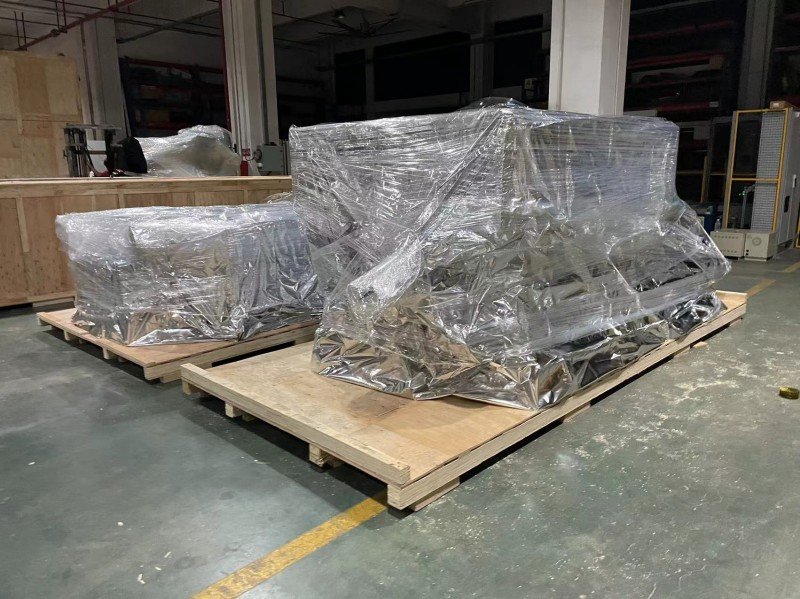
Risk Risk 1: Cargo Instability Due to Improper Weight Distribution
One of the main causes of damage in the open top shipping is cargo instability, which is likely to cause a series of problems, beginning with a slight shifting and continuing till devastating tipping, or structural collapses.
High center of gravity (COG), beam overloading, or imbalance at the floor (lateral imbalance) are all demands of uneven placement of loads where they increase roll and pitch forces in a vessel. During my years of experience of exporting heavy equipment, I have witnessed how a negligible bias rear-heavy can overload the axles in the inland transportation or lead to unsafe displacement at sea.
| Risk Factor | Consequence | Prevention Method |
| Point load stress | Floor deformation | Load spreading beams |
| High COG | Tipping risk | Symmetrical placement |
| Uneven lateral load | Vessel roll shift | Cross-lashing |
| Excess rear weight | Transport imbalance | Axle load check |
In order to minimize the instabilities and structural tension, risk-controlled open top logistics solutions combine weight distribution planning and pre-shipment engineered securing.
Risk 2: Lashing Failure During Sea Transport
The lashing failure is a common offender in the open top container safety accidents, particularly where sea forces, roll, pitch, and heave, interact at several directions concurrently.
Working together is a lack of lashing strength, wrong angles (they become too shallow and weak in restraint), slackness due to vibration or tying too tight to strangle the cargo itself. Loosening chain or strappings in long trips are addictively detrimental to OOG cargo, where movement can swiftly develop to impact destruction.
| Lashing Issue | Impact | Prevention |
| Shallow angle | Reduced restraint force | Optimal 45-60° angles |
| Uneven tension | Load imbalance | Uniform tightening & re-checks |
| Worn chains | Breakage risk | Pre-use inspection & certification |
| Inadequate anchor points | Cargo shift | Use rated D-rings & corner posts |
Making sure it is properly lashed is not a chance affair but rather it is a formula that is calculated depending on the anticipated forces, the type of the cargo, and the route taken over the sea.
Risk 3: Weather Exposure and Water Ingress
Cargo of type open top is much more vulnerable to exposure to weather compared to such containers as common ones the roof protects the contents. Tarpaulins are useful, although not impregnable to long durations of communing rain, saltwater sprays, updraught on tall shipments, and condensation.
As Friar Willy insinuates that salt corrosion increases on exposed metal surfaces, wind may lift or rip coverings on pieces of over height. Uncontrolled intrusion in tropical or monsoon routes results in rust, electrical malfunction of equipment or structural disorders.
| Environmental Risk | Mitigation Strategy |
| Rainwater | Reinforced tarpaulin sealing |
| Wind uplift | Additional top lashing |
| Salt exposure | Protective wrapping |
| Condensation | Desiccant use |
Active weather insurance begins with route-specific outlook and stiffened coverings obtained at various points.
Risk 4: Crane Loading Errors
Operations of cranes present dangerous instances where any mistake could be used to bend frames, create dents and or drop.
Sling angles Angles that are not correct provide side loads, inaccurate COG results in swing, sudden drop produces impact shock and no spotter supervision detects any problems of misalignment. In the case of open top vehicles, the exposed goods even increase the impact- I have seen how even slight off-centered lift can mark corner posts or move unsecured objects in an open top vehicle.
The crux of prevention lies in certified rigging, correct weight/COG information of the shipper, regulated speed, and continuous contact of crane operator and the ground team.
Risk 5: Regulatory and Documentation Errors
Any missed or poorly handled paperwork will reduce risks into a big compliance challenge.
At-risk status of undeclared OOG may result in carrier rejection, false height records may lead to surcharge claims, or a ban on a route, missing approvals may lead to port delays, and inappropriate labeling may invite handling rejection. Strict OOG rules are applied at ports and by carriers – failure to comply, usually results in demurrage, fines or re-stowage.
Compliance Risk Checklist
- AGO not announced: Carrier rejected.
- Measurement error → Controversy of Surcharge.
- Failure to receive approvals → Port delay.
- Mislabeling → Having to work with refusal.
Triple-check declarations, measurements, and permits early Now this is a step that most regulatory surprises occur only when not taken; the experience indicates that.
Risk 6: Inland Transport Imbalance
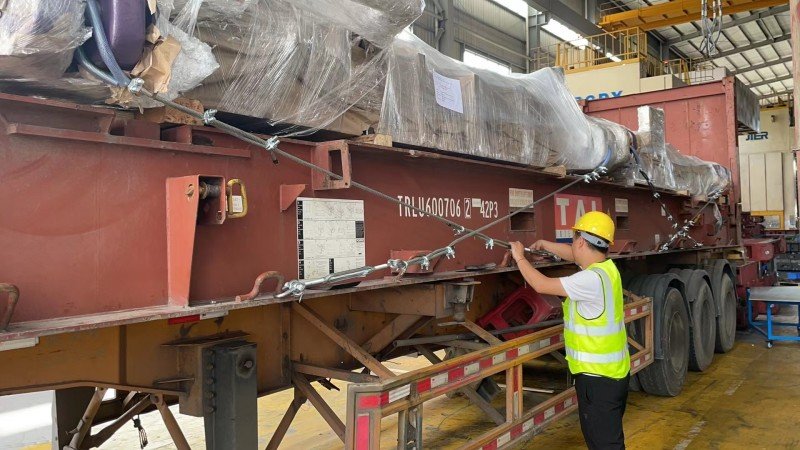
Risks are not just the end of the port journey- most of the time, inland transport imbalance prolongs the sea voyage strains in the case of open top shipments.
Shifting or structural strain may occur as a result of poor distribution and trailer axle overloading, bridge clearances miscalculated, bridge clearances overlooked, route permits, and road vibration unevenly distributed. Heavy loads on ultra-low flatbeds require careful planning; failure to plan out each turn or sharp bridge can cause the load to tip or damage the frames.
This is non-negotiable on the route surveys, permit checks as well as re-checks of the load secured at key handover points.
Integrated Risk Prevention Strategy
There is no certain way to prevent OOG cargo damage than to take the open top shipping as an engineered process, rather than ad-hoc.
Begin with pre-shipment engineering analysis: precise measures on the country, 3-dimensional loading, and computation of forces. Transit to controlled loading of confirmed COG and symmetric positioning. Next, undergo intensive lashing checks, weatherproofing and complete paperwork all photos and signature of surveyor.
Prevention Phase Overview
- Pre-loading: Corroboration of dimensions.
- During loading: Management of cranes.
- Post-loading: Lashing examination.
- Pre dispatch: Review of documentation.
This logical method of approach is based on actual experience on projects and it transforms the perceived weakness into controlled and un-dangerous transportation.
Conclusion — Prevention Is Always Less Costly Than Repair
Open top shipping contains distinguishable and containable risks in open top shipping. By thoroughly planned weight scheduling, engineered securing, weatherwrapping, and regulations, this minimizes cargo damage and provides safe and dependable OOG transportation.Monetary blow caused by avoidable accidents including repair, delays, insurance, in addition to the foregone manufacturing time are much greater than an effort taken to engineer the risk upfront. Practically, the cases of the shipments received intact and on time are those cases when all the phases were approached with prevention in mind.