
Transportation is one of the most risky stages of the lifecycle of a big mold because the controlled manufacturing conditions are replaced by the uncertainty of the external factors. The patterns of damage in large mold transportation are repeated in industries, such as automotive tooling down to aerospace die casting, and are often as a result of the same oversights. It is a common belief among many organizations that once molds develop to a certain size then they are irreversible in the transportation, but this is a misconception because of the significance of tubular preparation. In the cases when big molds are torn during the transportation, the reason is often predictable and avoidable. The majority of failures in the transportation of large molds are not related to their size or weight, but to the tendencies of the predictable gaps made in the planning and implementation.
When looking through the post-incident reports on the relocations of the moulds, it is evident that risks are concentrated in structural, environmental, and planning categories. These are not accidental, as they are based on the weaknesses that can be determined and mitigated through intensive evaluation. Through this advancement knowledge, teams can base on reactive repairs to proactive protection, which maintains mold structure and production-cycle schedules.
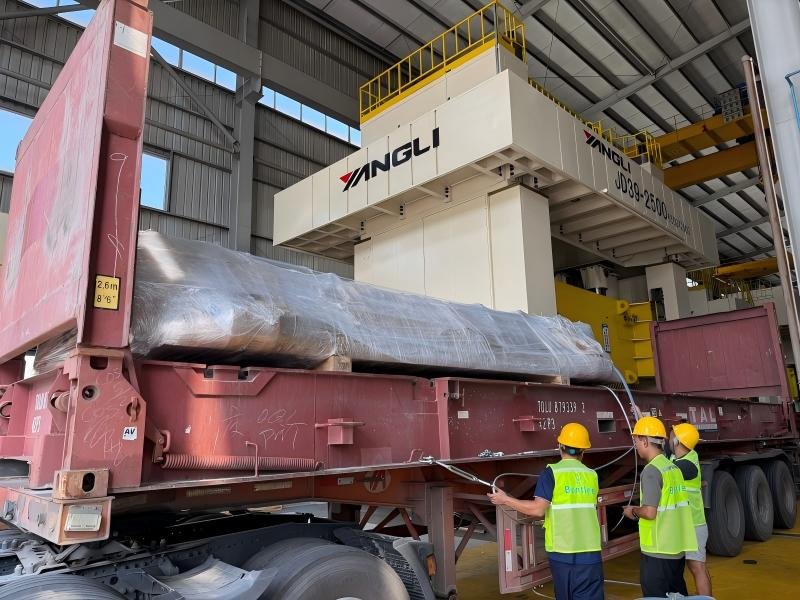
Why Transportation Is a Critical Risk Phase for Large Molds
Massive molds find their way into transportation at the point that they are most susceptible to, namely, the stable factory floors into the unstable environment of transit. In the production process, the molds are kept in a climatic free, vibration free environment, where various alignments are maintained with accuracy. However, when crated and loaded, they are subjected to external forces which take the advantage of their intrinsic complexities, e.g. an unequal distribution of weight, or fragile cooling systems.
Symmetrical structures in combination with concentrated weight of large molds, which is sometimes greater than 20 tons, contribute to increased exposure to stress. An example of this is that the bulging lines of a mold or internal cavities may change in the direction of acceleration and provide a torque that had not existed during the production of the part in still form. Transportation also comes with some risks such as road anomalies, thermal changes as well as handling inconsistency that is not experienced when the production is in-plant. This step requires the change of mindset: the journey is viewed as a continuation of the engineering process, as opposed to a logistics handoff.
To mitigate these, a thorough understanding of the large industrial mold transportation process including starting with a survey to the final unloading would take into consideration these aggravated weaknesses.
Risk Category Overview — Where Large Mold Transport Fails Most Often
Companies that have been experiencing failures with the transportation of large molds usually can be classified into a few categories that relate to certain oversights that worsen as the molds are being transported. These risk areas are summarized in the table below showing common areas of blind spots and their effects. This summary is based on the consolidated incident data on various projects, and the interrelatedness of these factors to each other is evident.
| Risk Area | Typical Oversight | Likely Consequence |
| Load distribution | Assumed symmetry | Structural stress |
| Transit vibration | Uncontrolled road impact | Precision loss |
| Environmental exposure | Moisture ingress | Corrosion |
| Securing methods | Inadequate restraint | Impact damage |
| Compliance planning | Route or permit mismatch | Delays and re-handling |
These types are not independent; any gap in planning in terms of compliance such as a planning gap in compliance can contribute to environmental risk by resulting in such unplanned stoppage in humid conditions. The identification of such patterns can result in specific interventions that can benefit by acting on root causes instead of symptoms.
Structural and Load-Related Risks
One of the most general causes of deformation during transportation of moulds is incorrect assumptions of structural behavior of a mold under load. Big molds do not just exist in blocky forms; they are designed with holes, ejector pins, and cooling mechanism, which have an unbalanced distribution of mass. When moved or fixed using visual judgment alone, this asymmetry causes different stress concentrations in local locations which may bend frames or break items during a movement.
Why These Risks Occur
The main problem lies in the neglect of dynamic loads, including vehicle acceleration or cornering ones, which vary significantly as compared to the static factory handling. As an illustration, a mold that has off-centered heavy parts may be fine in being lifted with a forklift in a workshop but it may bend under highway shocks unless it has been well balanced. They cannot be spotted through visual inspection, as these nuances do not take into consideration gravitational changes or the fatigue tolerance of the materials.
Prevention Strategies
At the beginning, prevention is based upon engineering accuracy. Conduct a detailed center of gravity analysis for large molds and produce custom cradles or frames, which will evenly redistribute the weight. Simulate stress in the case of transit conditions using finite element analysis (FEA), and add variable supports to make corrections in real time. Periodic load testing prior to loading is important because this will verify that securing hardware is in line with the profile of the mold and this likelihood of deformation is virtually zero.
Environmental Risks From Vibration and Long-Distance Transport
Vibration turns out to be a silent compounder of damage in the huge transport of molds especially over long distances where the micro-movements accumulate to create a considerable amount of wear. Contrary to short-haul moves, long distance routes subject the molds to hours of vibrations caused by the surface of the road, engine vibrations, and even rail couplings to destroy accuracy of the alignments of the molds necessary to injection or die-casting performance.
Why These Risks Occur
The accumulation is due to the fact that molds with their fine tolerances (usually less than microns) are not constructed to maintain kinetic energy. Even small bumps in hundreds of miles will add to frequent shocks which can loosen fittings or abrade surfaces. The latter is intensified by speed-oriented logistics, which puts more emphasis on fast delivery rather than shock-absorbent routing which do not consider the fact that increased velocities can increase impact forces.
Prevention Strategies
To address this, add shock-monitoring equipment to the transport system, which will record statistics that can be reviewed after the trip. Use air-ride suspensions on trailers and devise routes that do not follow high-vibration areas such as construction areas. Resonances can be dampened with padding material, like special foam insulates, and regular breaks to check the inspections can assist in detecting an early manifestation of shift. For deeper insights into vibration damage to precision molds, one may consider modeling (using accelerometers) to optimize protection according to the most susceptible frequencies of the mold.
Corrosion and Moisture Exposure During Mold Transport
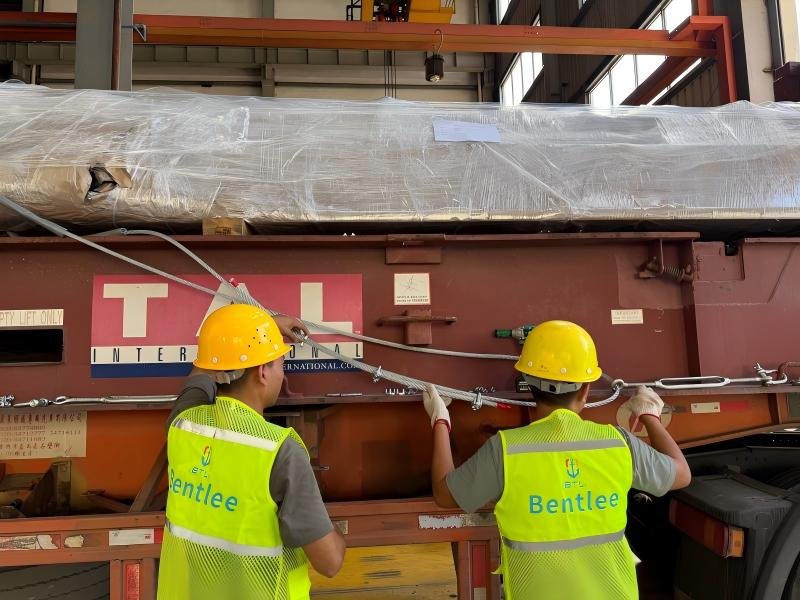
Large molds made of steel are very vulnerable to corrosion after they are out of climate controlled conditions where the moisture levels and temperature variations during transportation attract quick corrosion. This is not only a risk of the apparent rust, but it can also break internal channels, which will result in the functional failure at a much later time than delivery.
Why These Risks Occur
The molds grow in the air and also form condensation when the molds cool at night halts or pass through different climates and trap moisture to uncovered spaces. Other temporary coating such as oil tends to fail during the process of friction or washing that is not evenly coated. Prolonged storage in transit – because of delays- increases the exposure, since protection barriers decline with time.
Prevention Strategies
Mitigation begins with proper sealing: place vapor corrosion inhibitors (VCIs) and desiccants in enclosures, and wrap hermetically. Containers are climate-regulated to avoid fluctuations and also pre-transport drying will make sure that no leftover moisture remains. To be well-built in terms of approach, consider anti-rust protection of industrial molds that can withstand transportation anti-rust protection for industrial molds without much damage to transit or lead to the unavailability of the tools needed to inspect them.
Planning and Compliance Risks That Escalate Transportation Exposure
Poor planning on regulatory compliance usually spills into magnified hazards in the course of huge transportation of moulds, making a simple fault a significant hiccup. Weaknesses in permits such as permit gaps may initiate unplanned reroutes, which may carry unexpected handling or exposure.
Why These Risks Occur
These problems come about due to underestimation of jurisdictional variances which are bridge weight limits or escort requirements and they differ between routes. The re-handling rate is also high as a result of changes at the last moment, caused by clearance denials, which puts extra stress on the mold itself. Other risks are magnified by compliance failures such as expanding the environmental exposure during holds at checkpoints.
Prevention Strategies
One of the most important things is proactive mapping: obtain permits early and far in advance with specific dimensions and weights, and construct backup routes into the schedule. Coordinate with the authorities in advance to agree on escorts, or schedule limits. For specifics on oversized mold transport permit requirements, combine compliance checklists with project schedules which guarantee the smooth operation that will reduce the number of secondary exposures.
How Transportation Risks Translate Into Production Downtime
Although a mold may appear to come in intact visually, there may be underlying transportation risks, which can be reflected in long outages during the recommissioning process, which is damaging the asset value. Re-alignment requirements are usually a result of a marginal change, which postpones the incorporation into the production lines.
Why These Risks Occur
The structural micro-damage should be tried out to confirm tolerances and also corrosion may need cleaning or repair which ceases operations. The hidden cost of successful delivery also includes quality instability, where molds manufacture non-uniform parts, until stable- quality-wise, which may be weeks of lost production.
Prevention Strategies
Reduce this by capturing 3D scans of the pre- and post-transport conditions and being able to do diagnostics rapidly. Allow time to make adjustments to a schedule, and forecast problems using transit monitor data. A real-world example in the 50-ton injection mold transportation case is a real-life scenario where integrated risk controls allowed a total elimination of downtime and maintained schedules.
Conclusion — Transportation Risk Is Predictable
Rarely do large mold transportation risks come as a surprise. They are the by-products of decisions made–or not made–prior to the commencement of transport. The best method of safeguarding tooling assets and production schedules is to treat the issue of mold transport as an engineering and risk-management discipline. Environmental exposures, structural asymmetries, and compliance burdens can be mitigated by planning meticulously to turn a high-risk phase into a process that is under control, which means that molds will be ready for use immediately and the specter of avoidable failures will have been eliminated.