
The one exception in project cargo and heavy equipment logistics that has proved to be the case after years on-site is that the majority of the OOG cargo damage does not come as a result of storms, rough seas, and road incidents, it comes as a result of preventable equipment lashing errors.
Surprisingly, securing has been described as the last operational stage, a factor that is addressed by the truck drivers or stevedores when the cargo is loaded on the flat deck or the open top. It is still an assumption that when it is nailed it is secure. However, as field experience demonstrates, it is usually a miscalculation, wrong assumptions, or improper securing techniques that would trigger equipment lashing failures in OOG transportation, it is not extreme conditions of transport.
In case of heavy cargo movement or displacement, tips, or other structural pressure, the source of the problem always leads to the choices that were (or were not) undertaken long prior to lashings being installed. These errors can be tackled in the initial stages of the operation and can significantly reduce the risk of claims, delays and safety accidents.
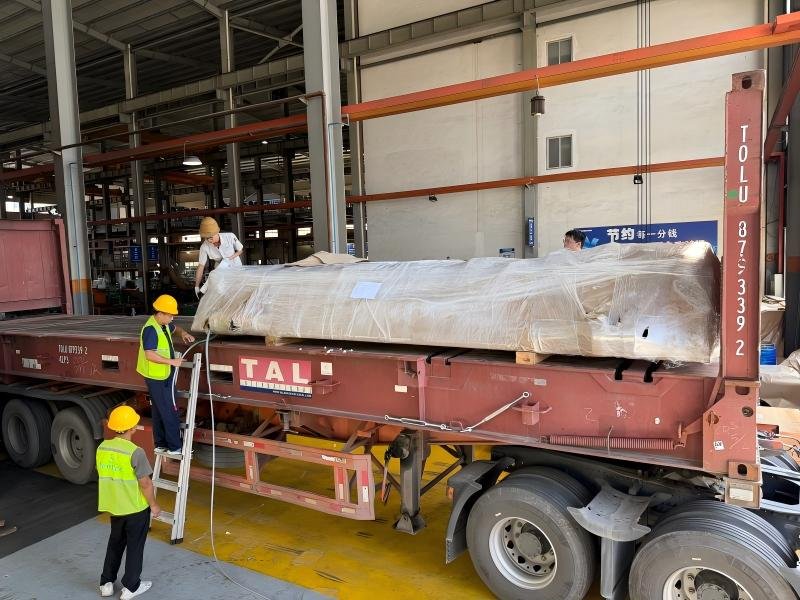
Why Equipment Lashing Mistakes Are Common in OOG Transportation
OOG cargo has absolutely different characteristics to standard containerized freight. Standard loads put a uniform load on the wall caused by the enclosed steel, however, very large objects, such as a 40-ton excavator, a steel bridge section, and a tall pressure vessel expose unusual shapes, high centres of gravity and non-uniform mass distribution to the forces in transport.
Even minor securing errors are magnified by size/exposure. Via a small displacement in the positioning of the load that may be acceptable in a 20-foot dry van happens to be a critical issue on a flat rack, where sea sloshing on the side or braking on the highway may create forces that are multiple times the actual weight of the shipment. Practice on routine cargo is a challenge to confidence: crews use the commonplace strap-and-chain arrangements without modifying them to the special characteristics of massy and bulky items.
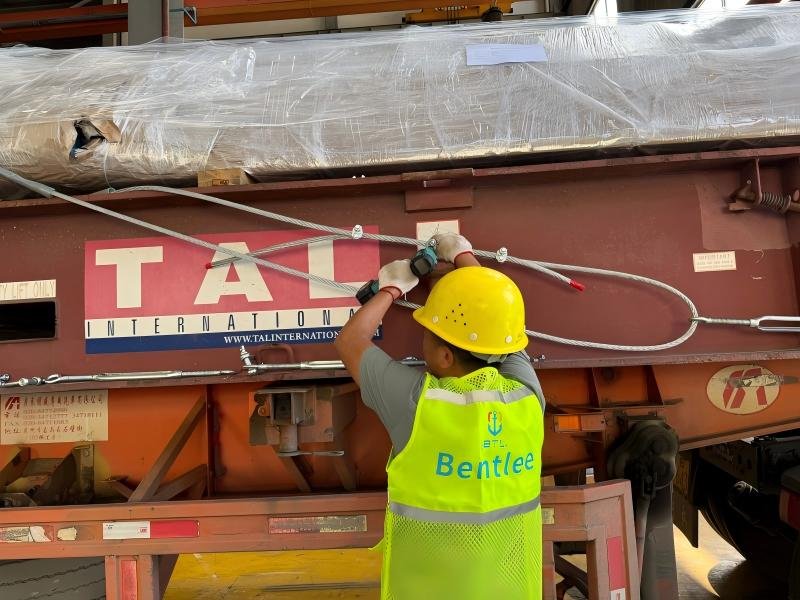
Mistake #1 — Treating Lashing as a Final-Step Task
Gaining security is not retrospective. When the deferrals on the lashing decisions are made waiting until the type of container is decided on or even at the loading stage, the number of options available reduces drastically.
Securing after the fact often compromised lashing angles, material strength, or then used improvised points. Effectiveness is directly determined by the planning sequence to ensure that appropriate choices of containers, location of loads, and designing reinforcements are made by considering early enough the forces, and attachment points so the choice of containers, orientation of loads and reinforcements can be made.
| Planning Stage | Common Error | Resulting Risk |
| Container selection | Securing not considered | Limited lashing options |
| Loading | Improvised lashing | Uneven force distribution |
| Pre-shipment | No recheck | Hidden instability |
Mistake #2 — Incorrect Load Positioning and Center of Gravity Assumptions
Mechanical stability is not equal to visual balance. To assume symmetricity of anobject, cargo is often placed on many teams and is made to appear to be symmetrical with the flat rack. Actually, mass distribution inside the gears, in the form of the counter masses, a disguised gearbox or counteroffset, and so on changes the actual point of gravity (CoG), and this can be changed by meters.
The overloading of certain lashings and under-loading of the others constitute an uneven force path to acceleration or roll, caused by an offset CoG. Direction of force is determined by positioning: an apparently innocuous displacement can convert horizontal lashings to a useless diagonal one in the event of a lateral movement.
| Assumption | Reality | Consequence |
| Load looks centered | CoG offset | Lashing overload |
| Symmetrical shape | Uneven internal mass | Unexpected movement |
Mistake #3 — Using Generic Lashing Methods for Specialized Equipment
The common lashing techniques do not work by their vagina usage whenever the lashing is used randomly on the heavy machinery. Chain-only system that would be appropriate with structural steel may consist of no vibration damping of a mechanical equipment with rotating components or delicate hydraulics. Skids with straps alone do not have the rigidity required to withstand repeated dynamic loads.
The selection of materials and angle is more important than the disgusting number of lashings. Tall unit vertical tie-downs are not very resistant to lateral forces and there is inadequate control over friction and this leads to skid with multiple lines.
| Cargo Type | Generic Method Used | Why It Fails |
| Machinery | Chain only | No vibration control |
| Skids | Strap only | Insufficient restraint |
| Tall units | Vertical tie-down | Poor lateral stability |
Mistake #4 — Ignoring Transport Forces Beyond Static Weight
Only a small part of the forces on OOG cargo is the static weight. Braking (longitudinal), rolling/pitching (transverse and vertical), and continuous vibration load dynamics have a multiplied effect on the stress of lashings and attachment points.
Transport by sea especially amplifies any kind of small mistake: even a 5-degree roll of the vessel can produce accelerations of more than 1g laterally. Securing a design sufficiently rigid to stay firmly in position when at rest frequently becomes loose at an accelerated rate under these accelerating and decelerating forces particularly when not pre-tensioned or anti-abrasive coated.
- Longitudinal road leg braking forces can be greater than 0.8g.
- Rolling causes side loads which are repetitive and caused by the seas.
- Long Voyages: Lashings become weary due to vibrations by engines/propellers.
- Multi-modal dynamics in the planning process can lead to the concentration of forces in fewer critical points.
Mistake #5 — Lack of On-Site Verification and Final Inspection
Physical inspection cannot be substituted with drawings and pre-load works. Execution deviations A little bit of shifting during lifting, uneven block assembly or a last-minute adjustment present unseen risks, which become evident only when the block is at work.
Tension, contact integrity and plan/reality compatibility are all checked at the conclusion. Leaving this step enables progressive loosening or wear of surfaces to be seen in transit.
| Inspection Item | Risk If Missed |
| Lashing tension | Progressive loosening |
| Contact points | Surface damage |
| Blocking fit | Sliding under vibration |
How Professional Lashing Planning Reduces These Risks
Provided that they are engineered securing plans will always be superior to ad-hoc execution since they consist of mixture of cargo examination, force calculation, and multi-modal consideration beforehand. Timely participation in the procedures enhances the choice of container types, loading position, and the shape of attachment points, it is important to note that lashings are not opposed to the forces projected or expected but will complement them.
The methodology is structured; starting with on-site measurement, 3D modeling, and modeling of forces enables the pinpointing of materials required at the correct specification and angles chosen. This, in effect, greatly decreases the frequency of claims as well as delays during transportation, by solving risks before appearing on the vessel or on the trailer.
For projects requiring detailed equipment lashing and securing services, the introduction and incorporation of expert advice during the planning phase has become one of the best proactive measures.
Key Takeaways — Lashing Errors Are Predictable and Preventable
Errors in equipment lashing during the transportation of OOG cargo have regular patterns based on mistakes in planning and do not depend on any unforeseen circumstances.
| Root Cause | Preventive Action |
| Late planning | Early securing design |
| Wrong assumptions | Load analysis (CoG, forces) |
| Generic methods | Cargo-specific solutions |
Conclusion — OOG Cargo Safety Starts With Correct Securing Decisions
Many heavy-lift and project moves can be seen to have experience that OOG cargo safety rests on the proper securing decisions of this phase of planning, rather than whether the lashings are going to hold in maximally stressful conditions. When applying lashing of equipment as an engineering discipline, and not a hurried activity, risks can be controlled and avoided. That distinction between a successful delivery and an expensive claim is frequently the timeliness of- and the punishments with which- those decisions are handled.