
Compare flat rack vs open top containers for OOG cargo. Discover which is ideal for oversized cargo shipping, heavy equipment transport, and out of gauge shipments based on dimensions, loading, and costs.
Introduction — The Most Important Information First
Picking the right container—flat rack vs open top—for your OOG cargo isn’t just a detail; it’s the foundation of a successful shipment. In my 15 years handling engineering logistics for oversized loads out of ports like Shanghai and Ningbo, I’ve seen mismatched choices lead to everything from damaged machinery to six-figure delays. The key factors? Cargo dimensions (height, width, length), weight distribution, loading methods (crane or side access), lifting points, and even port restrictions that vary by terminal.
Here’s the quick takeaway: Go with a flat rack container if your cargo is over-width or irregularly shaped, like a wide-base CNC machine or protruding steel beams—it offers the best flexibility for side overhangs and heavy-duty securing. Opt for an open top container when height is the main issue but width fits within limits, such as tall injection molders that need vertical loading. Flat racks generally win for ultra-heavy or wide items due to their robust base, while open tops shine for protected, top-loaded cargo. Weigh these against your specific needs, and always factor in 3D load planning to avoid surprises.
What Is OOG Cargo and Why Container Type Matters
OOG cargo, or out of gauge cargo, covers any shipment that busts the standard container specs—typically anything over 2.3 meters wide, 2.5 meters high, or 12 meters long for a 40-footer, or weighing more than 25-30 tons. We’re talking heavy equipment shipping like industrial presses, wind turbine blades, or factory disassembly parts that won’t squeeze through regular doors.
Why does the container type matter so much? Standard boxes are fine for pallets, but oversized cargo shipping demands specialized options to prevent shifting, damage, or rejection at ports. I’ve coordinated moves where ignoring this meant OOG surcharges doubling costs—think extra fees for over-dimensions starting at $500 per unit. Ports have crane limits and stacking rules too; a wrong choice could strand your load. For engineering logistics pros, it’s about matching the container to the cargo’s quirks to ensure stability and compliance.
Overview of Flat Rack Containers
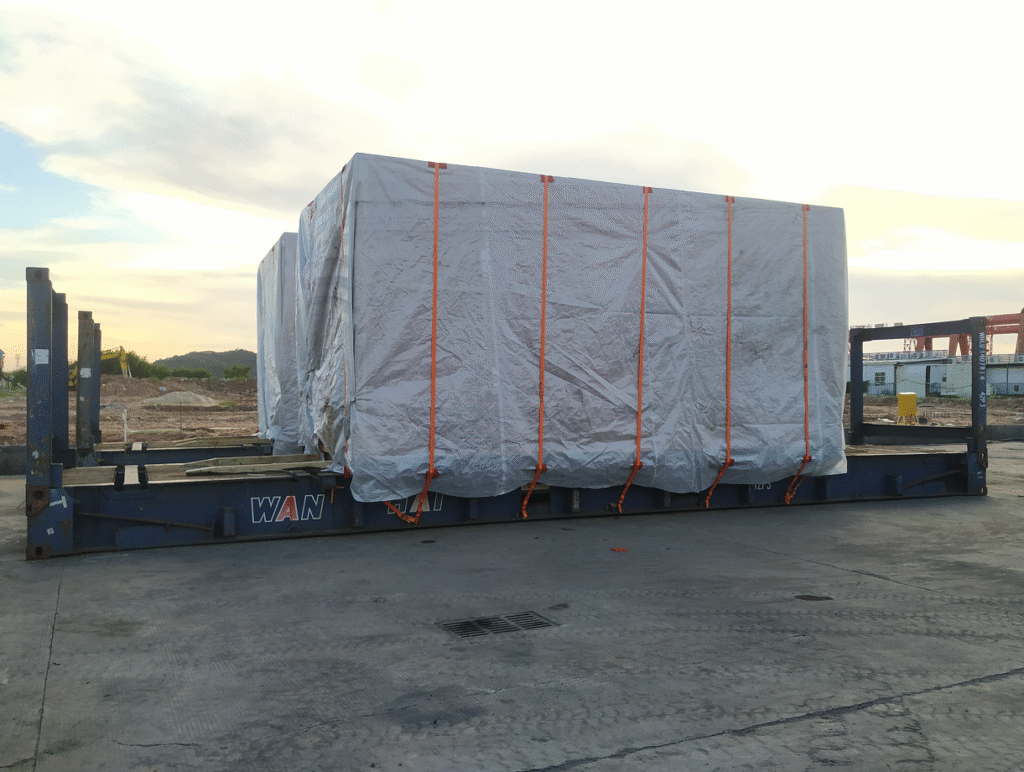
Flat rack containers are built tough: no roof, collapsible end walls, and a heavy-duty steel floor designed for serious loads. They’re like a sturdy platform on steroids, available in 20- or 40-foot sizes, with tie-down points everywhere.
When is a flat rack the preferred choice? Anytime width or irregular shapes are involved in flat rack machinery transport. I’ve used them for transformers wider than 3 meters, where side loading via crane or forklift is essential. They handle weights up to 45 tons easily, with loading often involving rigging from the sides or ends.
Pros: Unmatched flexibility for overhangs, strong base for even weight distribution, and easy access for lashing and securing. Cons: Fully exposed to weather, so you need extra tarps or crates, and they’re pricier due to limited stacking on ships. Typical cases? Shipping CNC machines from China factories—I’ve overseen dozens where the protruding arms fit perfectly with custom cradles, avoiding disassembly hassles.
Overview of Open Top Containers
Open top containers keep the rigid side walls but ditch the fixed roof for a removable tarpaulin or hard top, making them ideal for vertical drops. Standard sizes mirror regular containers, but with that open ceiling for crane access.
They’re suited for tall cargo that can’t slide through doors, like vertical silos or assembly robots. Open top loading advantages include straightforward top-down insertion, which minimizes tilting risks.
Pros: Better weather protection with the tarp, stackable like standards, and often cheaper than flat racks for height-only issues. Cons: Width is capped at about 2.3 meters—no overhangs allowed—and weight distribution must be spot-on to avoid wall stress. Limitations hit hard in ports with low crane heights. Use cases: I’ve recommended them for tall equipment like molding machines, where the cargo fits snugly inside and benefits from partial enclosure during sea voyages.
Flat Rack vs Open Top: Head-to-Head Comparison
Let’s break this down like I do in client meetings—flat rack vs open top, no fluff.
- Dimensional Flexibility (Height / Width / Length) Flat racks dominate for over-width cargo; they allow side overhangs up to 1-2 meters depending on carrier rules, perfect for the best container for oversized machinery with broad bases. Open tops handle height better—up to 4-5 meters with surcharges—but width is non-negotiable. Length-wise, both extend via platforms, but flat racks offer more container height/width limits forgiveness. In one project, a 3.5-meter-wide generator fit a flat rack effortlessly; an open top would’ve required costly cuts.
- Loading Method & Equipment Required Flat racks favor side loading with forklifts or cranes, using multiple lifting points for balance. Open tops are all about vertical loading advantages—drop it in from above, ideal for tight factory spaces. Rigging is simpler on open tops, but flat racks need more planning for exposed sides. Cranes are mandatory for both, but flat racks often require spreader bars for uneven loads.
- Weight Capacity & Stability Flat racks boast a beefier base, supporting 40-50 tons with even distribution—great for heavy equipment shipping. Open tops max out around 30 tons, with stability relying on wall support. COG (center of gravity) is crucial; flat racks forgive shifts better due to lashing options.
- Protection & Weather Exposure Open tops win with their tarpaulin, shielding from rain and dust—handy for sensitive electronics. Flat racks expose everything, demanding additional packaging like wooden crates or shrink wrap. Risk control means extra lashing on flat racks to combat sea spray.
- Cost Factors OOG surcharges hit both, but flat racks often cost 20-30% more due to specialized handling and lower ship stacking. Lashing costs run $300-800 for flat racks (more points needed) vs. $200-500 for open tops. Crating adds up if exposure is an issue. In my experience, open tops save on routes with calm seas, but flat racks justify the price for complex shapes.
When You Should Choose a Flat Rack
Reach for a flat rack when width exceeds walls—say, a 4-meter-wide steel structure that needs side protrusions secured. It’s prime for ultra-heavy machinery like 40-ton presses, where the base provides unmatched stability.
Irregular shapes? Absolutely—think vehicles with attachments or machines with awkward flanges requiring custom cradles. I’ve advised on flat rack machinery transport for mining equipment trailers; the collapsible walls allowed easy roll-on without disassembly, saving weeks.
Pro tip: If your cargo demands heavy-duty lashing across multiple points, flat racks are forgiving. In a recent factory relocation, we used one for a disassembly line with protruding gears—side access made securing a breeze, avoiding the wall constraints of an open top.
When You Should Choose an Open Top Container
Open tops are your pick for tall-but-narrow cargo, like a 4-meter-high robot arm that fits within 2.3 meters wide. Vertical crane loading is a game-changer here, especially in cramped warehouses.
When weather protection matters—tarpaulin keeps moisture out for longer transits. Less complex lashing suits items without wild overhangs; the walls add natural support.
I’ve steered clients to open tops for tall compressors; the top-down drop minimized handling damage, and the enclosure protected internals from salt air. If your machine nests inside without pushing sides, it’s efficient and often cheaper.
Engineering Factors: Survey, 3D Planning, Lashing Plans
Engineering isn’t optional—it’s everything. Start with on-site surveys for precise measurements; I’ve caught inch-off errors that would’ve voided insurance.
3D load planning visualizes stowage, factoring COG to prevent tipping. Software simulates ship motion, ensuring lashing points align with CTU Code standards—chains, straps, all rated for forces.
Inexperienced forwarders skip this, leading to denied loadings. In one case, our 3D model adjusted a flat rack setup for a transformer’s uneven weight, averting a potential rollover at sea.
Common Mistakes Importers Make
Biggest blunder: Picking open top for over-width cargo—it buckles walls or gets rejected. Solution: Measure widths twice, consult specs early.
Incorrect weight distribution on flat racks causes shifts; balance via COG calcs and even lashing.
Failing lashing plans? Ports demand them—prepare diagrams per CTU.
Misjudging port capabilities, like crane heights, strands loads; research terminals.
Underestimating packaging: Flat racks need crates for exposure; budget for steel supports or vacuum seals.
Avoid by partnering with pros who’ve handled similar—saves time and money.
Conclusion
In the flat rack vs open top debate, flat racks edge out for width and heavies, while open tops handle height with protection. Evaluate your cargo’s dimensions, loading needs, and route first. Working with an experienced OOG logistics provider—like those specializing in engineering logistics—cuts risks, from 3D planning to secure lashing. For complex oversized cargo shipping, don’t go it alone; expert guidance ensures your load arrives intact and on budget.