
The majority of transport damage in major relocation of molds is related to the poor preparation process where small details that may be overlooked during the pre-loading stage leads to major structural collapses or deterioration of surfaces along the way. Mistakes in preparation do not happen by itself, but worsen when faced with the pressures of vibration, movement and exposure to the environment and now become unmanageable risks. Most teams erroneously think that transport risk is only triggered once the loading is done without considering the impact that initial decisions have on determining the resilience of the mold during transit. Preparation quality of large mould transportation is the only variable that can be controlled in influence on transport safety and result.
The first step in successful large mold transportation involves long-term preparation before loading the work is made, preparation decisions about the implementation of risks aimed at their control or exaggeration. This principle of foundation highlights all the processes of preparing the molds, starting with pre-evaluations and then sealing. Treating preparation as an engineering science instead of an operating process will help the teams reduce the dynamic forces that shape the experience of encounter and therefore guarantee the integrity of the products when they arrive and reduce the number of disturbances to production schedules.
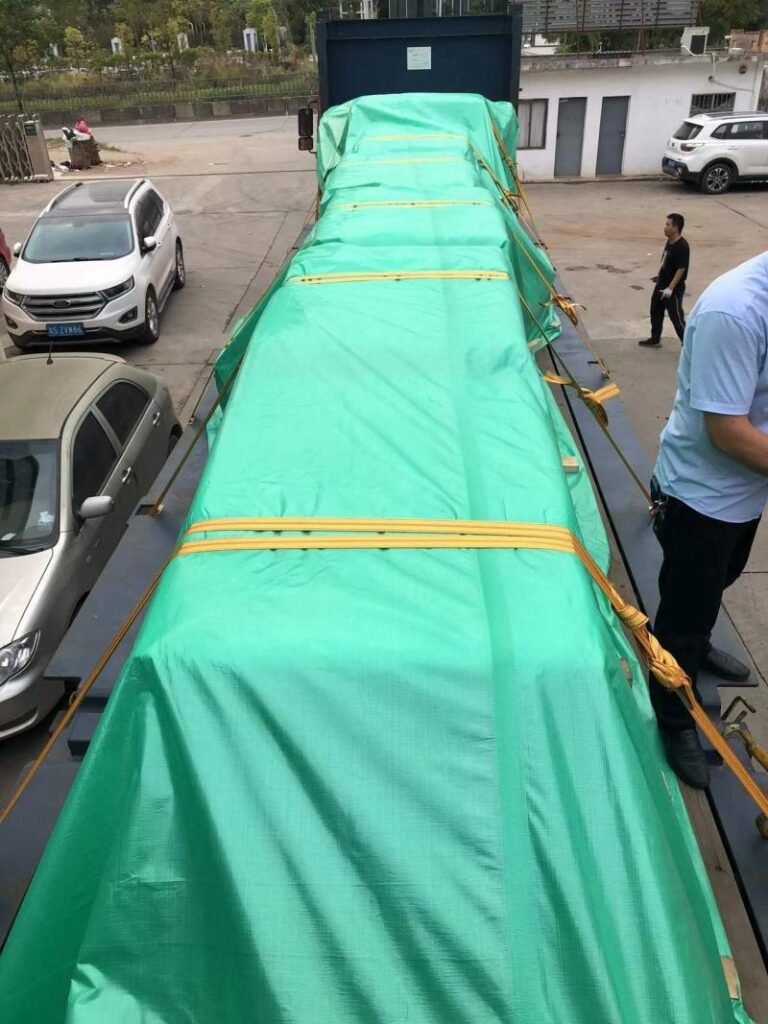
Why Preparation Is the Most Critical Phase of Mold Transport
The first engineering gateway is preparation, which has a direct impact on a mold to resist the unknown forces of transit. And without it, the most resistant molds will be victimized by magnified vibrations, unintended motion, or intrusions in the environment that will result in rework that costs more or failure. The rationale behind this is simple enough, molds are precision engineered pieces of equipment, usually weighing multiple tons and with highly complex geometries, their behaviour to transport forces, including acceleration, deceleration, and irregularities of the road is pre-programmed by how effectively the equipment has been inspected, safeguarded and stabilized in advance.
The Link Between Preparation and Risk Amplification
Bearing in mind the connection between preparation and downstream handling: a poorly-documented baseline state may cloud a decision as to whether damage was incurred during transit or existed prior to the transit, making insurance claims and quality assessments hard. In a similar vein, the failure in securing does not consider the inertial forces, which permit micro-movements that wear out surfaces with time. Timely repair, such as mid journey repairs, is rarely an option once the transport has started since the access is minimal and interventions may cause the transport to become more unstable. Practically, poorly prepared teams will tend to make more problems as a result, one weakness, such as an uneven load distribution will cause a chain reaction, creating such problems as distortion of the frame, or leakage of coolant.
Preparation’s Role in Controlling Dynamic Forces
When being transported, dynamic forces such as lateral movements on curves or vertical forces due to potholes, challenge a structural limit of a mold. Preparation logic requires one to invest in preparing against such by strengthening weak areas and equalising loads, rather than optimistically hoping that things will go well. It is not the stage of being optimistic but rather engineering foresight. As an example, in the large industrial mold transportation process, preparation integrates with overall planning to preempt failures that could halt operations at the destination facility.
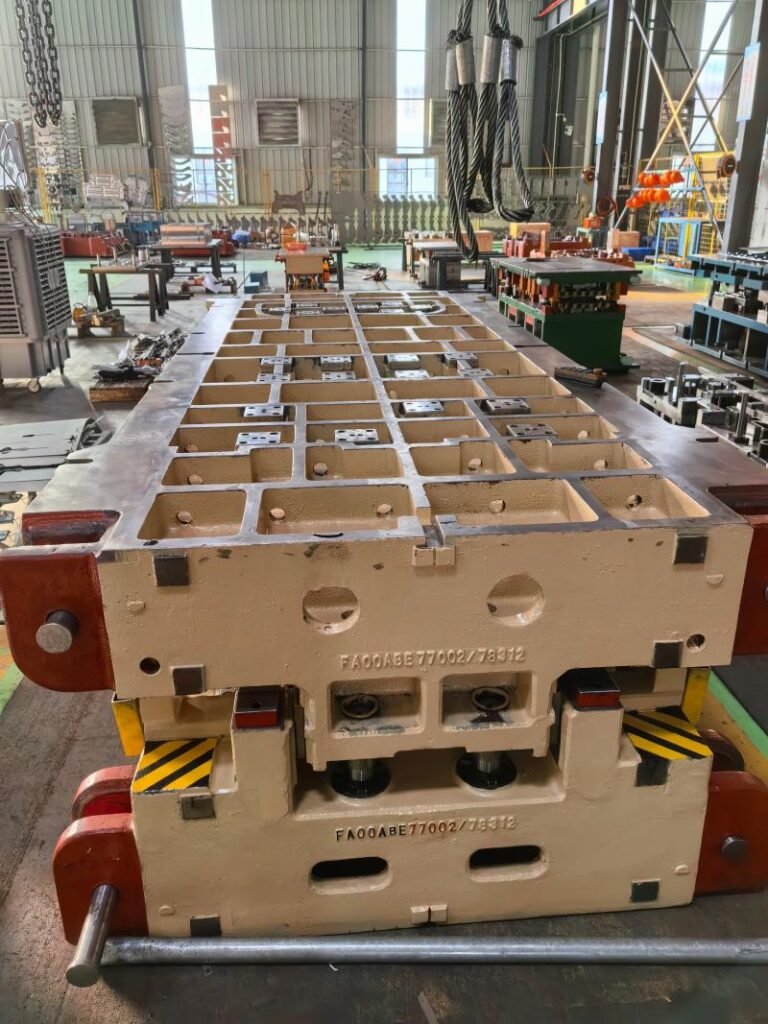
Pre-Transport Inspection and Condition Assessment
Comprehensive pre-transport screening creates an unquestionable foundation that prevents arguments and provides insight into specific safeguards in case any post-delivery complications can be precisely projected. Leaping over or hastening this phase will be a welcome sign of ambiguity, where teams will find no easy way of distinguishing between wear that occurred as a result of transport and vulnerabilities that existed before.
Establishing a Baseline for Accountability
It is very important to document the state of the mold before succeeding to the transfer point to establish a trace. This is done by use of high-resolution photography, dimensional measurements, and functional testing to record alignment tolerances, surface finishes and any hidden defects such as micro-cracks in stress prone regions. In the absence of this record, the evaluations of the post-transport will be subjective, which can result in false accusation of negligence of the handlers or negligence of the manufacturers. The situation with domestic cases where the transit time is reduced, with fewer delays, baseline documentation helps resolve the issues fast; in an international case, it can be crucial when the regulatory control differs.
Identifying Vulnerabilities Early
The most crucial aspect of inspection would be the identification of wear patterns, e.g. erosion on parting lines, misalignment of ejector systems, etc., which would aggravate under transport vibrations. In large injection or die-casting molds, that would include inspecting coolant passages, and depressurizing hydraulic components to prevent failures due to pressure reasons. The objective is proactive detection: these problems will be solved before transport takes place before they become significant disruptors. Teams must also consider suitability with transport fixtures and ensuring that lifting points are compatible with crane capacities.
Implications for Risk Management
The existence of undocumented conditions not only makes the process of evaluations more complicated, large mold transportation risks, as unseen flaws may interact with route-specific stresses, like thermal cycling in cross-country hauls. such as thermal cycling during cross-country shipments. This evaluation step supports the fact that preparation is not an option, but rather the engineering protection that brings mold integrity to the transport reality.
Structural Securing and Load Stability Preparation
The practice of effective structural securing predicts the behavioral characteristics of a mold under load, so that restraints do not induce additional stress concentrations. It is easy to assume that a one-size-fits-all approach is the cause of instability in this case, because molds are different in terms of mass distribution and geometry.
Understanding Load Behavior Dynamics
Securing strategy should indicate the way a mold will move in response to acceleration, braking or cornering. This begins with tracing restraint points so that the forces are evenly shared not putting pressure on weak areas such as thin-walled cavities. It is all related to physics that any loose or imbalanced loads will increase the vibrations which can lead to fatigue cracks in the long distance.
Center of Gravity and Restraint Optimization
The location of restraint depends on the center of gravity of a mold- off-center types need to be offset to avoid falling. It becomes dangerous when the teams assume some symmetry without taking into account asymmetries introduced by adding components such as heaters or inserts. During domestic transport, with routes potentially including urban manoeuvre, accurate balancing reduces sway; during international transport, with ocean legs, it reduces rolling as a result of the waves. Appropriate analysis in this case converts the possible hazards into controlled variables.
Avoiding Common Assumptions
Uneven distribution of weight can be assumed and cause strap tension to be uneven causing slippage. Rather, large molds should be placed using calculated tie-downs performed through center of gravity analysis, center of gravity analysis for large molds, which provides data-driven placement for chains, straps, and blocking materials. Such preparation will stabilize on diverse terrains and lessen the chances of the re-work when offloading.
Environmental Protection for Transport Duration and Route
The environmental protection should be adjusted to the expected pattern of exposure since unmonitored humidity or temperature changes may lead to corrosion that may undermine the accuracy of the mold over the long term. Domestic flights may be characterized by a short weather exposure, whereas international flights spread the risk of vulnerability in climatic conditions and stages of handling.
Assessing Exposure Differences
Risks associated with moisture and corrosion can vary greatly: domestic transport typically has to deal with road spraying or moisture in the enclosed trailers, whereas international transport can be exposed to saltwater mist in the sea transportation or long-term storing in the damp ports. The logic of protection necessitates corresponding barriers to time: the short hauls can be covered with simple barriers, whereas the long ones demand multi-layered barriers.
Tailoring Protection Strategies
In the case of molds having polished surfaces or ferrous parts, use rust inhibitors and desiccants so that seals do not fail when condensation cycles occur. This is enhanced further by international preparations which include the use of vacuum packing or climate controlled containers in order to counter equatorial heat or arctic shocks. The trick is the foresight: when you underestimate the length of exposure, it is impossible to reverse the pitting that will occur, which will influence the lifespan of the molds as well as the quality of the product.
Route-Specific Considerations
Environments of routes determine material options– UV-resistant wraps to use on open-deck shipments or anti-fungal coatings to use on shipments in tropical environments.. In export mold corrosion prevention, in the area of export mold corrosion prevention because any delays in the customs may increase exposure making small errors serious concerns to integrity.
Transport Planning Differences Between Domestic and International Moves
The predictability of transport regulations and logistics is crucially important in the transport planning of large molds, with domestic transport operations enjoying the advantages of predictable systems whereas international transport operations face the additional responsibility of increased foresight to overcome compliance barriers. The failure to appreciate these differences usually reflects weaknesses in the preparation at such pivotal points.
Route Predictability Versus Complexity
Domestic planning involves optimizing the routes in terms of efficiency whereby the highway weight restriction and escort requirement are considered. Efforts on the international level overlay the customs procedures, and advance paperwork, such as material safety data and origin certificates, is needed to prevent border detentions. The reason: domestic predictable routes mean tight schedules; however, uncertainty in the international world, like port strikes, will require buffers.
Permit and Clearance Timing
Permits should scale according to size: larger domestic permits should have state-related permits, scheduled at off-peak times, whereas international ones are based on multi-jurisdictional permits, such as IMO declarations of hazardous elements. Here delays are due to unfinished preparation such as performing dimensional checks not yet done, which are transferred to production blocks.
Amplification of Preparation Gaps
The magnitude of the international move increases the gap since the lengthy time frame exposes the molds to a greater number of variables a domestic control can be solved in a short period of time, the same situation can take weeks before the same is done overseas. Addressing this through oversized mold transport permits ensures compliance integrates seamlessly with preparation, safeguarding against amplified risks.
Conclusion — Preparation Determines Transport Outcome
The transportation results of large moulds are mostly predetermined before the move of the mould takes place. Caring about preparation as an engineering and planning task and not as a logistical formality is key to the integrity of molds, preventing delays and ensuring a trouble-free installation in the destination. The nature of proactive control through prioritization of analytical evaluations over impulsive actions allows teams to avoid the traps of reactive correction which most of the times are not adequate. This is a strict strategy that does not only keep the mold functional accuracy intact but also maintains a consistency in production, which portrays the interrelationship between the quality of preparation and the success of the entire project.