
Precision mold transportation undergoes cumulative mechanical damage due to vibration and shock which is usually not visible until the start of production. A veteran tooling engineer who has worked over the decades and has experience in troubleshooting mold failures, I have personally witnessed how these dynamic forces can creep up and destroy even the most design-resilient designs. Vibration and shock inevitably occur in the process of transportation, both because of the irregularities of the road, the abrupt braking, and the operations related to the handling, and the impact is not always immediate. It is a common belief that when a mold is received without any visible damage, then it was not subjected to the conditions of the transportation. It is a harmful delusion. The hidden damage caused by transport-induced vibration and shock can be very costly in terms of downtime and problems in quality because it is not noticed until the time of mold set-up or during early production ramps.
The first step in learning about these dangers is to realize that molds are not a block of heavy metal; they are complex structures of ground components that depend on micron-level tolerances. Internal stresses accumulate when repeated in oscillation or sudden impact, and may cause a shift in alignment or the beginning of micro-cracks. This paper explores the mechanics of these phenomena based on the principles of failure analysis that would enable the engineers and managers to address them and prevent them successfully.
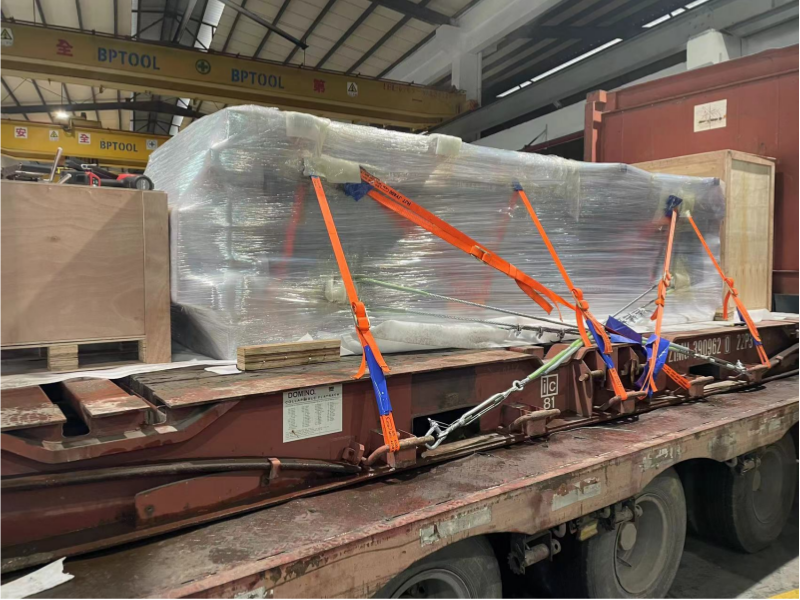
Why Vibration and Shock Are Inevitable in Mold Transportation
Vibration and shock are underlying mechanical issues to any over-the-road or multi-modal heavy precision equipment transportation. Regardless of how well thought out the process of fabrication shop to production facility, molds are subjected to a bombardment of active inputs. The causes of vibration are the condition of the road, i.e. potholes, expansion joints, and rough surfaces that are transmitted into the trailer by the trailer suspension. They are increased by acceleration and braking events, particularly on the highway or during urban navigation, where the forces may be up to 2g in sharp bursts. Shock events are usually caused by lifting and handling, e.g. lifting the mold between vehicles by cranes or forklifts or ports, causing sudden impacts that are felt throughout the structure.
Sources of Dynamic Forces in Transit
Why is never isolation absolute? The ability to decouple entirely of external forces, even with highly developed packaging such as air-ride trailers or shock absorbing cradles, is impossible because of physics. Inertial responses are generated in the mass of the mold and the momentum of the vehicle that no suspension can completely absorb. As an example, in long-haul trucking, the vibrations caused by engine rumble or tire-road contacts may last hours, causing fatigue. These unavoidable forces are multiplied in my case of the analysis of post-transport failures by route factors – consider mountainous routes with sharp turns or rail transport with coupling shocks. To grasp the full process, consider the industrial mold transportation process, where each stage introduces potential for these exposures.
How Dynamic Loads Act on Precision Mold Structures
Dynamic loads are essentially different than static loads, with the time sensitive stresses that are capable of growing as a result of resonance and causing disproportionate damage in precision molds. Constant loads, such as the weight of the mold when storing it, can be easily predicted, and thus easily designed to support. But dynamic loads, or vibratory loads, or shock loads, are so rapidly varied that they cause a cyclic stress, which takes advantage of material weakness with time.
Static vs. Dynamic Load Fundamentals
The important distinction is in the energy transfer: the dynamic forces add kinetic energy which will spread as waves through the mold and may be concentrated where the interfaces or other thin sections are. Resonance is produced when the natural frequency of the mold components is similar to the frequency of the external vibration to which it responds, leading to amplification in the amplitude the resonance. Such amplification can be able to transform small bumps on the road to devastating internal vibrations. The path of forces acting on internal components differs due to the dissimilarity of stiffness and damping characteristics; e.g., rigid cores may pass the shock directly, and flexible ejector plates may provide a damping pathway then re-distribute the shock unevenly.
Resonance and Force Amplification Effects
And why should this be of concern to molds? The force distribution in precision tooling depends on equilibrium and the dynamic loads refer to such equilibrium. I have used such amplified vibrations in failure investigations to trace drift in alignment to very small levels of inputs over a long cycle. This ties closely to center of gravity effects in mold transport, transport of molds since an off-center mass increases torque in dynamic conditions, which puts additional pressure on structural elements.
Mold Components Most Sensitive to Vibration and Shock
Some of the mold parts are more susceptible to vibration and shock as they are used to ensure accurate geometries and movements and hence, are the most likely locations of transport induced failures. Guide pins and bushings, etc. work with tolerances to 0.001 inches, and any dynamic action may cause wear or deformation which builds up invisibly.
Vulnerability of Key Mold Elements
Parting surfaces, where the halves of the molds come together, are also very delicate, because vibrations may result in slight abrasions or misalignments which result in flashing during production. Hardened steels Core and cavity inserts are vulnerable to micro-chipping by resonant shocks, particularly when not clamped in place. As an example of this sensitivity, one can cite the following table relying on empirical data of failures in tooling audit:
| Component | Vibration Sensitivity | Typical Failure Mode |
| Guide system | High | Misalignment |
| Inserts | Medium–High | Micro-chipping |
| Parting line | High | Flashing |
The table emphasizes this fact as dynamic forces are aimed at high-precision interfaces. These weaknesses, in reality, precision mold alignment issues, even the slightest exposure during transit can be funnelled into huge factory pain.
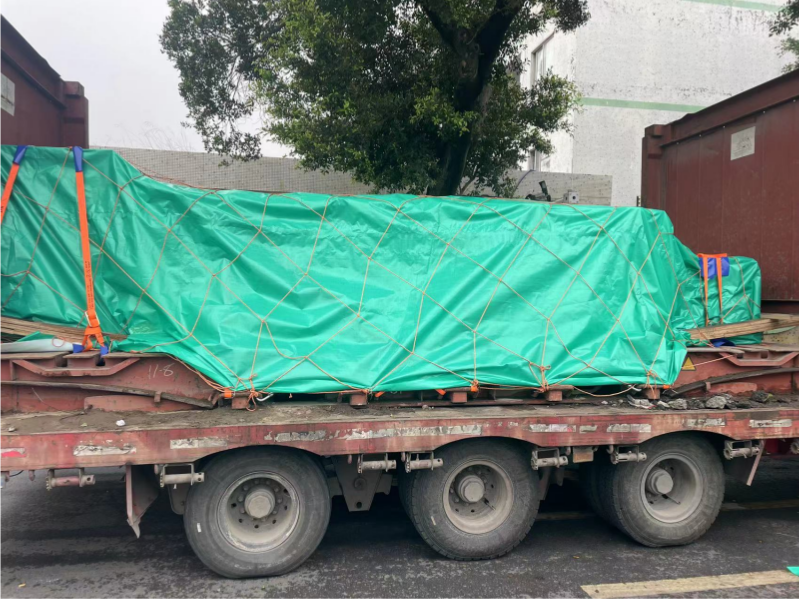
Cumulative Damage — Why Problems Appear After Installation
The cumulative impact of vibration and shock accumulation in a quietly silent build up in transit, which may not be detected until an inspection of the mold is performed in the production cycle, which will expose the defects in the form of the nonconformity in parts or early wear. The culprit is fatigue accumulation: repeated stress cycles cause the weakening of materials at the atomic level, which causes cracks that grow at a slow pace. Micro-movement during long transit -vibrations may cause components to be moved by a fraction of millimeters, which is sufficient to break tolerances with no visible mark.
Mechanisms of Fatigue and Delayed Failure
Why is transport damage revealed by test shots? First checks involve outward appearances, which lack internal stress that is only discovered during working loads. As an example, a mold may pass arrival inspection but display parting line errors within several hundred cycles, as worn out inserts sink into new locations. Drawing from a real-world 50-ton injection mold transportation case, where we observed the problem of undetected vibrations resulted in ejector pin binding only to be noticed later after installation, hence the delayed nature of these phenomena.
Long-Term Implications for Tool Life
This gradual wearing out reduces the life of tools, causing higher costs of maintenance and more time wastage. Engineers have to be aware that transport is not a neutral step but an active stressor that preconditions the failure of the mold.
Interaction Between Vibration, Moisture, and Corrosion
To reinforce the inherent risk of corrosion caused by moisture in the molds, vibration reduces seals and speeds up ingress, which poses a compounded danger that loses accuracy with time. Vibration-induced seal degradation occurs when rubber gaskets or O-rings fatigue resulting in the loss of compressive integrity, which then permits humidity intrusion.
How Vibration Accelerates Environmental Damage
The acceleration of moisture ingress: oscillations are able to drive air and water vapor into micro-gaps, particularly when operating in moist transit conditions, such as sea freight. The overall corrosion threat is then manifested in the form of pitting on critical surfaces with the abrasion of the particles during operations. This is exceptionally treacherous in global deliveries, linking directly to export mold corrosion prevention strategies that address both mechanical and environmental factors.
Synergistic Effects on Mold Integrity
My analyses have identified that the molds that were exposed to coastal routes experienced faster rusting of joints that are prone to vibration, which demonstrates that the forces are not independent of each other, but rather they combine and enhance the damages, in collaboration with the ambient conditions.
Transport Equipment and Route Influence on Shock Exposure
Suspension and surface conditions largely determine the levels of shock exposure, and the differences in the types of transport equipment and transport routes cause the potential risks to become actual vectors of damage. The most significant are differences in trailer suspension: air-ride is better in dampering in comparison with leaf springs, and even air-ride is not able to prevent the shocks on the uneven surface.
Equipment Variations and Their Impact
The conditions of the routes surface, e.g. smooth interstate highways against gravel access roads, is directly related to the amount of vibration, with the poorest pavements doubling the maximum accelerations. At ports and yards, another category of shocks comes in, as containers are stacked, forklift operations are performed, and in many cases, the shocks are the largest g-shocks. These factors highlight heavy equipment transport limitations, cannot be used to carry out the transportation of fine-tuning molds that demand appropriate technology.
Route Planning Considerations
The cumulative exposures should be reduced by engineers who test route with these influences.
Planning and Control Measures to Reduce Vibration Impact
Proper planning means combining measures and isolation principles to reduce the effects of vibration and switching to the proactive measures of engineering into the reactive methods of inspection. Securing strategies entail custom cradles that evenly spread the loads and the components should not experience relative movements.
Engineering Approaches to Damping
Concepts such as isolation and damping such as viscoelastic mounts absorb energy before it can reach the mold, but it can be verified using data-driven methods, such as accelerometers, rather than relying on assumptions. This strategy compares to the ad-hoc changes, which are bound to oversized requirements of transport permits of molding, tying into oversized mold transport permit requirements that enforce route and equipment standards for risk reduction.
Monitoring and Validation Techniques
With the incorporation of sensors, teams will be able to measure the exposures and optimize future transports, which will guarantee the integrity of precision.
Conclusion — Vibration Damage Is a Systemic Risk
Vibration and shock do not occur sporadically in the transportation of molds: they are ongoing mechanical feeds. To avoid losing the alignment, damaging the surface, and making degradation of the products irreversible, which reduces the reliability of production, it is important to understand how these forces influence precision molds. Changing the focus to an inspection-only approach to one that focuses on engineering awareness- including dynamic loads, component sensitivities and interaction with the environment- places the teams in a position to protect tooling investment. Ultimately, understanding vibration as a system risk leads to enhanced design and management behaviors, which maintain the performance of the mold both on the shop floor and the production line.