
In the case of the exported industrial moulds, the risk of corrosion is a function of duration of exposure and environmental fluctuation; not a matter of distance. The most widespread export-based problem of large industrial molds is corrosion, which is usually formed without notice, with oxidation causing damage to precision surfaces and internal mechanisms. Most people think that corrosion occurs when it is clear that the molds are wet but in the actual sense, it can begin because of a humidity condensation or a temperature condensation. Corrosion in the mold export projects may start a long time before damage is visible.
Large molds are made of high-carbon steels or alloys that are prone to rust, and this increases the risks during international transfers. These are tools, which are also crucial to injection molding or die casting, such as the automotive and electronic industries, and may weigh more than 50 tons and have dimensions more than several meters, so their high-protection is an irrevocable engineering consideration. In my experience of managing trans-Pacific and trans-Atlantic shipsment, failure to observe anti-rust has resulted in expensive rework, where molds are received with pitted holes or frozen ejecting items slowing down the production by months.
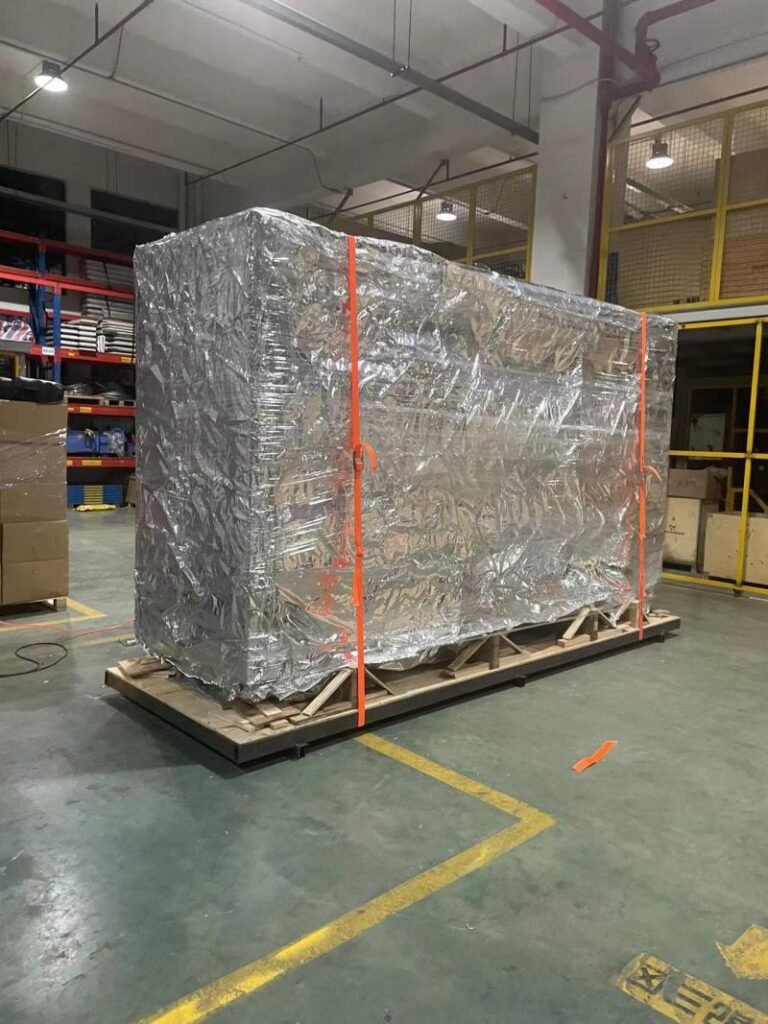
Why Exported Industrial Molds Face Higher Corrosion Risk
The exported industrial molds face high levels of corrosions mainly because the exposure interval is in weeks or even months, which is much longer than the domestic transport schedule. Contrary to short-hauls, international shipments have several points of handling such as factories, warehouses, ports and ships, each with varying levels of humidity that hastens oxidation.
Geographical variations in temperature also contribute to this: a mold loaded in a temperate factory may experience equatorial heat in a Southeast Asian port and then cooler oceanic conditions, which cause expansions and contractions that break protective barriers. The problem is worsened by moisture that becomes trapped within the packaging especially in cases where there are small openings that the humid air can access resulting in internal condensation that collects in the inaccessible places such as cooling channels or core inserts.
In the industrial mold export transportation process, mold export transportation process to provide a condition where rust may develop without detection particularly in molds with complex geometry that can conceal moisture pockets. The engineers should understand that corrosion is not merely a surface issue but it goes into the microstructures thereby compromising the fatigue strength of the mold as time passes.
The Role of Extended Transit Times
The trans-ocean voyages by themselves may take 20-40 days thus exposing molds to saltwater-laden air. Delays in ports or transshipment centers add to this making what would have otherwise been a two-week trip take a month-long nightmare where pitting corrosion may start at relative humidity of over 80.
Environmental Fluctuations Across Routes
Shipping between China and the U.S. West Coast, including, would involve humidity gradients, i. e., dry inland origins and moist coastal shipping terminals. These changes result in the dew point changes such that warmer air in crates cools faster releasing moisture directly onto the metal surfaces.
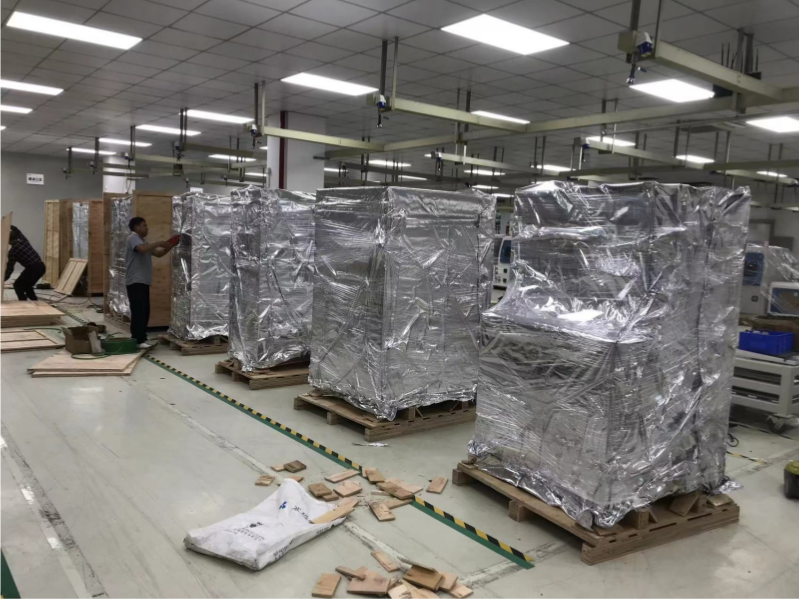
How Moisture Enters Mold Packaging During Shipment
The forces behind moisture intrusion into mold packaging during export are the condensation mechanics where the temperatures vary among the surfaces, and the cooler ones have the water vapor in a liquid state. This is especially treacherous in closed spaces where trapped air is humid, condensing at night when cooling or when the air is subjected to variation in altitude at airfreight storage.
The direct exposure to humidity is presented at port handling: molds tend to accumulate in the open-air staging conditions during the tropical rain or fog, letting the water penetrate through the flaws in the seals or the ventilation ports. Even the hardest wooden crates are not without constraints because porous substances take in the surrounding moisture that consequently flows into the interior especially when no climate conditioning of the packaging is done before loading.
Understanding these entry points is crucial, as they tie into broader corrosion risks during mold shipment, in the shipment of the molds results in the electrochemical reactions that dissolve protective layers of oxide on the steel.
Condensation Dynamics Explained
It is done according to the principles of the psychometric chart: when the internal temperature of the package is lower than the enclosed air dew point, condensation is formed. In the case of moulds being transported in winter between Europe and Asia this may occur during transit when the ships move into warmer seas.
Port and Handling Vulnerabilities
Molds can survive up to 48-72 hours in the open at extremely wet hubs such as Rotterdam or Shanghai, with relative humidity (typically 90%+) in the cracks of the shrink wrap or the joints of the crates penetrating molds and establishing the conditions of flash rust.
Packaging Design Shortcomings
Ordinary crates make use of desiccants; however, they become easily saturated in moist areas and thus useless without surveillance. Vacuum sealing is beneficial, however, pressure variations during transportation may destroy seals, letting in moist air again.
Corrosion Prevention Methods for Exported Molds
Corrosion prevention of exported molds depends on the choice of the method depending on the duration of the exposure, and the types of the corrosion prevention method, such as rust-preventive oils, volatile corrosion inhibitors (VCI), and vacuum sealing the goods, have different benefits.
Rust-preventive oils have a hydrophobic coating that is suitable in short-to-medium (up to 30 days) exposures, but must be carefully washed away on receipt to prevent contamination of molding operations. VCI papers or emitters emit vapor-phase inhibitors which create molecular shields on metal surfaces, which can be used in longer cycles (60+ days) with no residue, but require airtight enclosures to be effective.
Usually paired with nitrogen purging, vacuum sealing removes oxygen and moisture, the most protective method of ultra-long export, albeit at a higher cost because of specialized equipment. It is all about duration: oils are appropriate in air shipments, whereas VCI or vacuum is most suitable in transports through the sea where humidity remains.
In-depth export mold corrosion prevention the overlapping of these techniques-e.g., oil coating over VCI in a vacuum bag- against the background of unnecessary protection against the inevitable environmental intrusions.
Comparing Oil-Based Protection
Such oils as cosmoline form a waxy coating that works well against salt spray but is difficult to strip. They are ideal when applied on the exterior surfaces, and they are done through dipping or spraying methods to promote evenly spread wear.
VCI Technology Advantages
VCIs are non-contact inhibitors and they diffuse through the air to cover crevices. In molds whose internals are complex in nature, emitter pouches located strategically can last up to 12-24 months, which is a long way compared to simple desiccants.
Vacuum and Inert Gas Systems
Vacuum packing eliminates most of the air which helps to reduce oxidation possibilities by 99%. Residual moisture is removed by addition of silica gel or molecular sieves and this technique is therefore perfect with high-value precision molds that will be shipped to wet locations.
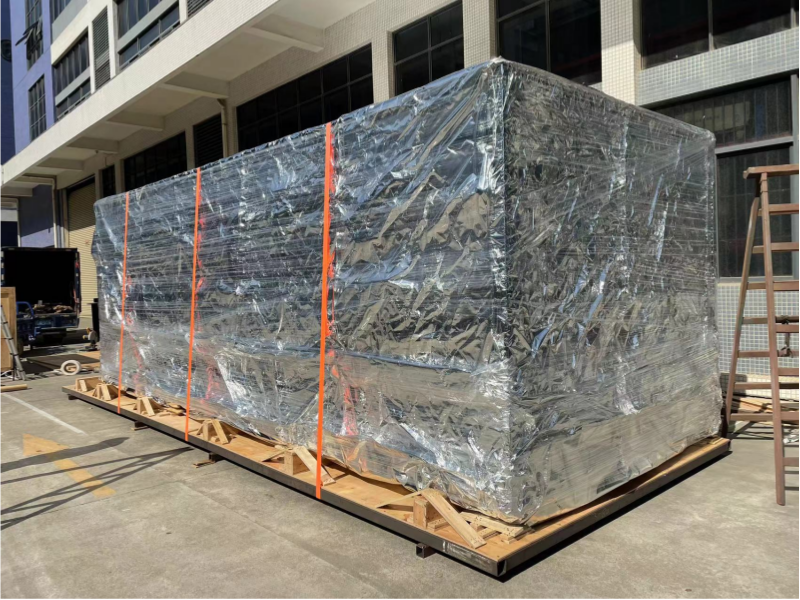
How Vibration Undermines Moisture Protection
The moisture seals may be destroyed in transit by vibration, since the continual motion wears out adhesives and gaskets, forming tiny cracks that allow moisture- laden air inside. This is particularly bad when it comes to truck to ship transfers as road vibrations and shaking caused by waves erode protective wrappings.
Exposure is caused by movement where vibrations either loosen updesiccants or move VCI emitters, exposing them to a smaller area and providing localized hotspots of corrosion. In the long run, this sabotages even the strongest systems, making a closed crate a semi permeable one.
The interplay with transport vibration impact on molds affecting the molds asset is an indicator that mechanical stresses not only lead to direct, but also to the loss of anti-rust barriers, contributing to the cumulative risks.
Seal Degradation Mechanisms
Container ships can cause cracks in heat-sealed bags due to harmonic vibrations in the range of 10-50 Hz, and the counts of fatigue cycles are in the millions during one voyage.
Exposure from Dynamic Shifts
As aspergils grow or slide slightly, coating surfaces, bare metal is exposed to any water that has penetrated it and galvanic corrosion proceeds more rapidly in alloyed materials.
Export Routes, Delays, and Regulatory Impact
The export routes present the effect of the variable corrosion risk, where the molds spend a lot of time in the warehouses due to the long waiting time before being loaded onto ships and are subjected to the local climate, like the monsoon climate of India or the dry but dusty climate of the Middle East.
This is increased by clearance delays in ports or border crossing, and regulatory holds include inspections or paperwork, days of uncontrolled storage, over which temperature variations encourage condensation. Compliance regulations e.g. treatment of wooden crates with fumigation can unintentionally add moisture unless it is dried well after fumigation.
Through prudent planning as contained in the literature on export clearance and transport permits for molds, is essential to minimize idle exposure.
Pre-Shipment Waiting Periods
Delays between factory and loading are normal, ranging between 7-14 days, making staging areas a source of unwanted humidity chambers unless climate controlled.
Regulatory Hold Effects
In order to perform customs verifications, some unpacking may be necessary (exposing molds only briefly, but long enough that they can start rusting unless it is sealed up again with new inhibitors).
How Corrosion Protection Affects Installation and Commissioning
Lack of proper corrosion protection increases the cleaning duration during arrival since the removal of rust requires abrasive processes that may scratch the accuracy surfaces, and it may take days to commission.
Alignment implications are more subtle: guide pin or bushings corrosion results in misfits at time of installation, and requires re-work that interrupts production schedules. In extreme cases, pitting changes thermal conductivity, and the resulting effect is uneven cooling in operation.
Real-world examples, such as a 50-ton mold export transport case, and other real-world scenarios show that solid protection facilitates the organization of the task to prevent these traps.
Cleaning and Remediation Challenges
Flash rust also needs chemical neutralizers prolonging the downtime and posing a risk of residue in early production that affects the quality of parts.
Long-Term Alignment and Performance
The slightest corrosion may cause tolerances to change by microns, building up to defects in thousands of cycles and reducing mold life.
Conclusion — Corrosion Prevention Starts Before Shipment
The situation with corrosion in exported industrial moulds is entirely predictable, based on well understood environmental mechanisms that engineers can forecast by performing adequate risk assessment. Prevention proves to be a fundamental planning choice, which is incorporated in the design of the mold to the choice of packaging to make sure that the protective measures are suitable to the challenges of the particular route. Through looking and a-head to moisture and rust risks, instead of being a response strategy on arrival, teams protect the physical property, and the integrity of the entire production chain. This engineering vision makes a problematic failure to be a natural progression, maintaining the complex craftsmanship of these vital instruments within the global supply lines.